
1What stage is your coaching business in?
Each row shows who should be selling, who should be coaching, and the next hire.
| Monthly revenue | Who sells | Who delivers | Main funnel | First hire |
|---|---|---|---|---|
| $0 to $10K | You, in DMs and calls | You, 1:1 | Warm audience, referrals | None yet. Prove the offer |
| $10K to $20K | You | You, 1:1 | Posts and referrals, lumpy months | Part-time assistant |
| $20K to $50K | You, with a setter booking calls | You, moving to group | One paid front door: webinar, VSL or free Skool group | Setter |
| $50K to $100K | A closer, you on overflow | Group or hybrid, a coach helps | The same funnel, more ad spend | First closer |
| $100K and up | Setters and closers | Coaches you trained | A second funnel and a back end offer | Sales manager or head of delivery |
From our own builds. The stage matters less than which step caps you.
Below about $100K a month, the thing that breaks is getting clients. Systems and people become the main problem around $250K and up.
Real stage jumps we have built, none of them typical:
- $10K to $20K, lumpy months: Karl Yombom had 1.1 million followers and still had $15K to $20K months. We left his content alone and built a low-ticket front end, a path into the high-ticket offer, a booking flow and the follow-up. He collected $40K, then $75K, then $95K in his first three full months. Read the case.
- Brand new offer, no list: Blake Mathews went from $0 to $1,230,101 in 60 days on cold traffic webinars. Read the case.
- $100K and up, adding a back end: one education offer went from $12K a month to $415K collected in 2026 with a free and paid Skool group. Read the case.
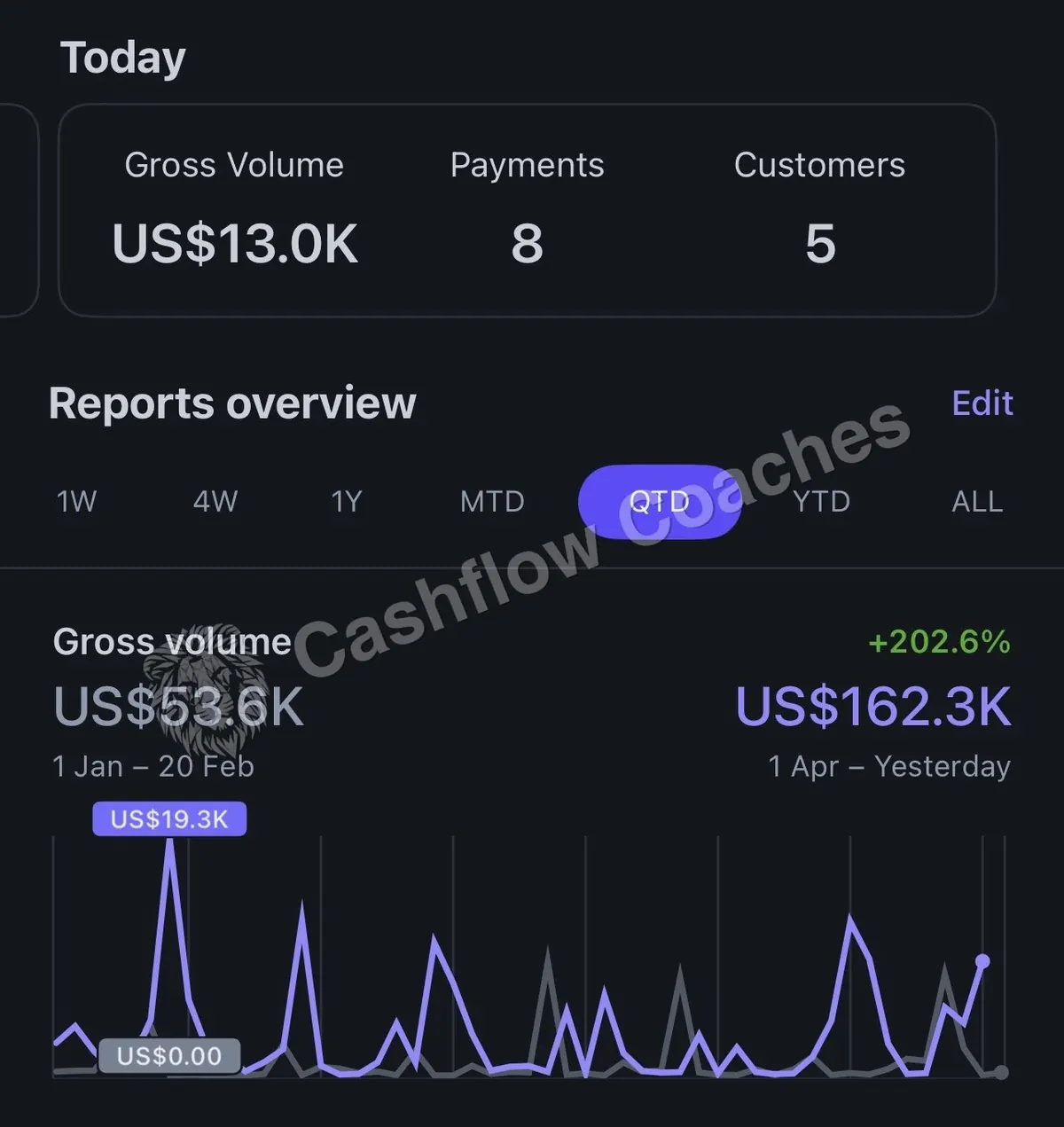 $53.6K to $162.3KQuarter on quarter, +202.6%
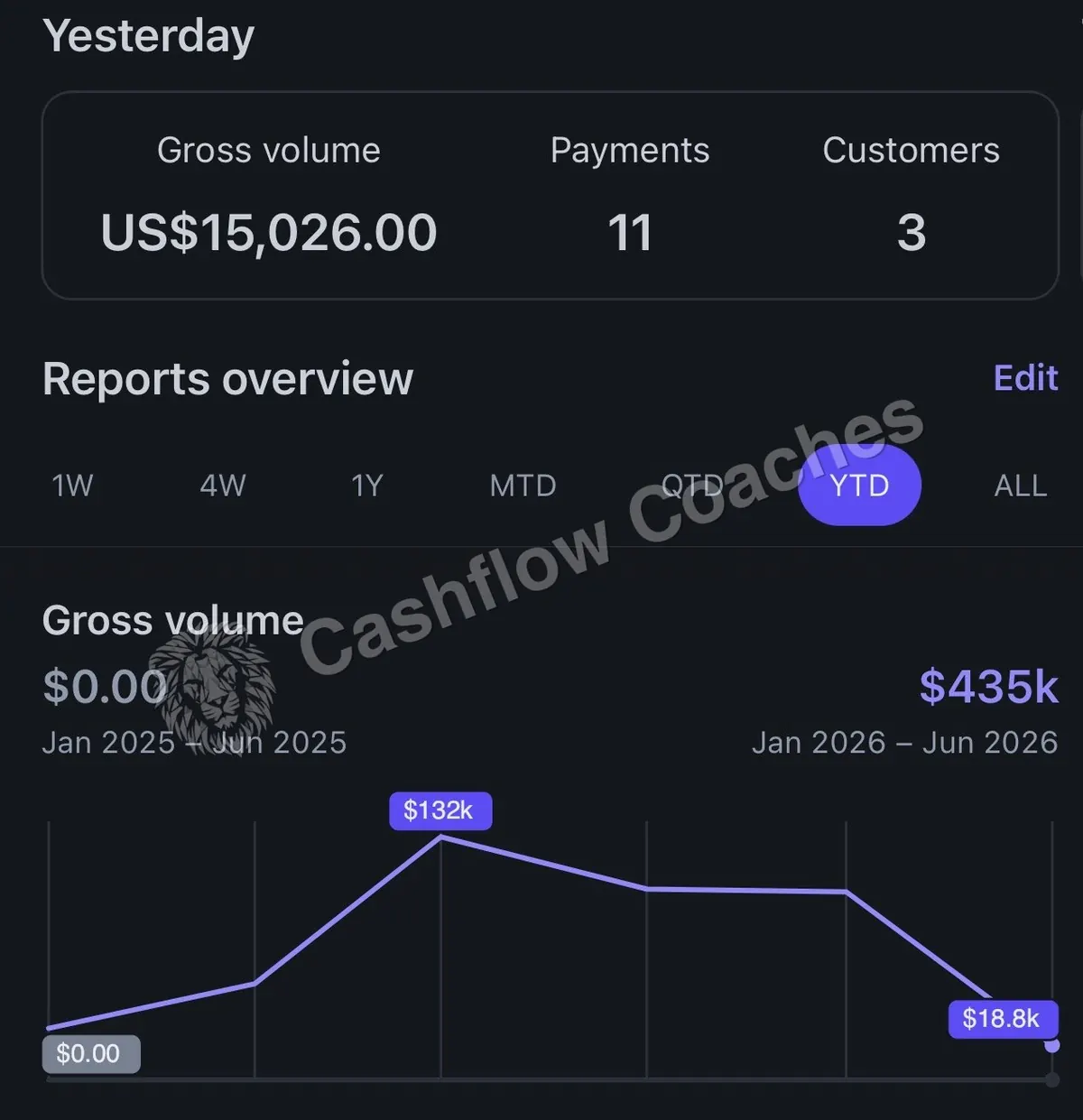 $0 to $435KA brand new account, year on year
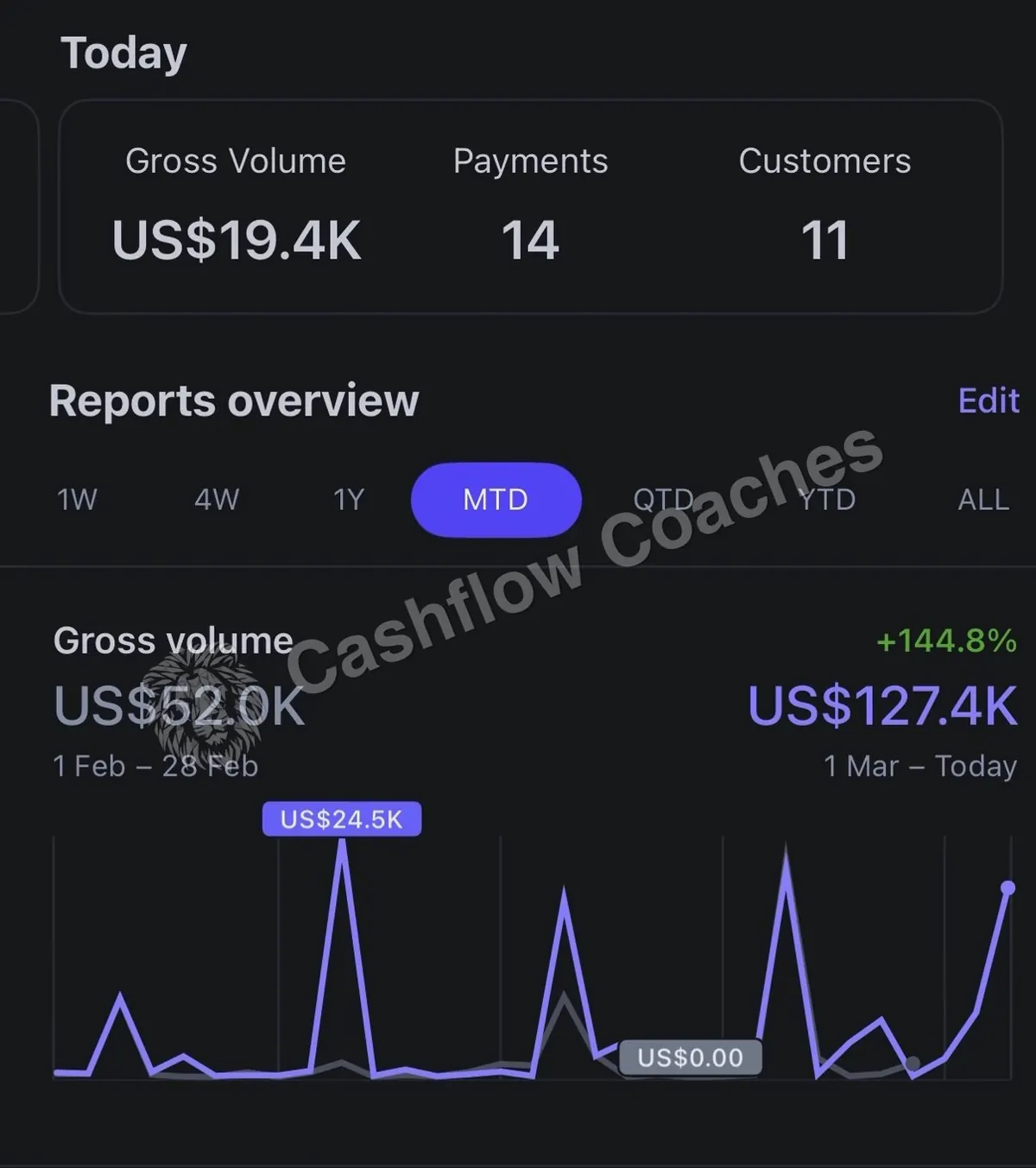 $52K to $127.4KMonth on month, +144.8%
Real screenshots from our clients and our stories. Not typical.
2What's capping you? The 8-question check
Pick one answer for each.
Answer the first question to start
Each answer points at one step: offer, leads, show rate, close rate, cash per sale or your time.
Not sure your answers match your real numbers? Use the 2-minute quiz to find the exact bottleneck in your business from last month's figures.
31:1 vs group vs hybrid: which coaching model scales?
1:1 coaching caps you at the hours in your week. Group and hybrid break that cap.
| Model | Package example | Hours a client | Clients / 80 hrs | Margin |
|---|---|---|---|---|
| 1:1 | $5,000 for 3 months, weekly 1-hour calls | 5 | 16 | 70% |
| Group | $3,000 for 3 months, weekly group call, course | 0.5 | 160 | 95% |
| Hybrid | $5,000 for 3 months, group calls plus a monthly 1:1 | 1 | 80 | 94% |
Made-up example. Margin assumes a coach paid $100 an hour.
- 1:1 wins when the price is very high and the result needs your eyes on every client. Keep a few seats, priced high.
- Group wins when the result follows a clear method that most clients can run on their own.
- Hybrid is the usual bridge. Clients keep some personal time, and you can hand the group calls to a coach you trained.
Info businesses usually target about 85% margin at $100K a month and 70% or more at $250K. 1:1 delivery rarely gets there once you pay other coaches.
When should you move from 1:1 to group?
When your 1:1 clients fill most of the hours you can coach. The starting numbers are Priya's, a made-up coach.
| Model | Max clients | Ceiling a month |
|---|---|---|
| 1:1 | 86 | $0 |
| Hybrid | 0 | $0 |
| Group | 0 | $0 |
Hybrid counts 1 hour per client a month and group half an hour.
How do you move 1:1 clients to group without losing results?
Keep the personal moments and turn the repeat teaching into a system. Our split is about 80% systemised and 20% personal.
- Write down the 5 to 7 steps every client goes through. Your best clients' path is the outline.
- Record onboarding first. It is where every new client eats the most of your time. Then record your answers to the 10 questions you hear every week.
- Record one module per step. Add a worksheet so clients act, not just watch.
- Run one weekly group call for hot seats. Clients bring the step they are stuck on. Everyone hears the answer.
- Put clients in pods of 3 to 5. They meet for 30 minutes a week without you: last week's promise, this week's promise, the biggest blocker.
- Keep 1:1 time for milestones. A short review at each step, and a call when someone is stuck for two weeks.
- Move existing clients at renewal. Sell new clients the hybrid offer from day one.
4How many calls and leads do you need for $100K a month?
Work it backward from cash. Target ÷ cash per sale = sales. Sales ÷ close rate = shown calls. Shown calls ÷ show rate = booked calls. Booked calls ÷ the share of leads who book = leads.
Pick your stage to fill in typical rates, then change any of them. For show rate alone, use the show rate calculator.
Pick one, or enter your own numbers below.
| Each month | Today | Target | Extra |
|---|---|---|---|
| Sales | 4 | 20 | 16 |
| Calls that show | 20 | 100 | 80 |
| Booked calls | 33 | 167 | 133 |
| Leads | 333 | 1,667 | 1,333 |
| Closers needed | 1 | 1 | 0 |
Closers needed assumes about 8 booked calls a day each.
5Which step closes the gap fastest?
Before you buy more leads, see what each step is worth at the calls you already get. Each row changes one planner number and keeps today's booked calls.
| Change, same calls as today | Cash a month | More than today | Booked calls the target then needs |
|---|
Raising show rate and close rate makes every future call worth more, so we fix them before turning up ad spend. If you want us to find yours, see if you qualify. One Cashflow Coaches client booked 664 sales calls in three months. Not typical.
Want your plan sent to you?
Leave your email and we will send you your numbers, plus the one step we would fix first.
We only use this to send your plan and to follow up about growing your business. If you add a mobile, we may call or text you about it.See If You Qualify
Bring your bottleneck and your gap from this page. We'll tell you what we'd build first.
6What do you build, and in what order?
Build in the order buyers move: offer, front door, booking, sales, cash, then the back end. Skip ahead and you end up with a sales team and no calls, or ads and no one to take the calls.
- An offer that already works. An offer is proven once 15 to 30 clients get the promised result in the promised time. If yours is not there, scaling only makes the problem bigger.
- One front door you control. A webinar, a VSL funnel or a free Skool group, on paid ads, that a stranger can say yes to before they book a call. Pick one. Start with the webinar funnel guide or the VSL funnel guide. Once a live webinar sells, an automated webinar can run it on a schedule.
- A booking flow that gets people to show. Qualifying questions, calls booked within a few days, and reminders by email and text until the call starts.
- A sales process that closes. Recorded calls, reviewed every week. A setter first, then a closer when your calendar is full.
- More cash per sale. A bigger first payment and a price that can carry the ad cost. Add a premium tier, with more direct access, for the buyers who want more of you. In our builds that is often 1 in 10 buyers. Raise price 10% to 15% at a time and judge it over the next 30 calls.
- A back end. Somewhere for finished clients to go, like a members club or a paid community, so you stop starting every month from zero. If it bills monthly, watch one number: revenue goes flat once the members who cancel each month equal the ones who join.
To score all six builds in your own business, get the client acquisition system audit skill. You can build them yourself, hire one of the coaching business coaches who teach it, or have them built. What DFY means explains the difference, and the done-for-you webinar funnel and done-for-you VSL funnel pages show what we build.
Dr Daniel Moses sold well on calls but started each month from zero. After we built a members club and worked the list he already owned, he collected £16K in 10 days from that cold list, and £436K cash on Stripe in total. Not typical. Read the case.
7What numbers should you aim for?
A sense check for your planner numbers, not targets you must hit.
| Number | What operators commonly report |
|---|---|
| Show rate on booked calls | about 50% average; 60% to 70% is a strong, realistic best |
| Close rate, one-call close | 20% to 25% usual, 30% or more above average |
| Cost per booked call | $100 to $300 to model; more for big tickets |
| Calls per closer | about 8 booked calls a day |
| When to hire a first closer | you close about 30%, hold about 70% show, calendar full |
| A new closer's close rate | about half the founder's at first |
| One funnel's spend ceiling | cost per call rises past a natural daily spend; stack a second funnel instead of forcing one |
| When an offer is proven | 15 to 30 clients with the promised result in the promised time |
| Ad spend to fill 3 closers | 528 booked calls a month, about $100K to $182K of ads at $200 to $345 a call |
Know your cost per booked call? Check what it is worth with the ROAS and break-even ROAS calculator, and what a whole client costs with the client acquisition cost calculator.
8Worked example: Priya, $20K to $100K
Priya is a made-up mindset coach. She collects $5,000 a sale. Last month she made $20,000 from referrals. She shows 60% of booked calls and closes 20%.
| Line | The maths | Result |
|---|---|---|
| Sales for $100K | $100,000 ÷ $5,000 | 20 |
| Calls that must show | 20 ÷ 20% | 100 |
| Booked calls | 100 ÷ 60% | 167 |
| Booked calls a day | 167 ÷ 22 days | 7.6 |
| Leads, if 10% book | 167 ÷ 10% | 1,667 |
| Ad budget at $200 a call | 167 × $200 | $33,333 |
Priya fixes two steps before she spends more. Reminders and a confirmation message take her show rate to 75%. Weekly call reviews take her close rate to 25%.
- 60% show, 20% close
- 1,667 leads
- About $33,333 in ads
- 75% show, 25% close
- 1,067 leads
- About $21,333 in ads
Made-up example. About $12,000 less in ads.
9What to do this week
About an hour and a half in total.
- Find your row in the stage table. Write down who sells, who delivers and your next hire.
- Count last month: cash collected, booked calls, calls that showed, sales and where each client came from. (30 minutes)
- Take the 8-question check above. Write down your bottleneck and its next build.
- Pick your stage in the planner, then type in your own numbers. Write down the booked calls a day your target needs.
- If show rate or close rate tops the levers table, fix it before you buy traffic.
- If you coach everyone 1:1, draft a hybrid package: weekly group call plus one short 1:1 a month.
- Set a rhythm. 15 minutes a day on yesterday's calls booked, shown and closed. An hour a week on cost per booked call, show rate and close rate. One morning a month on the offer and the next build.
Find the exact bottleneck in your business
Frequently asked questions
What is the 70/30 rule in coaching?
In a coaching session the 70/30 rule usually means the client talks about 70% of the time and the coach about 30%. It works on a sales call too: the buyer should do most of the talking while you ask questions.
What is the 80/20 rule in coaching?
The 80/20 rule says about 20% of your clients, channels or tasks bring about 80% of your results. To scale, find the one channel that brings most of your clients and the one step that loses most buyers, and spend your time there.
What are the 5 C's of coaching?
There is no single official list. Trainers use different words, and most versions include clarity, commitment and consistency. They describe how to coach a client well. They do not tell you how to grow a coaching business.
How much does a scaling up coach cost?
Prices vary too much for a fair average, from low monthly group business coaching programs to high ticket one to one work. Judge any coach or agency by the math: what it costs against the extra clients it should bring. A done-for-you build from Cashflow Coaches is a one-time five-figure install, with the exact number on a call.
How many sales calls do I need to make $100K a month?
Divide $100,000 by the cash you collect per sale to get sales. Divide that by your close rate to get shown calls, then by your show rate to get booked calls. At $5,000 a sale, a 20% close rate and a 60% show rate, that is 20 sales, 100 shown calls and about 167 booked calls a month, or about 8 a working day.
When should a coach hire a closer?
Hire the first closer once you close about 30% of your own calls, hold about a 70% show rate and your calendar is full. Expect a new closer to close about half as well as you at first. See how to hire a high ticket closer.
How do you scale a coaching business with no money?
You cannot buy ads without money, so start with what you own. Run a weekly free training for your audience and send everyone who messages you to it. Then put part of each new client's first payment back into ads, so one client pays for the next.
How long does it take to go from $20K to $100K a month?
It depends on how fast you can book and close more calls. One Cashflow Coaches client went from $15K to $20K months to $95K cash collected in the third month after the system was built. That is a real result, it is not typical, and most take longer.
What is a coaching business?
A coaching business sells a result through guidance: one to one calls, a group program or a community, paid up front or over a few months. It runs on three jobs: getting clients, selling on calls and delivering the result. Below about $100K a month, operators commonly report that getting clients is what breaks first.

$10M+ in client results. I run Cashflow Coaches, a done-for-you marketing, sales, operations and tracking agency. We handle everything from paid ads, funnels, webinars, VSLs and Skool communities to setters, closers, ops and tracking. Two-time Skool Games winner.
Bring your numbers to the call.
We look at your offer, your bottleneck and your gap to $100K, and map the build that closes it. If you're not a fit, we tell you what to fix first.
Book your callKeep reading: Client acquisition for coachesWebinar funnelsVSL funnelsShow rate calculatorCAC calculatorWhat DFY meansFind your bottleneck (quiz)
Priya is a made-up example. Her numbers, and the 1:1, group and hybrid math, show how the maths works and are not client results or benchmarks. The stage table, the stage presets and the check come from our own builds. Every real result on this page is a past result from a specific client. None of them is typical or a promise of what you will make. Your results depend on your offer, your price, your ad spend and your sales team.