
1What is Skool, and what is a Skool community?
Skool is an online community platform. A Skool community, also called a group, is one place where your members talk, take your course, join your live calls and see who is most active. It is built for coaches, consultants and creators.
| Skool feature | What it does | How coaches use it |
|---|---|---|
| Community feed | Posts, comments and questions | Member wins, questions, your weekly post |
| Classroom | Courses and lessons | Your program, step by step |
| Calendar | Live calls and events | A weekly group call or Q&A |
| Leaderboard | Points and levels for being active | Open a lesson or bonus at a set level |
| About page | What people see before they join | The sales page for your group |
Who owns Skool?
Skool is a private company run by its founder. Skool has not published its full list of owners.
Is Skool free?
Joining a free group is free. Starting your own group is not. After a 14-day free trial it costs $9 a month on Hobby or $99 on Pro. You can still run a group that is free for members.
What is Skool used for?
Paid memberships, free lead groups, course delivery and group coaching. For coaches, the most common job is a free or low-price group that fills sales calls for a bigger program.
Checked 23 October 2026 on skool.com/pricing, Skool's owners group and theskoolgames.com.
Why a community and not just a course? Buyers barely log into a course portal but use a community every day, and the group makes more new content every few weeks than the whole course holds.
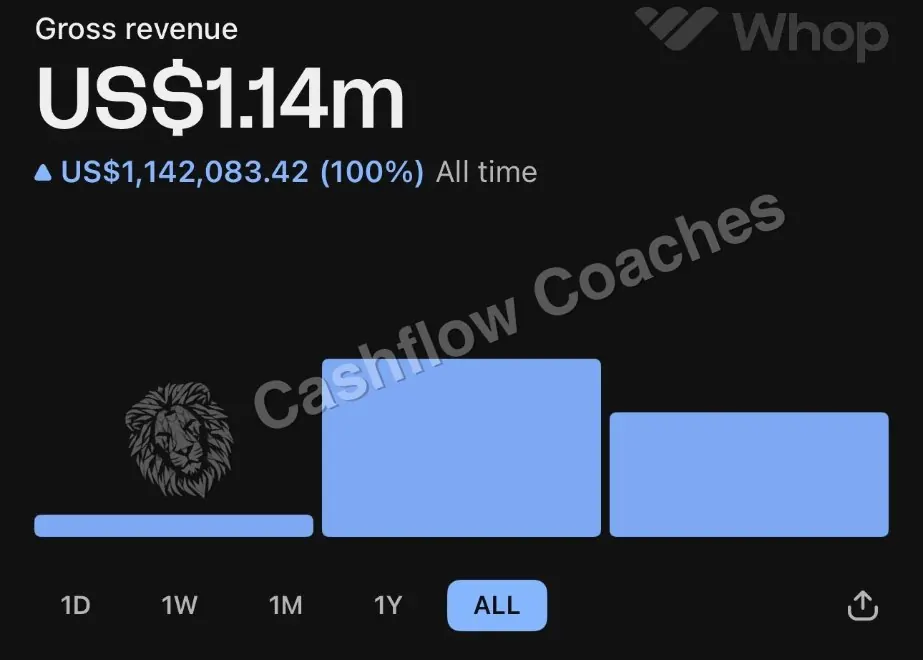 $1.14M all timeOne community business
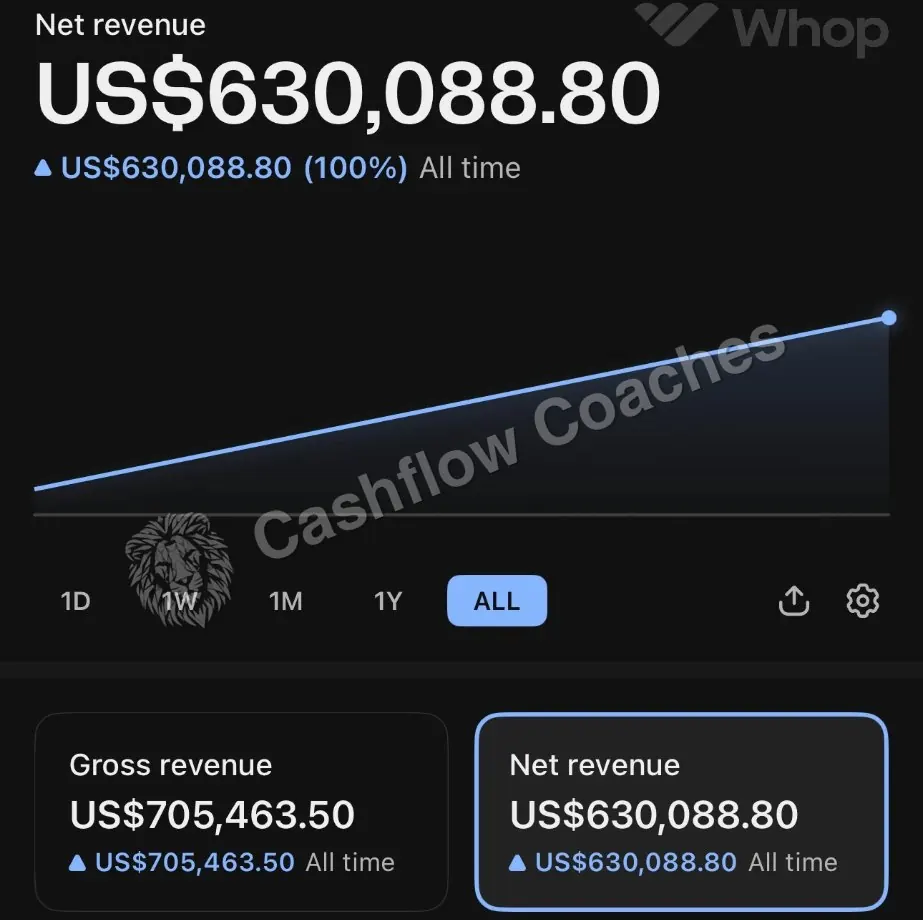 $630,088 net revenueAll time, one offer
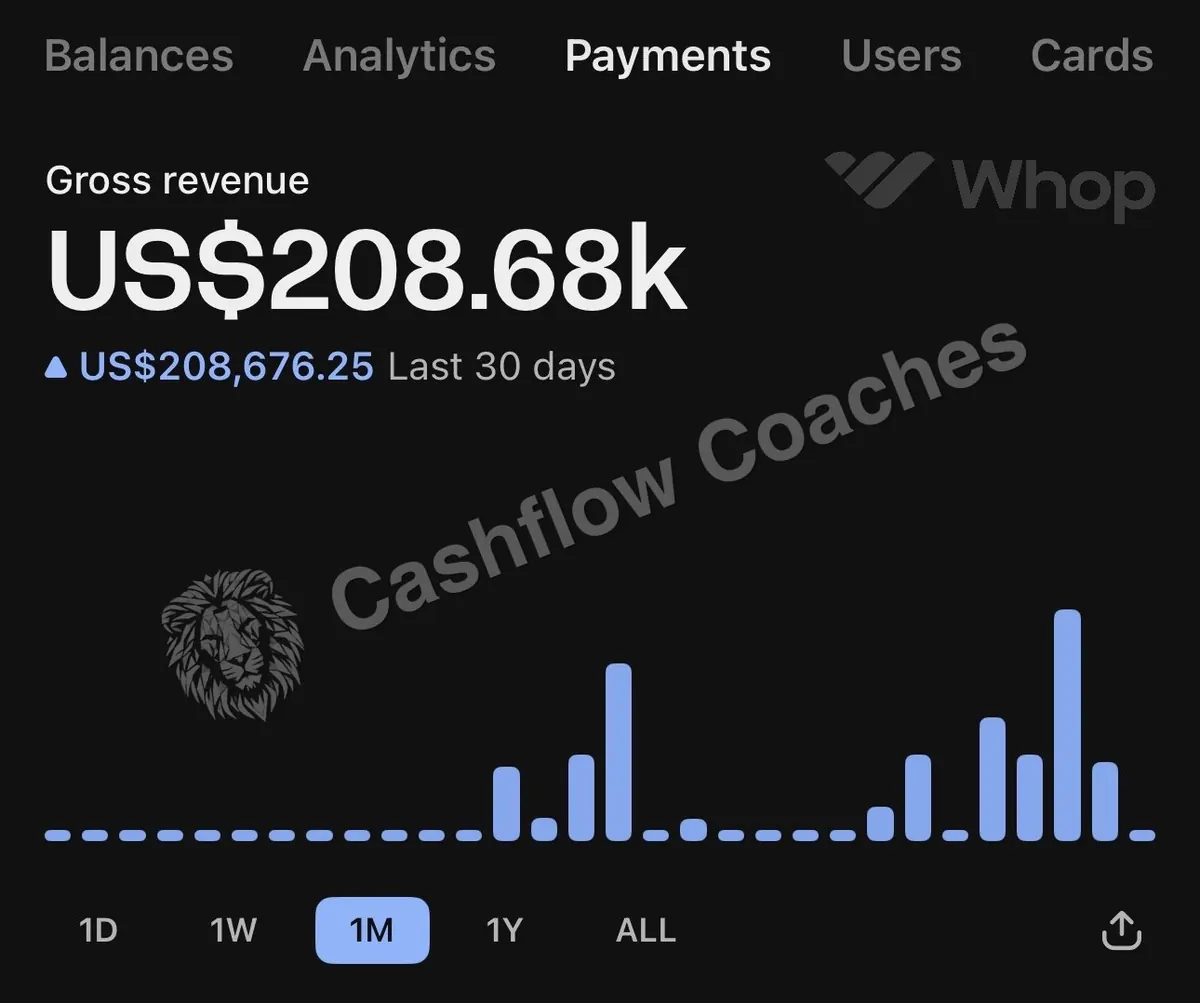 $208.68K in 30 daysOne month of payments
Real screenshots from our clients and our stories. Not typical.
2How do you start a Skool community in 7 steps?
You can have a group live in one afternoon.
- Pick one promise and one model. Write who it is for and what they get in one line. Decide free group, paid group, or free plus a paid tier.
- Start the 14-day trial and pick a plan. Hobby at $9 to test. Pro at $99 once you sell more than about $1,268 a month. See Skool pricing.
- Set the name, URL, logo and cover. Use the name generator below. Skool recommends a 1084 × 576 cover. It also becomes your ad image if Skool promotes you.
- Write the About page in one hour. Who it is for, what is inside, and a 2 minute walkthrough video.
- Set up categories, rules and spam guards. Use the category setup below. Turn on membership questions and lock chat to Level 2.
- Build one start-here course and one weekly call. Add the call to the calendar. Do not build the whole course yet.
- Set pricing, connect payouts, invite 3 people. Pricing lives in SETTINGS. Payouts go to your bank through a Stripe Express link Skool sets up. Then invite three people you know before strangers arrive.
Steps checked against Skool's help center on pricing, payouts, cover size and spam tools, 23 October 2026.
3How do you name a Skool community?
Put the word people search for in the name. Then add who it is for or the result they want. Skool's Discovery search and Google both read the name first, so a clever name nobody searches for costs you members every day.
| Weak name | Strong name | Why |
|---|---|---|
| The Inner Circle | Fitness Inner Circle | Has the word people type |
| Dana's Tribe | Fitness for Busy Moms | Says the topic and who it is for |
| Level Up Academy | The Baby Weight Club | Names the result, not a feeling |
Then claim a custom URL that matches the name, so the link you say out loud is the link people type. Under 30 characters is our rule, so the name reads in one glance on a phone.
4How much does it cost to start a Skool community?
| Cost | Hobby | Pro |
|---|---|---|
| Plan | $9 a month | $99 a month |
| Fee per sale | 10% + 30¢ | 2.9% + 30¢ |
| Free trial | 14 days | 14 days |
| Members Skool finds for you | Growth Boost keeps a share, $3 of a $10 sale in Skool's example | |
Skool community pricing is the small cost. Your time, your ads and the people who take sales calls cost more. The full breakdown is on our Skool pricing page. Prices checked on skool.com/pricing, 23 October 2026.
5Can a coach make money with a Skool community?
Yes. There are three common models, and many groups use more than one.
| Model | How it makes money | Best for |
|---|---|---|
| Free group | Members join free. The most engaged book a call for your high-ticket program. | Coaches with a high-ticket offer and someone to take calls |
| Paid group | A monthly or yearly fee for access | Creators with a big audience or a clear skill to teach |
| Tier ladder | A low tier, a main tier and a top tier in one group | Groups where price is the main reason people cancel |
The average paid membership is about $50 a month, with prices from $1 to thousands. A common tier ladder is $9, $99 and $999 a month.
Past client results. Not typical. Across our builds, the group fee pays for the group and the high-ticket step is where the business grows.
6Which numbers decide how much a Skool group makes?
How many people join, how many pay, what they pay, how long they stay and how many move up.
| Number | Benchmark |
|---|---|
| About page join rate, free group | about 20% of visitors |
| About page join rate, paid group | about 4% of visitors |
| Average paid price | about $50 a month |
| Monthly retention, paid groups | about 80% average, 90%+ for the best, 70% or less for weak groups |
| Churn by how long someone has been a member | about 20% a month in months 1 to 3, 10% or less by day 90, 2% or less from month 6 |
| Members from Skool's Discovery search | over a quarter of all memberships |
| Members from affiliates | 20% to 40% in many groups |
| Free group joiners who buy the next offer | about 10%, by getting a third onto a call and closing 30% to 50% |
| Cost per booked call with a group in front | from about $250 down to about $40 |
A paid member stays 1 ÷ (1 − retention) months on average. At 80% that is 5 months. At 90% it is 10. Same price, twice the value from every member.
7Model your Skool group's revenue
Same group, three retention rates
Your numbers, with only retention changed.
| Retention | Levels off at | Group revenue a month | Member stays |
|---|---|---|---|
| 70% (weak) | 100 | $4,900 | 3.3 months |
| 80% (average) | 150 | $7,350 | 5 months |
| 90% (best groups) | 300 | $14,700 | 10 months |
| Yours | 150 | $7,350 | 5 months |
Want your model sent to you?
Leave your email and we will send you these numbers, plus the one change we would make first.
We only use this to send your numbers and to follow up about your client acquisition. If you add a mobile, we may call or text you about it.8How do you get people to join your Skool community?
Growth is traffic times About page conversion. Skool tracks where each member came from, so you can see which channel works.
| Channel | How it works | Cost |
|---|---|---|
| Your content | Group link in every bio, video description and pinned comment | Your time |
| Meta ads | Ads straight to the About page, or to a free group | Ad spend |
| Skool Network | Discovery search, suggested groups and Skool's own ads (paid groups only) | Growth Boost share on those members |
| Member affiliates | Members share a link and earn a commission | The commission you set |
| Email invites | You email an invite link to your list or clients | Free |
Traffic sources from Skool's help center, checked 23 October 2026. Skool says Growth Boost is not built for high-ticket offers sold on calls.
- Seed it before strangers arrive. Invite three people you know: clients, friends or peers. Skool's data shows groups that reach three members are about twice as likely to succeed.
- Write the About page in an hour. Say who it is for and what they get. Then add a short video that walks through what is inside. One group lifted its About page conversion from about 0.5% to 2.2% by adding one walkthrough video.
- Send traffic every day. Link the group in every video description, bio and pinned comment, and say it out loud in your content. Some owners run Meta ads straight to the About page with no other funnel.
- Let Skool and your members bring people. Skool's Discovery search brings over a quarter of all memberships, and many groups get 20% to 40% of members from affiliates.
- Find your 10 regulars. Aim for about 10 true regulars. It can take a few hundred members to find them. Spend far more time replying and reading than posting, about nine to one.
For clients we run the paid version of this: Meta ads into a free group, a quick win inside, a paid tier or low-ticket offer next, and the most engaged members booked onto calls. That is our done-for-you Skool growth service.
See If You Qualify
Bring your numbers from the revenue model. We'll look at your group and tell you what we'd fix first.
9Which category setup cuts churn?
Skool gives you up to 10 post categories. Most groups use too many. People who feel lost or behind cancel, so we keep it short.
| Category | Setup | Why it keeps members |
|---|---|---|
| Start here | Admins post, newest first | One post that tells a new member their first 3 steps |
| Wins | Members post, newest first | Proof the group works, every day, without you selling |
| Questions | Members post, default sort | Fast answers make people come back |
| Introductions | Members post, newest first | A first post on day one gets people talking |
| Best of | Admins post, top of the month | Your best resources in one place, so the fee feels worth it |
| Announcements | Admins post, newest first | The weekly call and anything that changed |
This is our setup, not a Skool rule.
Which Skool settings do we turn on day one?
| Setting | How we set it | Why |
|---|---|---|
| Membership questions | Three: one multiple choice question that sorts people by where they are, then email, then phone | The first answer tells you who is ready for a call before you say a word |
| Auto DM to new members | On, with one question at the end (below) | A reply starts a real conversation on day one |
| Unlock chat at a level | Level 2 | Stops most spam DMs to your members |
| Meta pixel | On | Lets you retarget About page visitors with ads |
| Zapier | Send question answers to your CRM (Pro plan) | Your setters see who to call first |
Hey #NAME#, welcome to #GROUPNAME#! Message me here if you need help with anything.

Quick question: what are you doing right now to [get the result]?
Swap in your own result. Skool fills in #NAME# and #GROUPNAME# for you. Every reply is a member telling you their problem in their own words.
Category limits, permissions and sort options from Skool's help center, checked 23 October 2026.
10How do you keep paid members from leaving?
- Cut content. One owner cut churn from 30% to 5.2% by deleting lessons members were not using.
- Keep the week simple. Skool cut its own owners' group to one post, one call and one recording a week, and churn came down.
- Offer a yearly plan. About 17% off is the usual discount, and yearly members churn less. One client of ours built $143K a year on annual memberships. Not typical.
- Add a cheaper tier when price is the reason people leave. One group at $29 a month added a $9 tier after cancellations kept naming price, and retention improved.
- Raise prices for new members only. Skool keeps existing members at the price they joined at, which also keeps them from leaving, since rejoining costs more.
- Judge churn after 90 days. New members churn most in months 1 to 3, and churn falls to 10% or less by about day 90. A young group always looks worse than it is.
11How do you move Skool members up to a high-ticket offer?
Four ways to turn members into booked calls:
- A free onboarding call for every new member.
- A short video series inside the group: the opportunity, your story, three beliefs you break, then the invite to a call.
- A weekly live training, where setters message the people who chat.
- Setters who message anyone who posts, comments or likes.
Cost per booked call falls from about $250 to about $40 with a group in front, because the group warms people up like an email list, with far more replies. One of our clients made $30K in ascension on top of a $40K a month community. Not typical. To price your calls, use the client acquisition cost calculator. If you want the group, the calls and the closers built for you, see if you qualify.
12Worked example: Dana's first year
Made-up example. Dana is a fitness coach. Her group gets 600 new free members a month. 5% start paying $49 a month. 80% of paid members stay each month. 1% of new free members buy her $3,000 coaching program on a call.
| Month | Paid members | Group fees that month |
|---|---|---|
| 1 | 30 | $1,470 |
| 3 | 73 | $3,587 |
| 6 | 111 | $5,423 |
| 12 | 140 | $6,845 |
| Year one | levels off near 150 | $60,820 |
Her high-ticket sales: 600 × 1% = 6 a month, × $3,000 = $18,000 a month, or $216,000 in the year. The group fees are about a fifth of her first year. The group's main job is to fill her calendar.
Then Dana cuts half her lessons and offers a yearly plan. Retention goes from 80% to 85%. Nothing else changes.
- Levels off at 150 members
- Members stay 5 months
- Each member worth $245
- Levels off at 200 members
- Members stay 6.7 months
- Each member worth $327
Made-up example. Same traffic, same price.
13Free or paid Skool group: which should you start with?
| Free group | Paid group | |
|---|---|---|
| About page join rate | about 20% | about 4% |
| Money from the group itself | None | Monthly or yearly fees |
| Main job | Fill calls for your high-ticket offer | Pay for itself and grow |
| Best when | You have a high-ticket offer and someone to take calls | You have a big audience and no high-ticket offer yet |
If you are brand new, run the group free for the first month or two. Promise early members free access for life, then charge. You learn what members want before you set a price. For coaches with a high-ticket offer, our default is a free group in front and calls behind it.
14What to do this week
- Run the name generator. Pick a name with your search word in it and claim the matching URL.
- Paste the About page opening it gives you. Record a 2 minute walkthrough video of what is inside.
- Turn on the day-one settings and paste the auto DM.
- Pick one traffic source and post the link every day for 7 days.
- Run the revenue model with your real price and 70% retention, so you plan for the weak case.
Want Claude to write the rest of your launch, from the About page to the first 30 days of posts? Get the Skool community launch plan Claude skill. If members join but nobody buys, find the exact bottleneck in your business.
Find the exact bottleneck in your business
Frequently asked questions
What is a Skool community?
A Skool community is a group hosted on Skool.com that combines a discussion feed, a course classroom, a calendar and a points leaderboard. Coaches use free groups to collect leads and paid groups for recurring revenue.
Who is the CEO of Skool?
Skool is a private company run by its founder. Skool has not published its full list of owners.
Is Skool free?
Joining a free group is free. Starting your own group costs $9 a month on Hobby or $99 a month on Pro after a 14-day free trial. You can still make your group free for members.
How much does it cost to start a Skool community?
$9 a month on Hobby with a 10% plus 30 cent fee per sale, or $99 a month on Pro with 2.9% plus 30 cents. Both start with a 14-day free trial. Checked on skool.com on 23 October 2026.
How do you start a Skool community?
Pick one promise and a free or paid model, start the 14-day trial, set the name, URL and cover, write the About page with a short video, set up categories and spam guards, build one start-here course and a weekly call, then set pricing, connect payouts and invite three people you know.
How do Skool sign up and sign in work?
Create a free account at skool.com, or click Join on any group's About page and sign up there. Starting your own group adds the 14-day trial. To sign in later, use Log in at skool.com or the Skool app with the same email.
How does the Skool app work?
The Skool communities app is a free download on the App Store and Google Play, with the same main tabs as the website: the feed, chat, classroom and calendar. Members can post, watch lessons and manage or cancel a membership from the app.
How do I cancel a Skool membership or delete a community?
To leave a paid group, click your profile picture, then Settings, then the Communities tab, then SETTINGS next to the group and Manage membership. You leave at the end of the billing cycle. Owners cancel the group plan under SETTINGS, then Billing. Cancel any paid plans before you close your account.
What is a good retention rate for a paid Skool group?
Skool owners commonly report about 80% of paid members staying each month on average, 90% or more in the best groups, and 70% or less in weak ones. At 80%, a member stays about 5 months. At 90%, about 10.
How do you name a Skool community?
Put the word people search for first, then who it is for or the result they want, and keep it under 30 characters. Fitness for Busy Moms beats a name like Dana's Tribe. Then claim a custom URL that matches the name.

$10M+ in client results. I run Cashflow Coaches, a done-for-you marketing, sales, operations and tracking agency. We handle everything from paid ads, funnels, webinars, VSLs and Skool communities to setters, closers, ops and tracking. Two-time Skool Games winner.
Bring your group's numbers to the call.
We look at your offer, your group and your numbers, and map the full system for your business. If you're not a fit, we tell you what to fix first.
Book your callKeep reading: Done-for-you Skool growthSkool pricingSkool reviewSkool GamesSkool alternativesCase study: Skool community revenueVSL funnelsCase study: Minje KimCase study: paid communityClient acquisition cost calculatorFind your bottleneck (quiz)About AnshjeetHome
Dana is a made-up example. Skool facts were checked on skool.com and help.skool.com on 23 October 2026 and can change. Her numbers show how the maths works and are not a client result. Benchmarks on this page are what other operators and Skool owners report. They are not Cashflow Coaches results and not a promise. Every real result on this page is a past result from a specific client. None of them is typical. Cashflow Coaches is not part of, or endorsed by, Skool.