
1Which funnel is best? The 5 sales funnel types compared
It depends on your price, your traffic and your team. Operators commonly sell under about $300 on a sales page, up to about $1,000 with a video and checkout, and above $1,000 on a call. The full ladder: DMs and a text page for free and $7 to $29 items, a video page next, a live webinar for about $300 to $3,000, then a multi-day challenge or a call for $15,000 and up. The bigger the price, the more time a buyer needs with you before they trust you. No closer means no call funnel yet. All five share the same sales funnel stages: attention, a lead, a call or checkout, then the sale.
| Funnel | Price it sells | Best when | Team you need | Number to watch |
|---|---|---|---|---|
| Webinar | About $1,000 and up | Buyers need teaching first | A presenter, closers above a few thousand | Cost per sign-up, $10 to $20 |
| VSL | $1,000 and up, on a call | Buyers know the problem | Setters and a closer | Cost per booked call, $100 to $300 |
| Application | $5,000 and up | Warm traffic, or too many no-fit calls | A closer | Form and calendar on one page |
| Skool community | Free, then a paid tier and calls | You have content and show up daily | Someone to run the group, closers | About 10% of joiners buy the next offer |
| Low-ticket ascension | $7 to $300 up front | Lots of traffic, a high ticket offer behind it | Email, setters calling buyers | Buyers move up over 6 to 9 months |
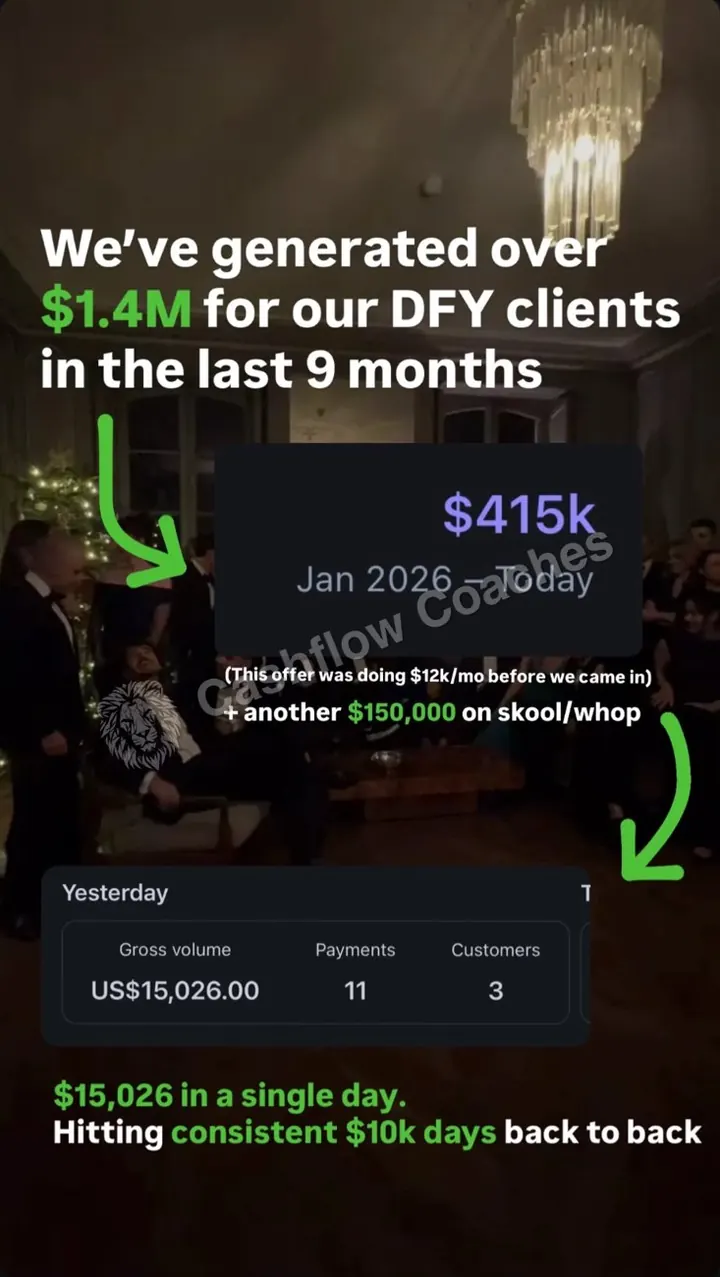 $1.4M for our clientsIn 9 months
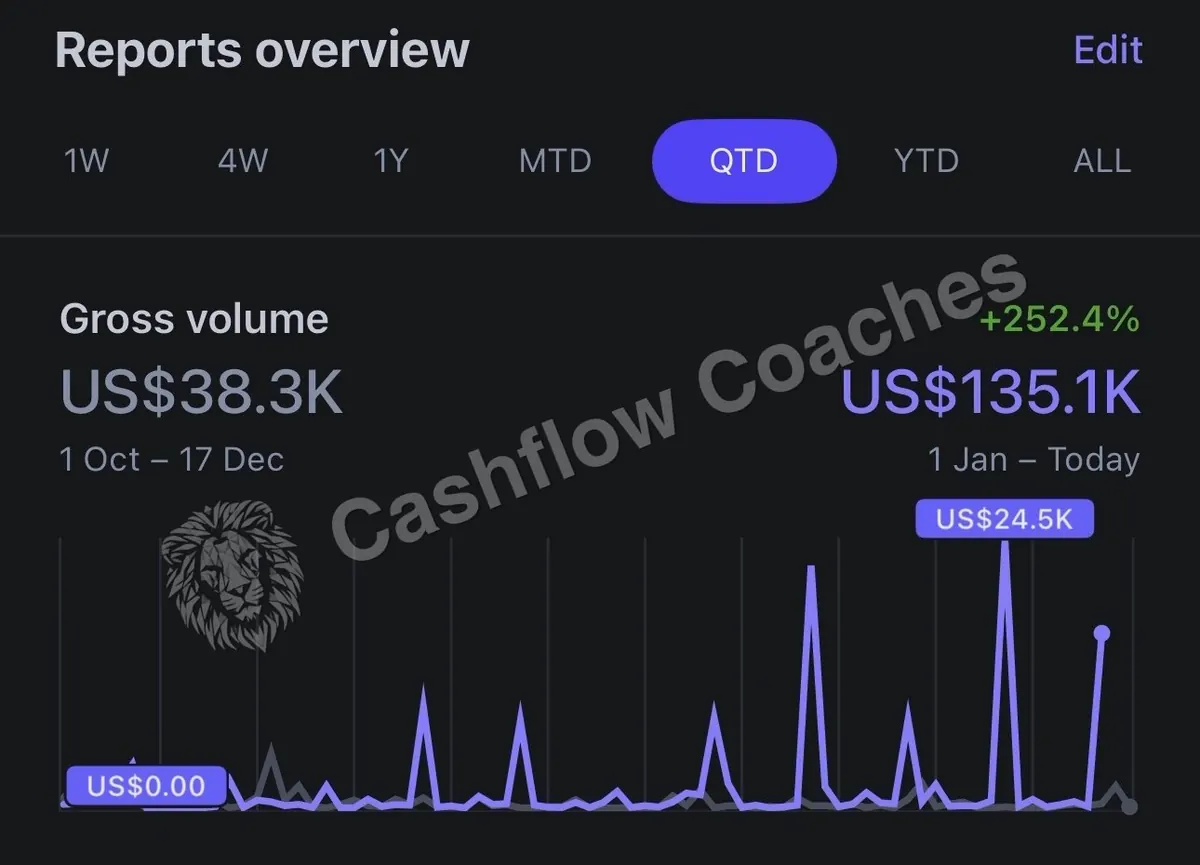 $38.3K to $135.1KOne quarter to the next, +252%
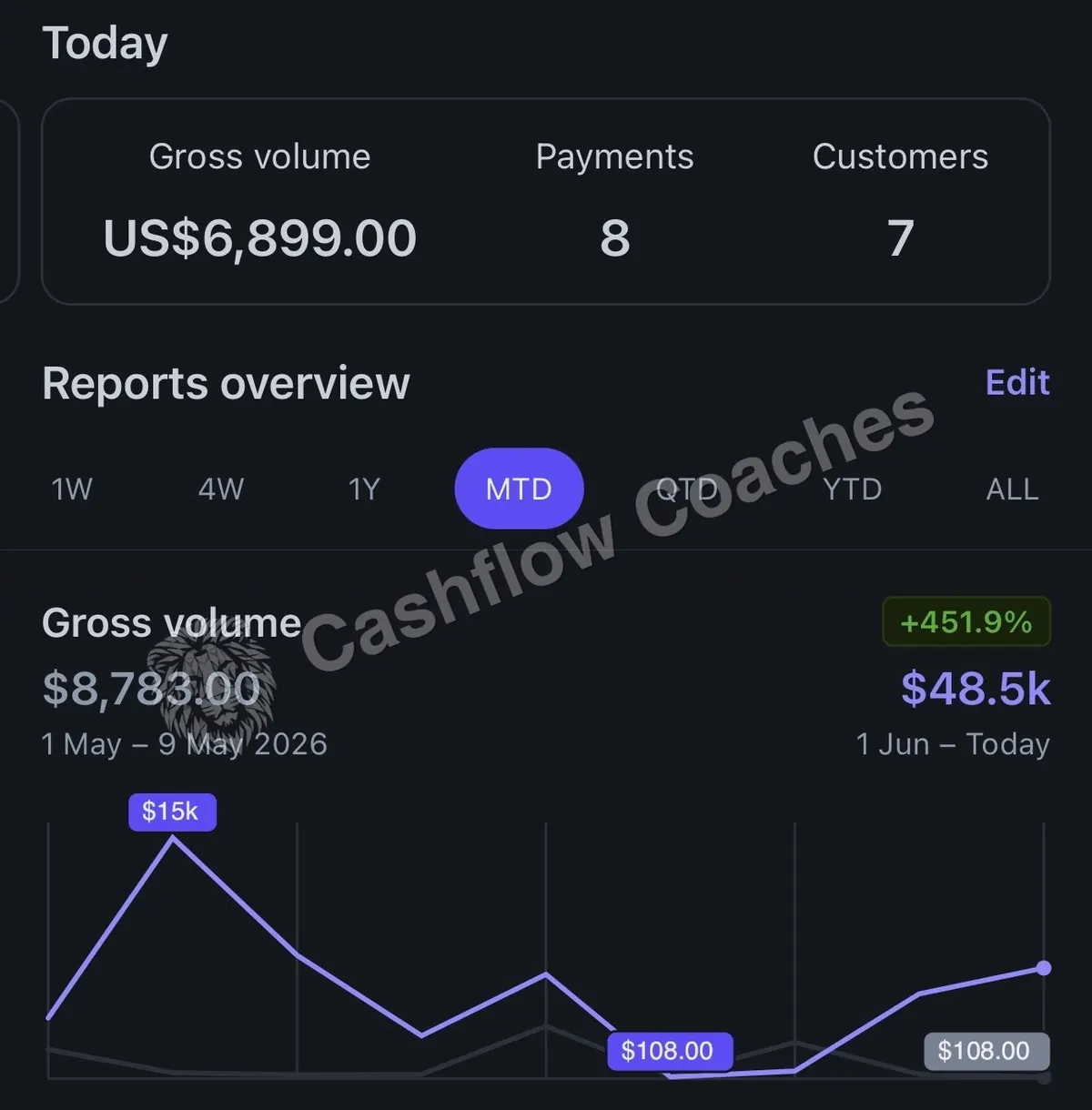 $8,783 to $48.5KMonth on month, +451.9%
Real screenshots from our clients and our stories. Not typical.
2Your funnel plan
Change your answers in the box at the top.
Numbers to hit with your first funnel
| Step | Benchmark |
|---|
Pages to build, in order
Below about $6,000 to $10,000 a month, skip cold ads and start on warm traffic.
3Webinar funnel
How it works. You teach a free training at a set time for about an hour, then make an offer. Everyone who doesn't buy gets the replay and a call.
The webinar funnel, page by page
- Sign-up page. A headline with the result and the date, a short video with a curiosity thumbnail, a countdown and one opt-in box. Two or three scrolls at most.
- Confirmation page. One job: get the event into their calendar. Show the time in their time zone and give one reason they must be live, like a bonus only shown live.
- Reminders. Email and text the day before, the morning of, 1 hour before and when you go live.
- Live training. Teach the 3 beliefs a buyer needs to say yes, show proof for each, then make one offer with one next step.
- Booking page. Short form and calendar on the same page. Above a few thousand dollars, the offer is a call, not a checkout.
- Cleanup. A 10-day cleanup: setters call attendees who did not book first, then sign-ups who never showed, and send the replay.
- Teaches hundreds of people at once
- Calls booked after a webinar commonly show at 70%+ and close at 35%+
- Cash comes back in about 10 days
- Someone has to present live
- About 70% of sign-ups miss it, so you need replays
- It needs a real test budget
Skip it when nobody can present for an hour, or you can't fund about $5,000 to $7,500 per test webinar.
| Webinar number | Benchmark |
|---|---|
| Cost per sign-up | $10 to $15 great, $15 to $20 average, above $30 rarely works |
| Sign-up page opt-in | 20% to 50% |
| Show up live (cold) | 30% great, about 20% average |
| Attendees who book a call | about 30% |
| Return on ad spend when it works | 3x to 5x |
Ours: Brecken Troike's cold webinar returned 36.96x ($326,552 on $8,836). The 60-day launch above ran on cold webinars too. Not typical. Full guide: webinar funnel playbook.
4VSL funnel
How it works. A short video does the first half of the sales call. People who fit apply and pick a time. Setters call everyone who opted in but didn't book.
The VSL funnel, page by page
- Opt-in. Name, email and phone. This is what lets setters call the people who never book. Some dress the opt-in up as a short quiz ("see which plan fits you"). It collects richer answers and lets you send only qualified leads back to the ad platform as conversions. One reported quiz opt-in in health ran at about $10 a lead.
- Video page. Three things only: a headline, the video, then the form and calendar under it. The video sells the call; the investment is covered on the call.
- The video, in order. What I can do for you. Why I can do it. Why it matters now. What they get. The top objections. Who it is not for. How to book. One operator built his from the most asked sales call questions, most common first, and cut his cost per qualified call to under half the usual.
- Good-fit thank-you page. Tell them to open the invite and accept it. Add one short video on why to show up. Report the ad conversion here and nowhere else.
- Poor-fit page. A cheap offer or a free resource. Send poor fits to a look-alike page that reports no conversion, so the ads stop hunting for more of them.
Headline: For [who] at [their level]: how to [result] in [time frame] without [the thing they hate]
Under the headline: Watch the [X] minute video. If it fits, pick a time below.
Button: See if you qualify
Under the form: Calls are with [name or team]. We cover the investment on the call. This is for people ready to invest in [result] now.
- Runs every day on its own
- Easy to test one step at a time
- In one split test, adding an opt-in took return from 2.7x to 10x
- You need a closer
- Only about 10% of leads book on their own, so you need setters
- No-shows eat your calendar
Skip it when nobody can take calls within 3 days, or your price is under about $1,000.
| VSL number | Benchmark |
|---|---|
| Clicks that become booked calls | 3% to 5% |
| Cost per booked call | $100 to $300 |
| Play rate on the video | 30% and up |
| Video length | 2 to 15 minutes for business owners; 5 to 10 to start for consumers, 60 at most |
| Show rate | 60%+ target, plan on 40% to 50% |
| Close rate, one call | about 25% |
Ours: one client's booking flow booked 664 sales calls in three months. Not typical. Full guides: VSL funnel and high ticket funnel.
5Application funnel
How it works. A few questions come before the video and sort buyers. Good fits book. Poor fits get emails, a free resource and still a setter call, because people round their answers up.
In the strongest version the ad does the selling. It says everything a buyer needs to book, offer first and proof next, and links straight to the form. Buyers with money book on the spot instead of sitting through a long video. It only works with a clear offer and a strong ad, which is why it forces you to fix both.
0 to 5 seconds: who it is for and the result.
"[Who] doing [their level]: we help you [result] in [time frame]."

5 to 30 seconds: the offer, plainly.
What they get, how it works, how long it takes. No price: that is for the call.

30 to 60 seconds: proof.
Two client results with numbers, with their permission.

60 to 75 seconds: who it is not for.
"If you are [poor fit], this is not for you."

The end: one step.
"If that is all you need to know, tap below and apply. It takes two minutes."

Content-led version: teach one useful thing first, then turn to the offer at about 30 seconds.
The application funnel, page by page
- Form page. Name, email and phone first, then the questions below.
- Calendar, same page. Good fits pick a time without a new page loading.
- Thank-you page. The sales video lives here now, plus the steps to accept the calendar invite.
- Poor-fit page. A free resource or a small offer. Setters still call.
1. What do you sell, and who to? (typed)
2. What is your business making a month right now? (under $10K / $10K to $20K / $20K to $50K / $50K+)
3. What have you already tried to fix this? (typed)
4. Have you bought a coaching program or course before? (yes / no)
5. If it is a fit, can you invest $[price] in the next 30 days? (yes / with a payment plan / no)
6. Why now? (typed)
Question 4 does the most work. In one funnel with over 4,000 applications, people who had never tried an online business were about 3x more likely to no-show and not buy. Stated income predicted nothing. Ask about past behaviour, not hopes. Get the application funnel builder skill to write the form, the routing and the thank-you page for your offer.
- In one funnel, moving the video after the form cut cost per qualified call from about $550 to about $100
- Fewer no-fit calls
- Fast to build
- Less teaching before the call
- Fewer leads
- A slow form can drop completion to 30%
Skip it when buyers don't know they have the problem yet. Teach them first with a webinar.
| Application number | Benchmark |
|---|---|
| Typed questions | about 3 |
| Form and calendar on separate pages | about half of qualified people never book, against a 16% drop on one page |
| Video on the thank-you page | one raised show rate by 19% |
| Booking window | 72 hours at most |
Our own form and its questions are in the application funnel guide.
6Skool community funnel
How it works. A free group warms people up like an email list, but they talk back. The serious ones join a paid tier or book a call for your main offer.
Four ways the group books calls
- A welcome call for every new member. Short, helpful, and it ends with "want help doing this?"
- A 5-video series pinned in the group. The opportunity, your story, three belief breakers, then the call to book. It is a sales video in five parts.
- A weekly live call. Teach one thing. Setters message the people who joined in.
- Setters on every like, comment and post. Run all four.
Keep the group light. One large community cut its own group to one post, one call and one recording a week, and fewer members cancelled.
- Cost per call can drop from about $250 to about $40
- Recurring revenue from the paid tier
- Members sell other members
- Needs daily posts and replies
- Slower to first cash
- Members cancel, so you keep filling it
Skip it when you won't show up in the group, or you have nothing to sell after it.
| Community number | Benchmark |
|---|---|
| About page visitors who join | about 20% for free groups, about 4% for paid |
| Joiners who buy the next offer | about 10%: a third get on a call, 30% to 50% of those close |
| Average paid membership | about $50 a month |
| Members who stay each month | about 80% on average, 90%+ for the best |
Ours: John Duda's funding education offer grew a free group to 23,403 members, with 659 paying $697 a year, and collected $415K in 2026. We have scaled 350+ Skool communities. Not typical. Full guide: Skool community growth.
7Low-ticket ascension funnel
How it works. You sell something cheap, so a lead becomes a buyer. The small sale pays back part of the ads. The money comes when buyers move up to your main offer.
The low-ticket funnel, page by page
- Sales page. One product that solves one small, urgent problem, $7 to $47.
- Checkout with an add-on. A one-click extra, like templates or a recording, on the checkout itself.
- One upsell page. The next logical step at $97 to $300.
- Buyer emails. If the product is a book or course, send one email per chapter with the main idea, so buyers get the win without finishing it.
- Setter calls to buyers. Book the ones who engage onto a call for your main offer. Buyer-only ads, setters and chapter emails shorten a 3-month path to high ticket.
- A buyer is worth more than a lead
- Ads can partly pay for themselves
- Builds a list of people who pay
- $10K a month at $27 needs about 371 sales
- Buyers commonly take 6 to 9 months to move up
- Cash is slow
Skip it when you need cash this month, or there is no high ticket offer behind it.
| Low-ticket number | Benchmark |
|---|---|
| Traffic for $10K a month at $27 | about 18,550 clicks at a 2% sale rate |
| Return at launch vs a year later | 0.4x at launch, about 8x a year later in one funnel |
| Time from a book sale to high ticket | about 3 months on average |
Ours: a low-ticket front end, an ascension path and a qualified booking flow took one creator with 1.1M followers from lumpy $15K months to $40K, $75K, then $95K cash. Not typical.
8Can you combine funnels?
Yes, but later than most people think. Many businesses scale on one funnel for a long time. One single VSL funnel produced $72M before its owners launched a second one. Add a second funnel when the first stops scaling, not when you get bored of it.
There are two kinds of ceiling. A message ceiling: your ads only speak to a small slice of buyers. The fix is new hooks in the same funnel. A market ceiling: you have reached most buyers who want this now. The fix is a second funnel for the people the first one misses.
Once you add more, there are two ways to run them.
| Route | How it runs | Fits |
|---|---|---|
| One funnel, deeper | More spend and new hooks on the funnel that works | A team that can keep one funnel full |
| A portfolio of small funnels | Several funnels at about $100 to $400 a day each: free training, VSL, audit, low ticket, webinar, challenge. Every one asks for a phone number and setters call them all. | A setter team and an ad budget of a few thousand a day |
Funnels in a portfolio feed each other, so don't judge each one on its own last-click numbers. One operator reports that only 50% to 60% of calls come from the first click. Some run a direct VSL and an application funnel to about $1M a month before they add a webinar.
The common pairs: webinar into VSL (retarget people who did not buy with a different funnel every few weeks), low ticket into a call, and community into a call. For one real estate coach, a members club and the path into it led to £436K collected on Stripe. Not typical. Want us to tell you which pair fits your numbers? See if you qualify.
9Worked example: Priya picks her funnel
Priya is a made-up health coach. She sells a $3,000 program. She has 6,000 followers, $4,000 a month for ads, and takes her own calls.
| Question | Priya's answer | What it rules out |
|---|---|---|
| Price | $3,000 | Low ticket as her main funnel |
| Audience | 6,000 followers | A community as her only source, for now |
| Ad budget | $4,000 a month | A weekly webinar test at $5,000 to $7,500 each |
| Calls | She takes them | Nothing. A call funnel works |
So she starts with an application funnel, then adds a VSL funnel and cold ads once it holds for a month.
10What to do this week
- Answer the 5 questions in the chooser. Copy your plan.
- Decide who takes the calls. If nobody, sort that before any call funnel.
- Write the one promise your ad and your first page will both make.
- Build only the pages on your plan's list, in that order.
- After two weeks of traffic, check each number against its benchmark.
Already running a funnel that has stalled? Don't build a new one yet. First find the exact bottleneck in your business.
Find the exact bottleneck in your business
Frequently asked questions
What are the types of funnels?
For coaches and experts there are five main types: the webinar funnel, the VSL funnel, the application funnel, the Skool community funnel and the low-ticket ascension funnel. They differ in the price they can sell, the traffic they need and whether someone has to take sales calls.
What is the best sales funnel for coaches?
It depends on your price, your audience and your team. Under about $1,000, sell without a call. Above it, with someone to take calls, use a VSL or webinar funnel on cold ads, a community if you already have an audience, or an application funnel if your ad budget is small.
What is the best high ticket sales funnel?
A call funnel. Operators commonly sell anything above about $1,000 on a sales call. That means a VSL funnel, a webinar that books calls, or an application funnel. Pick by whether your buyers need teaching first and how much traffic you can buy.
What is the difference between a VSL funnel and an application funnel?
The order. A VSL funnel shows a sales video first, then a form and a calendar. An application funnel shows a short form first and moves the video to the thank-you page. The application version gets fewer leads but often cheaper qualified calls.
VSL vs webinar: which is better?
Neither wins every time. A webinar runs about an hour on a schedule and suits buyers who need teaching. A VSL is minutes long, runs every day and suits buyers who already know their problem. Many coaches run both.
Do you need a sales team for a funnel?
Not below about $1,000, where people buy on a page. Above that, someone has to take the calls. Operators commonly report only about 10% of leads book on their own, so setters who call the rest matter as much as the funnel.
What is a tripwire or SLO funnel?
Both are names for a low-ticket funnel. You sell something cheap, often $7 to $300, so the sale pays back part of the ads. It is a self-liquidating offer, or SLO. The profit comes later, when buyers move up to a bigger offer.
What is the best funnel software?
There is no single best sales funnel builder. The software hosts your pages, and it matters less than your offer, follow-up and sales team. Pick one your team can run. Our guide to the best funnel builders and our ClickFunnels vs GoHighLevel page compare the common choices.

$10M+ in client results. I run Cashflow Coaches, a done-for-you marketing, sales, operations and tracking agency. We handle everything from paid ads, funnels, webinars, VSLs and Skool communities to setters, closers, ops and tracking. Two-time Skool Games winner.
Bring your chooser answer to the call.
We map the full system around your first funnel. If you're not a fit, we tell you what to fix first.
Book your callKeep reading: Coaching funnelSales funnelHigh ticket funnelApplication funnelDone-for-you funnelSales funnel buildersFind your bottleneck (quiz)
Priya is a made-up example and her plan is not a client result. Benchmarks on this page are what other operators commonly report. They are not Cashflow Coaches results and not a promise. Every real result on this page is a past result from a specific client. None of them is typical.