
1What is a sales process?
It is the path every buyer takes with you, written down so your team runs it the same way each time. Each step has one owner and one number to watch. Compare each step to a target and fix the one that is easiest to double.
The process is the steps. The methodology is how you talk inside a step, like the questions on a sales call.
The steps here are for businesses that sell on a call: coaches, consultants, agencies and high ticket B2B services, not software teams with long deal cycles.
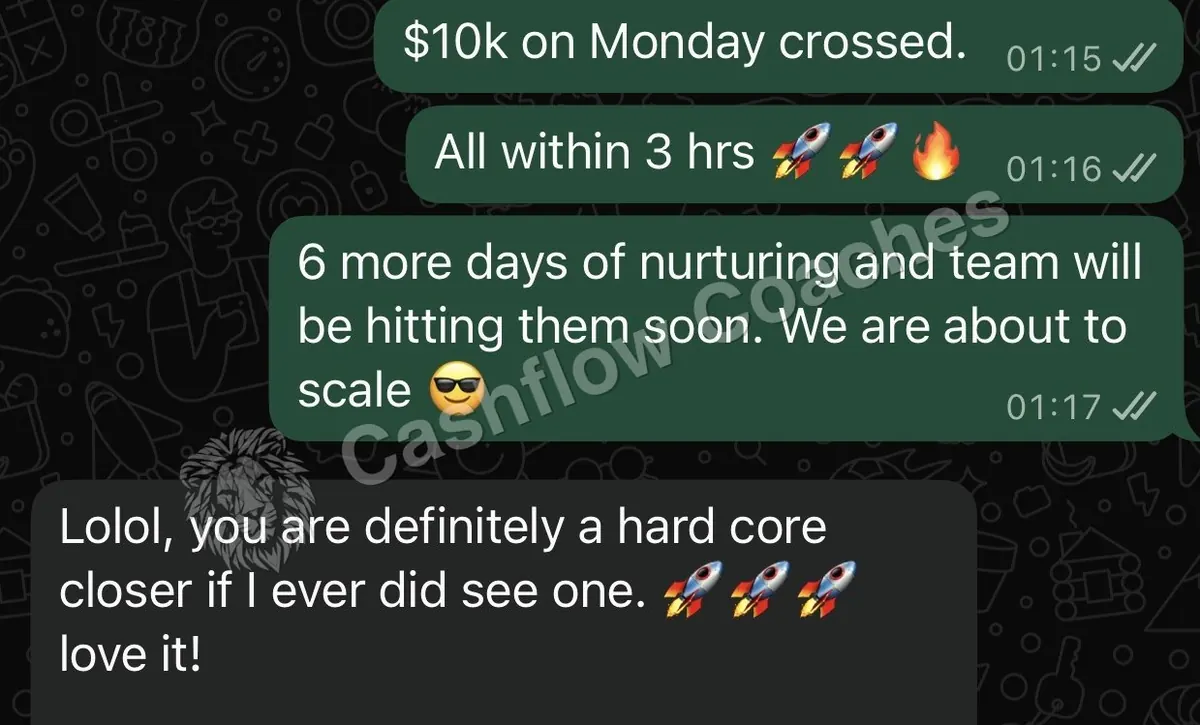 $10K in 3 hoursA client's closer, Monday morning
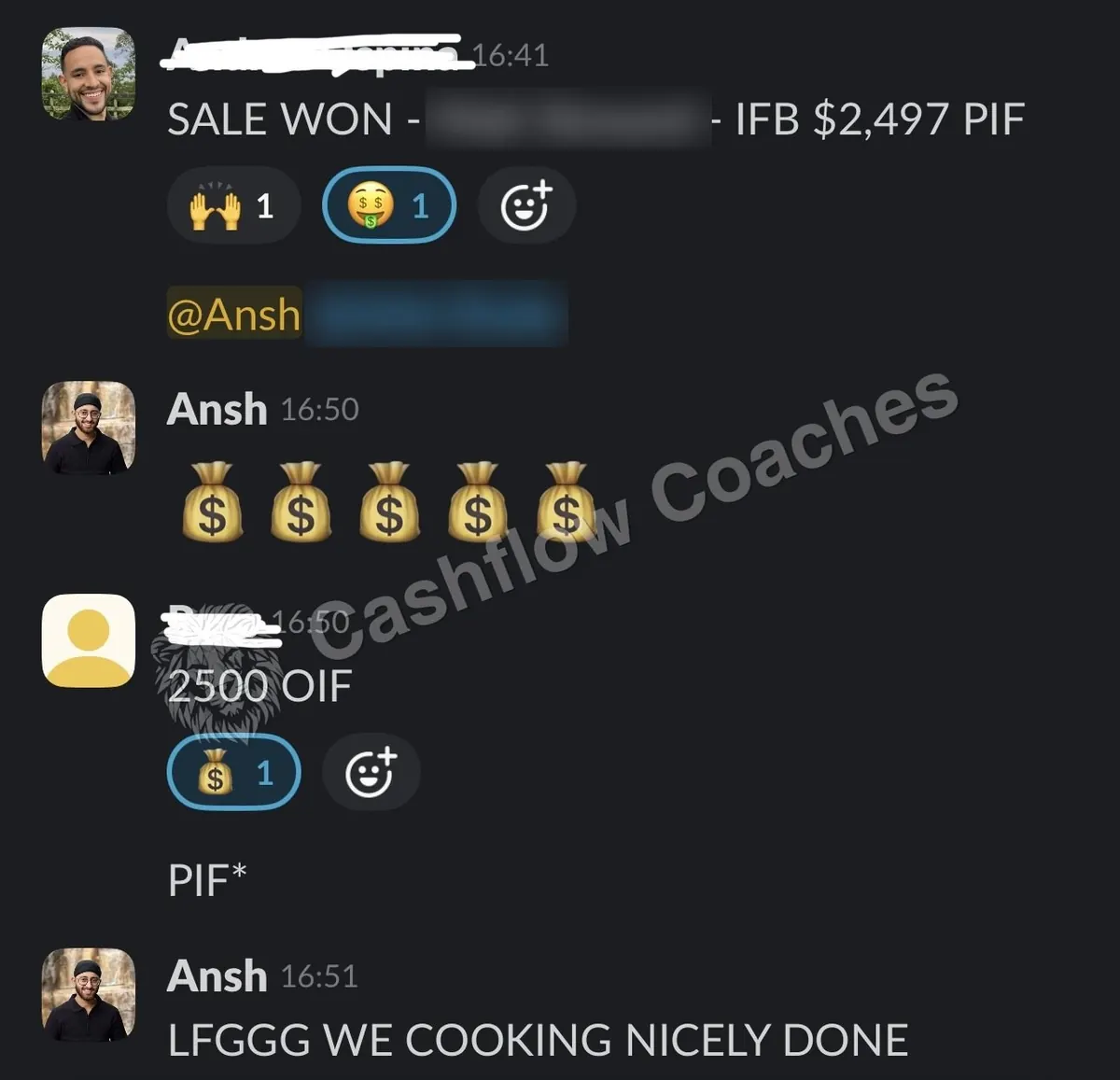 $2,497 paid in full"Sale won" in the team channel
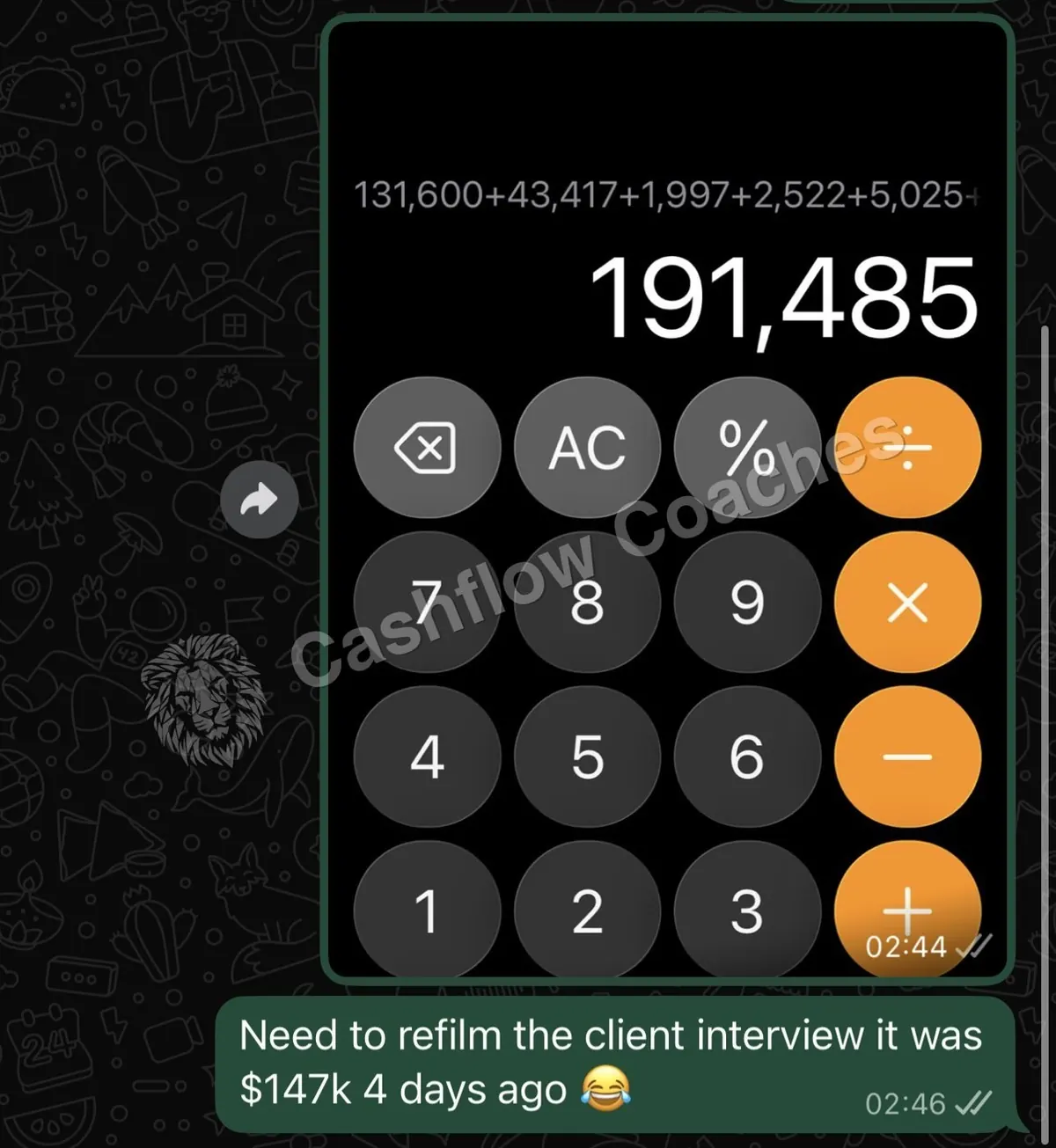 $191,485 for the month$147K of it in 4 days
Real screenshots from our clients and our stories. Not typical.
2What are the 7 stages of the sales process?
The 7 steps in order, each with one owner.
Capture the lead
Ad, video, webinar or post gets a name, email and phone
Respond fast
Text in minutes, call in 5 to 7
Qualify
A few questions on the form and the first call
Book the call
Application and calendar in one flow, today or tomorrow
Get them to show
Confirmations, reminders and proof
Run the sales call
Find the gap, present the offer, ask for a decision
Follow up to close
Set touches over two weeks, then a monthly win-back
Paid client
Hand over to onboarding the same day
For five steps instead of seven, merge them into lead, contact and qualify, book and show, sales call, and follow-up.
3What should each step hit?
Not sure which step is yours? find the exact bottleneck in your business.
| Step | Number to watch | Target |
|---|---|---|
| 1. Capture | Cost per booked call | $100 to $300; up to $1,000 for long cycles or very big tickets |
| 2. Respond | Minutes to first contact | Text in 2 to 3, call in 5 to 7 |
| 3. Qualify | Questions on the form | About 3 typed questions |
| 4. Book | Leads who book | Only about 10% book on their own; setters pull the rest through |
| 5. Show | Show rate | 60%+ target; plan on 40% to 50% while testing |
| 6. Sales call | Close rate, one-call close | 25% target; 20% to 25% usual; 30%+ above average |
| 7. Follow-up | Close rate, two-call close | 35% or more |
1. Capture the lead
Get a name, email and phone first, so every lead can get a text and a call even if they never finish the video.
2. Respond fast
Interest is highest in the first minutes. See speed to lead for the setup.
3. Qualify
Ask questions that predict behavior. One operator found stated income predicted nothing across 4,000+ applications, while "tried an online business before?" did.
4. Book the call
Put the application and calendar in one flow. Split onto two pages, and about half of qualified applicants never book. Keep the booking window under about 72 hours.
5. Get them to show
Confirm by phone and send reminders and proof. See sales call show rate.
6. Run the sales call
What buyers watch and read before the call moves close rate more than what the closer says. On the call, name the gap and ask for a decision. See high ticket sales.
7. Follow up to close
Run 8+ texts and 8+ calls over two weeks for warm leads who have not decided. No-shows get a call within minutes and a new time.
Check open deals every morning.
| Sign | The move |
|---|---|
| No contact for 7 days | Send something tied to their last call: a case study from someone like them. Never "just checking in" |
| Payment link sent, no reply in 3 days | Call, do not email. Use the script below |
| Rescheduled twice | Ask straight out if it is still a priority. Two reschedules is a pattern |
| Silent for 14 days | Close the file and say so. People often reply to that message |
Hey [first name], it's [name]. When I send a link and don't hear back, it's usually one of three things: the money, the timing, or whether it's the right fit. Which one is it for you?
Hi [first name], I know you've got a lot on. I'm going to close your file so I'm not filling your phone. If the timing gets better, reply here and I'll pick it straight back up.
4Sales process calculator: find your leakiest stage
Put in one month and set a target for each stage. Fix the stage worth the most at target first.
| Stage | Yours | Target | Revenue at target |
|---|---|---|---|
| Contact | 40% | $54,000 | |
| Booking | 30% | $42,000 | |
| Show | 50% | $43,200 | |
| Close | 20% | $45,000 |
Leakiest stage: contact.
Contact and booking have no clean shared benchmark. Use your best week in the last three months as the target. To run this math on your own CRM export every week, get the funnel math diagnostic skill.
5One-call or two-call close: which makes more money?
A two-call close books a short first call, then a second call to sell. It closes a higher share of the people it reaches. But every extra step loses people: some never book call two, and some of those never show.
So call two has to close a lot better just to break even. No two-call data yet? Start with 65% booking call two and 60% of those showing.
Break-even = one-call close ÷ (book call two × show call two).
Most coaches find one call wins once the pre-call content is doing the teaching. Deals needing 3 or 4 calls are fixed with more teaching before the first call, not more calls. A two-call close earns its place on big tickets, where call two closes far above the break-even.
6Sales process steps with examples: webinar, VSL and B2B
Made-up models, built on the benchmarks above.
Webinar funnel
| Step | The maths | Result |
|---|---|---|
| Live attendees | Example | 400 |
| Book a call | 400 × 30% | 120 |
| Show up | 120 × 70% | 84 |
| Close | 84 × 35% | about 29 |
Webinar-booked calls show and close higher, because the webinar already did the teaching. See our cold webinar case study. Not typical.
VSL funnel
| Step | The maths | Result |
|---|---|---|
| Ad spend | Example | $10,000 |
| Booked calls | $10,000 ÷ $200 per call | 50 |
| Show up | 50 × 60% | 30 |
| Close at $5,000 | 30 × 25% | 7.5 clients, $37,500 |
B2B services, worked backward
Work backward from the clients you need. Goal: 2 new clients a month at $15,000.
| Step | The maths | You need |
|---|---|---|
| Clients | Goal | 2 |
| Calls held | 2 ÷ 25% close | 8 |
| Calls booked | 8 ÷ 60% show | about 14 |
One of our B2B clients booked calls at $66 each on a $15,000 offer. At that cost, 14 calls is under $1,000 of ads. Not typical.
See If You Qualify
Bring your numbers from the calculator. We'll tell you which stage we'd fix first.
7Who owns each step?
| Step | Owner | Hands off when |
|---|---|---|
| Capture | Marketing | The form is submitted |
| Respond, qualify, book | Setter (AI can send the first text) | A qualified call is on the calendar |
| Show | Setter plus reminders | The lead joins the call |
| Sales call and follow-up | Closer | Payment is in |
| Onboarding | Delivery team | The client has their first win |
Show rate and close rate are shared. Marketing sets what buyers believe before the call. Sales sets what happens on it. Give both teams the same weekly numbers so neither can blame the other.
Once you have two or more closers, someone has to run them. Our daily routine: break down one won call and one lost call, go through yesterday's leads and what happened to each, and role-play the objection that came up most. Then tell marketing what buyers said, in their words. "The leads are bad" is not feedback.
Plan about two setters per closer. Hiring guides: appointment setters and high ticket closers. Scripts for the setter step: appointment setter script.
8Which sales framework fits which step?
Frameworks are methods for the talking parts of the process. They sit inside steps 3 and 6.
| Framework | What it checks | Best for |
|---|---|---|
| BANT | Budget, authority, need, timeline | Quick qualifying on the first call |
| MEDDIC | Metrics, economic buyer, decision criteria, decision process, pain, champion | B2B deals with several decision makers |
| Consultative | Where they are, where they want to be, what is in the way | Coaching and service sales calls |
Most coaches and consultants need the third one. Use the MEDDIC sales process when a committee signs off.
9Worked example: Ava finds her leak
Made-up example. Ava is a consultant with a $6,000 offer. Last month: 500 leads, 60 calls booked, 30 showed, 6 clients. $36,000.
She thought her closer was the problem.
| If this stage hits target | Change | Revenue |
|---|---|---|
| Contact | 40% to 60% | $54,000 |
| Close | 20% to 25% | $45,000 |
| Show | 50% to 60% | $43,200 |
| Booking | 30% to 35% | $42,000 |
Her leads waited until the next morning. She adds a text at 0 minutes and a call within 7. Fixing contact is worth $9,000 a month more than lifting close rate. If your process already works and you want it run for you, see if you qualify.
10How do you improve your sales process this week?
- Pull last month's counts: leads, reached, booked, showed, closed.
- Put them in the calculator. Set a target for each stage.
- Pick the one stage worth the most. Ignore the rest for 30 days.
- Run the one-call vs two-call numbers if you sell on two calls.
- Print the flowchart. Write a name next to every box.
- Judge the change over a month, not a week. Small samples swing a lot.
Find the exact bottleneck in your business
Frequently asked questions
What are the basic steps of the sales process?
For a business that sells on a call: capture the lead, respond fast, qualify, book the call, get them to show, run the sales call, and follow up to close. Each step has one owner and one number to watch.
What are the 5 steps of the sales process?
A five-step version merges the seven: lead, contact and qualify, book and show, sales call, follow-up. The work is the same. There are just fewer boxes.
What are the 4 stages of the sales cycle?
A simple four-stage cycle is: get the lead, start the conversation, hold the sales call, and close. The seven steps on this page split those stages so you can measure each one.
What is a B2B sales cycle?
It is the time and steps from first contact to signed deal when you sell to a business. It is often longer than selling to a person, because more people sign off. Operators selling mid-ticket offers on cold traffic commonly report a 2 to 3 week cycle with 2 or 3 calls.
What is the difference between a sales process and a sales methodology?
The process is the steps buyers move through. The methodology is how you talk inside a step, such as the questions on a sales call. BANT and MEDDIC are methodologies.
How do you find the weak step in a sales process?
Compare each step to a target and fix the one that is easiest to double. The calculator on this page shows what each stage is worth at your target.
What is a good close rate on sales calls?
Operators commonly report 25% as the target on a one-call close, 20% to 25% as usual, and 35% or more on a two-call close.
What is a sales process flowchart?
A picture of each step in order, with who owns it and where people drop out. You can download the one on this page as an SVG file and edit it.

$10M+ in client results. I run Cashflow Coaches, a done-for-you marketing, sales, operations and tracking agency. We handle everything from paid ads, funnels, webinars, VSLs and Skool communities to setters, closers, ops and tracking. Two-time Skool Games winner.
Bring your stage numbers to the call.
We look at your calculator numbers and name the leakiest stage. If you're not a fit, we tell you what to fix first.
Book your callKeep reading: Speed to leadSales call show rateShow rate calculatorHigh ticket salesHow to hire a high ticket closerClient acquisition systemFind your bottleneck (quiz)
Ava is a made-up example. Her numbers and the three model funnels show how the maths works and are not client results. Benchmarks on this page are what other operators report. They are not Cashflow Coaches results and not a promise. Every real result on this page is a past result from a specific client. None of them is typical.