
1What is Skool, in one minute?
Skool is an online community app. One group holds a feed, a classroom for your course, a calendar for live calls, and a leaderboard that gives members points and levels.
People find your group, read its About page and join. You can run it free, charge monthly or yearly, add paid tiers, or sell one-time access. See the Skool community guide for setup.
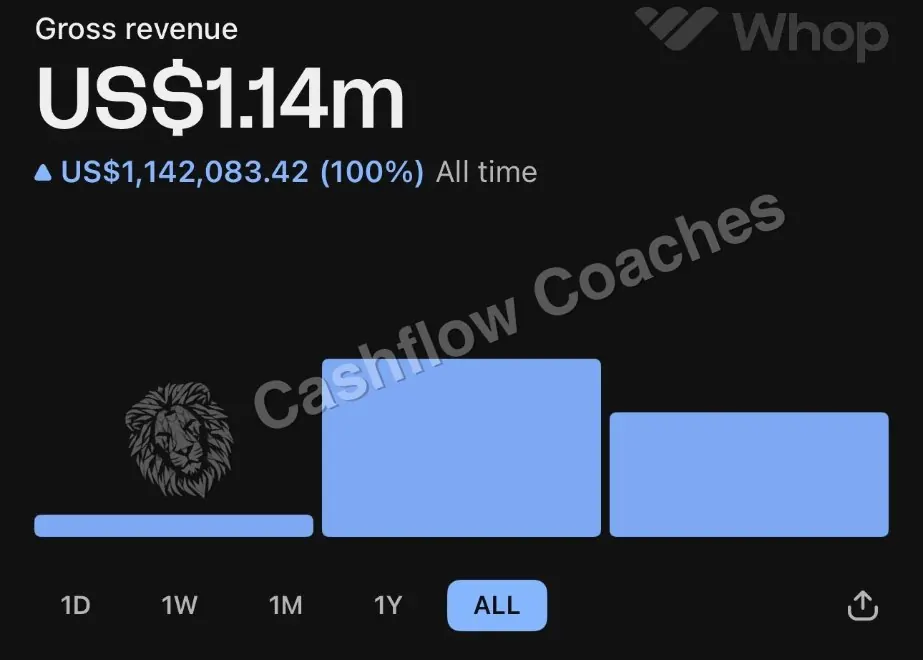 $1.14M all timeOne community business
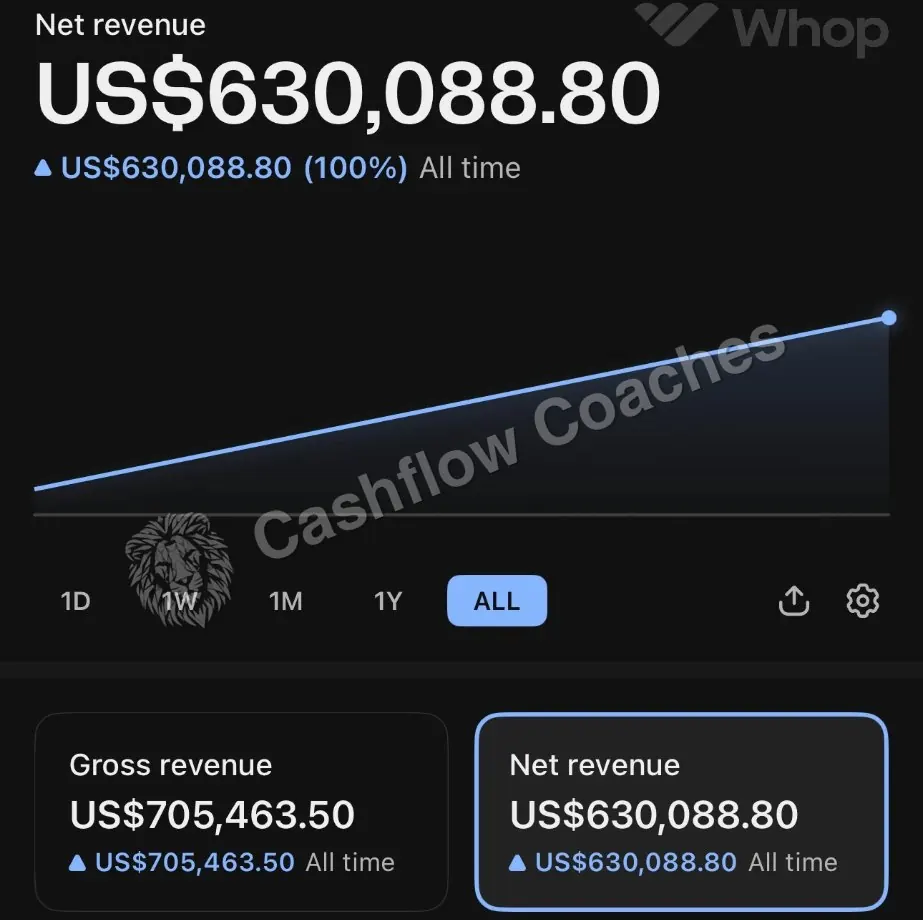 $630,088 net revenueAll time, one offer
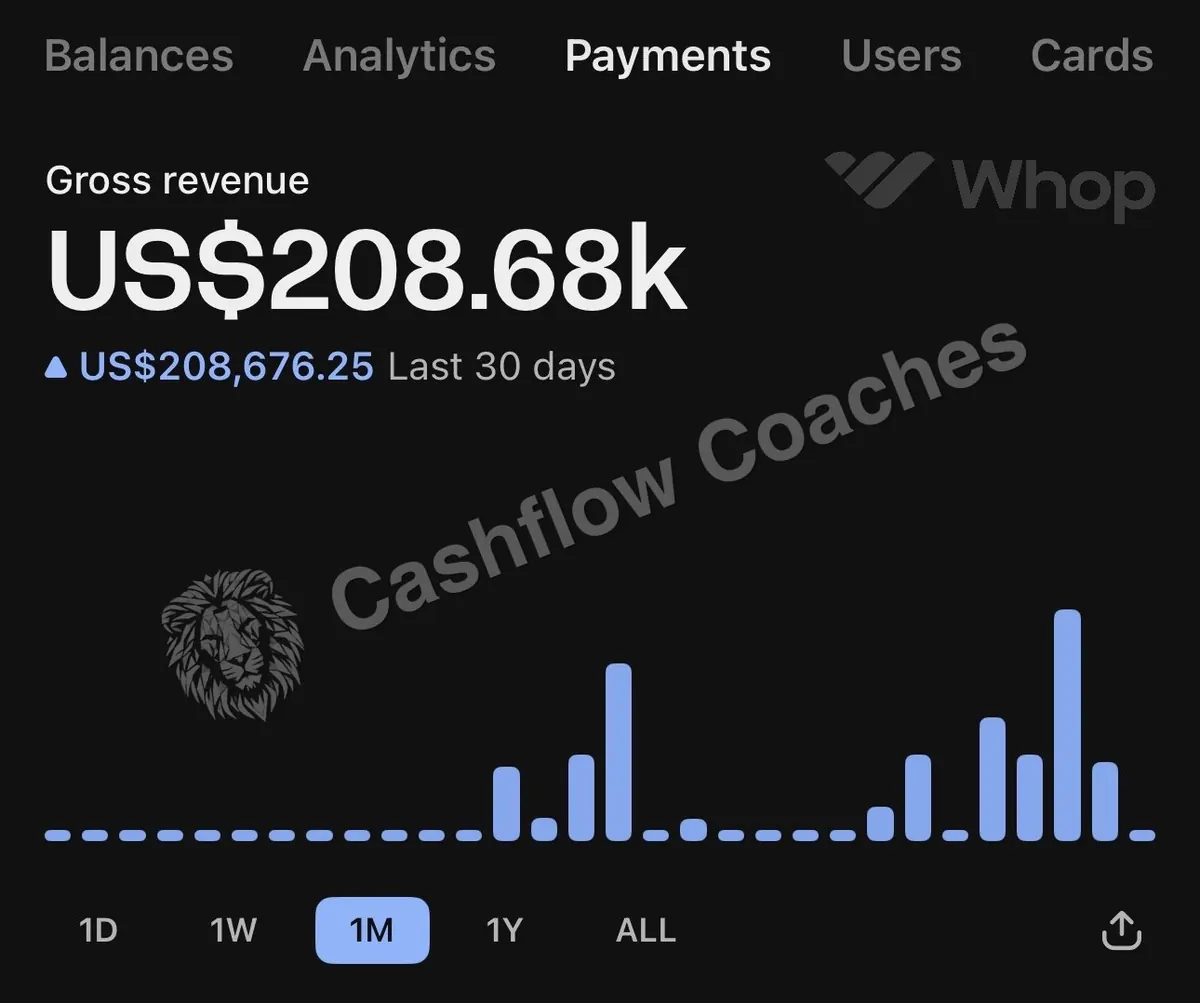 $208.68K in 30 daysOne month of payments
Real screenshots from our clients and our stories. Not typical.
2How do Skool features score, area by area?
We scored the 8 areas that matter to a coach. 5 is best.
| Area | Score | Why |
|---|---|---|
| Community | 5 / 5 | Clean feed, up to 10 post categories, chat, and AutoMod that flags spam accounts. |
| Gamification | 5 / 5 | Points, levels and a leaderboard. You can lock lessons, posting or chat behind a level. |
| Payments | 4 / 5 | Skool is the merchant of record and pays out every Wednesday. Prices are USD only. |
| Events | 4 / 5 | A built-in calendar for live calls. Simple and reliable. |
| Courses | 3 / 5 | Video, text, files, level unlocks and one-time course sales. No graded quizzes or certificates that we know of. |
| Analytics | 2 / 5 | MRR, traffic sources and conversion. Little on who is about to cancel or which lesson works. |
| Branding | 2 / 5 | Logo, cover and About page copy. Every group shares one layout. |
| Integrations | 2 / 5 | Pixel and ad tracking, but you still need your own email, booking and CRM tools. |
The plain average is 3.4. We rate Skool 4 out of 5 for coaches, because the strong areas (community, members, payments) are the ones that move revenue. The weak areas mean paying for add-on tools.
Features checked on categories, AutoMod, one-time course sales and payments in Skool's help center, 23 October 2026.
3What does Skool do well?
| Strength | Why it matters for a coach |
|---|---|
| Everything in one place | Group, course, calendar and live calls with one login. |
| No limits | Unlimited members, courses, videos and live calls on both plans. |
| The About page sells | Free groups convert about 20% of About page visitors, and paid groups about 4%. |
| Skool finds members for you | Skool's Discovery search brings over a quarter of all memberships. How it ranks groups. |
| Members bring members | Many groups get 20% to 40% of members from member affiliates. |
| Flexible pricing | Free, monthly, yearly, free plus paid upgrade, several tiers, or one-time. A 7-day trial for members. |
| Price raises without losing members | Skool keeps existing members at the price they joined at, so you can raise prices for new people only. |
| Tax handled | Skool is the merchant of record and adds and pays EU VAT for you. |
Plan, fee, pricing model and VAT details are from skool.com/pricing and Skool's help center, checked 23 October 2026.
4What are the cons of Skool?
- Every group looks the same. You get a logo, a cover and About page copy. You cannot change the layout.
- Prices are in US dollars only. Buyers who expect another currency may drop off at checkout.
- Hobby's 10% fee gets expensive. Past about $1,268 a month in sales, Pro is cheaper. See the Skool pricing breakdown for the maths.
- Members Skool finds for you cost more. Growth Boost is on by default. In Skool's own example, it keeps $3 of a $10 sale for members it brings you, for as long as they stay.
- The course area is basic. Video, text, files and level unlocks. If you need graded quizzes or certificates, check Skool can do it before you move.
- It is not your email list or sales system. You still need your own email list and a way to book and track sales calls.
- You cannot use your own payment account. Skool processes the money and pays out weekly. Your first payout can take up to 14 days.
- No refunds on plan fees. Cancel any time, but months you paid for are not refunded.
- An empty group hurts you. A quiet feed makes new members leave. Aim for about 10 true regulars, and it can take a few hundred members to find them.
5Skool complaints and Reddit reviews: what is true?
| Complaint | True? | Our view |
|---|---|---|
| Free groups are full of spam and DM pitches | Partly | Skool now runs AutoMod in every group and lets you lock posting and chat behind a level. Charging even $1 a year cuts most of it. |
| Most groups just sell how to make money on Skool | Partly | Those groups are loud in Discovery, but plenty of groups teach a real skill. Check each group before you join. |
| No refunds on the plan | True | Plan and transaction fees are not refunded. Cancel before renewal if unsure. |
| Analytics are too basic | True | Fine at the start. At scale you add your own tracking and CRM. |
| Payouts are slow | Partly | The first payout can take up to 14 days. After that it is every Wednesday. |
| The course area is weak | True | It is simple. For tests and certificates, use a course tool. |
Checked against payment terms, payouts and spam tools, 23 October 2026.
6Is Skool legit?
Yes. Skool is a real, paid software company. It handles payments, VAT and weekly payouts, and its rules are public in its help center.
Skool says creators on the platform have earned more than $1 billion in total. That is Skool's own figure, so treat it as a claim.
Is Skool a scam or a pyramid scheme?
No. A pyramid scheme pays you mainly for recruiting people who must pay in, with no real product. Skool sells software at a public price. You earn by selling your own group or course to members.
Skool pays a referral commission when someone you invite starts their own group, which is normal for software. Some groups also sell making money on Skool with big promises. That is a problem with those groups.
Before you pay for any group, read the About page, check the star rating and how busy the feed is, and look at the owner's refund terms.
7What changed in 2025 and 2026?
Many older reviews are out of date.
| Change | What it means for you |
|---|---|
| Two plans, Hobby $9 and Pro $99 | The cheap plan makes testing an idea low risk. Pro has the low fee. |
| Custom URL and affiliates on both plans | Older reviews say Hobby lacks them. Skool's pricing page now lists both on Hobby. |
| Growth Boost, on by default | Skool promotes your paid group in Discovery and runs Meta ads for it with its own money. It keeps a share of members it brings you. Skool says to turn it off for high-ticket offers sold on a call. |
| Growth levels 1 to 4 | The more About page visitors and paid members you bring, the more Skool spends promoting you. |
| AutoMod and level locks | Fixes most of the spam that older reviews complain about. |
| Member reviews and stars | Paid members are asked to rate a group after 30 days. Ratings now show on Discovery. |
| Freemium and tiers | One group can have a free level and paid levels. |
| A higher fee on big single charges | On Pro, charges above $900 pay 3.9% + 30¢ instead of 2.9% + 30¢. |
| 11 languages, payouts in 150+ countries | Easier for groups outside the US. Members still pay in USD. |
Sources: skool.com/pricing, Growth Boost, Growth levels, reviews, pricing models, languages, all checked 23 October 2026. Skool does not date each change, so we group them as recent.
8Skool app review: is the mobile app any good?
Yes, for members. Skool has a free app on the App Store and Google Play with the same main tabs as the website. Members can post, chat, watch lessons and manage or cancel a membership from the app.
For owners, it is fine for posting and replying. Settings are easier on desktop. Skool's help center says the Billing tab can be hard to find on small screens.
See If You Qualify
Bring your fit check result. We'll look at your offer together and tell you whether a Skool group belongs in it.
9Who is Skool for, and who is it not for?
- Coaches with a high-ticket program who want a free group that fills the calendar
- Creators with an audience who want a simple paid group
- Course sellers whose buyers stop logging in
- Owners who will show up in the group every week
- Brands that need a fully custom look
- Sellers who must charge in a currency other than USD
- Programs that need graded tests or certificates
- Owners who want a course with no community work
Why does community beat a plain course for most coaches? Buyers barely open a course portal but use a community every day.
10Is Skool right for you? Take the 6-question check
A hard limit is flagged even if the total is high.
11What do we see across 350+ communities?
- Put a free group in front of your sales calls. For coaches with a high-ticket program, a free group in front of sales calls is our default. About 10% of joiners buy the next offer, when about a third get on a call and 30% to 50% of those close.
- Calls get cheaper with a group in front. Cost per booked call falls from about $250 to about $40, because the group warms people up. To check your own numbers, use the client acquisition cost calculator. If you want that funnel built for you, see if you qualify.
- Less content keeps more members. Skool cut its own owners' group to one post, one call and one recording a week, and churn came down. People who feel behind cancel.
- Judge a new group after 90 days. Churn runs near 20% a month in months 1 to 3, and drops to 10% or less by day 90.
- Yearly plans steady the money. One client of ours built $143K a year in annual memberships from zero. Not typical.
- The community pays, then the program pays more. Another client reached a $40K a month community plus $30K in ascension to a high-ticket offer. Not typical.
12How does Skool Discovery rank groups?
Discovery is Skool's own search and category pages. It brings over a quarter of all memberships, and more than half for some groups. Skool's help center says three things, in this order:
- Get listed. A new group needs a cover image, a group description, a finished About page, at least one post and some members. Until then it shows as unlisted.
- Get ranked. Groups are ranked inside each category by member growth, member activity and member retention. Skool says retention matters most.
- Get reviewed. A person at Skool adds boosts for strong artwork and About pages, an interesting niche, real engagement and an active owner. Penalties hit bots, spam, weak artwork, payments taken off Skool, poor support and an owner who has gone quiet.
Removing quiet or Level 1 members does not help your rank, Skool says, because some members like to lurk. Skool also warns that links in your description can lower clicks and joins. If your category or language is wrong, Skool support can change it. Google reads your group name and description too, so the search word belongs in both.
From Skool's help center: How to rank higher in Discovery, Discovery FAQs, Why isn't my group visible and About page setup, checked 24 October 2026.
13Can you actually make money with Skool?
Yes, but most groups make modest money, and the spread is huge.
| Number | Benchmark |
|---|---|
| Average paid price | about $50 a month |
| Price range | $1 to $10,000 a month |
| Owner income range | $500 to $350,000 a month |
| Monthly retention, paid groups | about 80% average, 90%+ for the best |
| Full-time income mark | $5,000 to $10,000 a month |
A paid group at $50 needs about 100 to 200 paying members to reach that full-time mark. For coaches, the faster path is usually one high-ticket sale from the group, which can be worth more than a year of fees from one member. Run your own numbers in the Skool revenue model.
14Worked example: Priya decides
Made-up example. Priya is a business coach. She sells a $3,000 program on sales calls and posts short videos every week. Her current course sits in a portal her buyers rarely open.
She scores 18 of 18 on the fit check. She starts a free group on Hobby, and will move to Pro the month her paid sales pass about $1,268. She turns Growth Boost off, because she sells on calls. She links the group in every video. Each new member gets one welcome message offering a short call.
Say 300 people join in a month and she gets 1 in 10 onto a call. That is 30 calls. If she closes 20% of them, that is 6 sales at $3,000, or $18,000. Her Skool bill that month is $9, because a free group has no transaction fees.
15What to do this week
- Take the fit check above. If anything is flagged red, solve that first or pick another route.
- Decide the group's job: a paid product, or a free front door to your program.
- Start the 14-day free trial. Pick Pro if you will sell more than about $1,268 a month (the maths).
- Invite three people you know before you send any traffic.
- Write the About page in one hour and record a 2 minute walkthrough video. Then run it through the Discovery checker and fix the first thing it names.
- Pick one traffic source and post the group link every day for 7 days.
- Plan one weekly post, one weekly call and one recording. Nothing more for the first 90 days.
Get the Skool community launch plan Claude skill to write the About page, settings and first 30 days with Claude. Already live but stuck? Find the exact bottleneck in your business.
Find the exact bottleneck in your business
Frequently asked questions
Is Skool worth it in 2026?
For most coaches, yes, as the front of the business. A free or low-price group that leads to a high-ticket program sold on a call is where Skool earns its keep. We rate it 4 out of 5 for coaches. It is a weaker fit if you need your own branding, other currencies or advanced course tools.
Is Skool legit?
Yes. Skool is a real paid software company. It processes payments, handles EU VAT, pays owners every Wednesday and publishes its rules in its help center. A legit platform does not make every paid group on it worth joining, so check a group before you pay.
Is Skool a scam or a pyramid scheme?
No. A pyramid scheme pays mainly for recruiting people who must pay in, with no real product. Skool sells software at a public price, and owners earn by selling their own groups and courses. The worry comes from some groups that sell big money promises, so judge each group on its own.
What do Skool reviews on Reddit say?
The common complaints are spam in free groups, too many make-money groups, no refunds on plan fees, basic analytics and a simple course area. Most are fair. Spam is much better now that Skool runs AutoMod and lets owners lock posting and chat behind a level.
What are the cons of Skool?
Every group shares one layout, prices are in US dollars only, the Hobby plan takes 10% of sales, analytics are thin, the course area is basic, and plan fees are not refunded. A quiet group also loses members fast, so you need to show up every week.
How does the Skool app work?
Download the free Skool app from the App Store or Google Play and log in with your Skool account. It has the same feed, chat, classroom and calendar as the website. Members post and watch lessons there. Owners can post and reply, but settings are easier on desktop.
Who owns Skool?
Skool is a private company run by its founder. Skool has not published its full list of owners.
Is Skool free?
Joining a free group is free. Creating your own group costs $9 a month on Hobby or $99 on Pro, after a 14-day free trial.
How much does Skool cost?
$9 a month on Hobby with a 10% plus 30 cent fee per sale, or $99 a month on Pro with 2.9% plus 30 cents (3.9% on single charges above $900). Yearly billing gives 2 months free. See our Skool pricing breakdown for the full cost and a calculator.
How does Skool Discovery rank groups?
Skool ranks groups inside each category by member growth, member activity and member retention, and says retention matters most. A person at Skool also adds boosts for strong artwork, a strong About page, real engagement and an active owner, and penalties for spam, bots, payments taken off Skool and an inactive owner. To be listed at all, a group needs a cover image, a description, a finished About page, a post and some members.

$10M+ in client results. I run Cashflow Coaches, a done-for-you marketing, sales, operations and tracking agency. We handle everything from paid ads, funnels, webinars, VSLs and Skool communities to setters, closers, ops and tracking. Two-time Skool Games winner.
Not sure Skool fits your offer?
We look at your offer, your audience and your fit check result, and map the full system for your business. If you're not a fit, we tell you what to fix first.
Book your callKeep reading: Skool communities guideSkool pricingSkool alternativesSkool vs CircleSkool vs KajabiSkool vs WhopSkool GamesDone-for-you Skool growthScale a coaching businessCase study: Minje KimCase study: paid communityFind your bottleneck (quiz)Home
Priya is a made-up example. Her numbers show how the maths works and are not a client result. Skool's features, prices and fees were checked on skool.com and help.skool.com on 23 October 2026 and can change. Benchmarks on this page are what other operators and Skool owners report. They are not Cashflow Coaches results and not a promise. Every real result on this page is a past result from a specific client. None of them is typical. Cashflow Coaches is not part of, or endorsed by, Skool.