
1What is a discovery call in sales?
A discovery call is the part of the sales conversation where you find out where the buyer is, where they want to be, and what is in the way. You talk less than a third of the time. Done well, the buyer hears their own problem out loud and asks you how to fix it.
It is not a cold call. The prospect booked it, or agreed to it, because they want something. In a high ticket business it is either a short triage call with a setter or the first half of the closer's sales call. Both sit inside the wider sales process.
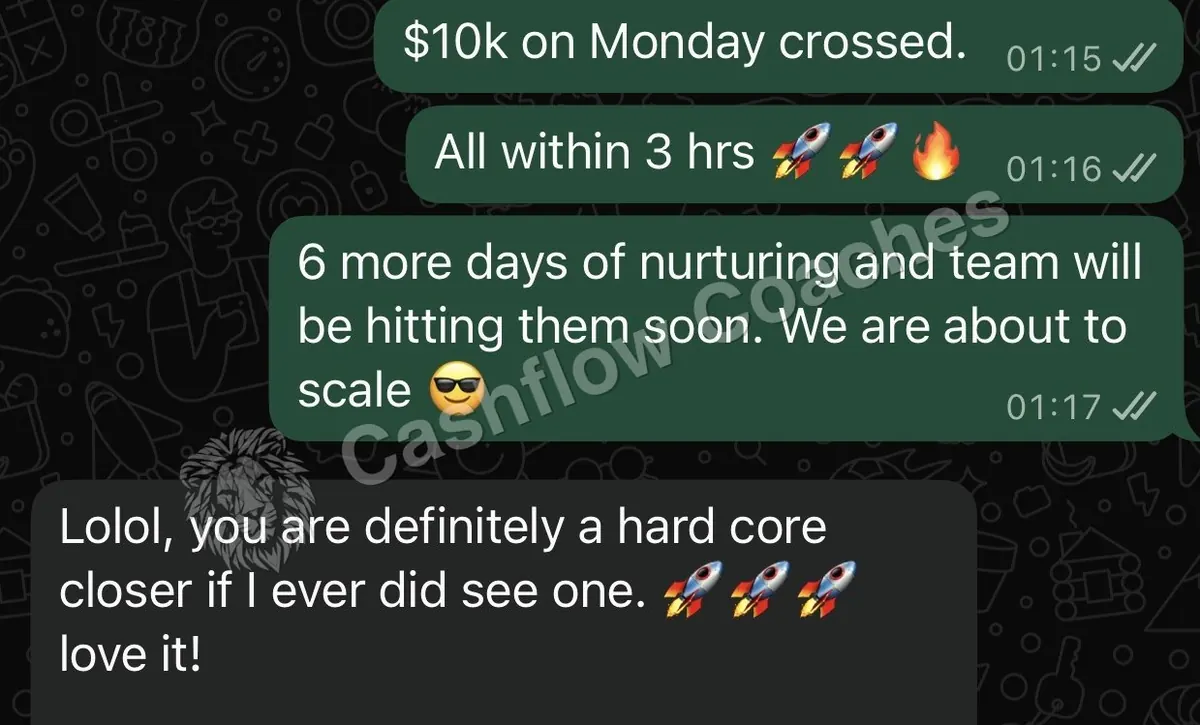 $10K in 3 hoursA client's closer, Monday morning
 $2,497 paid in full"Sale won" in the team channel
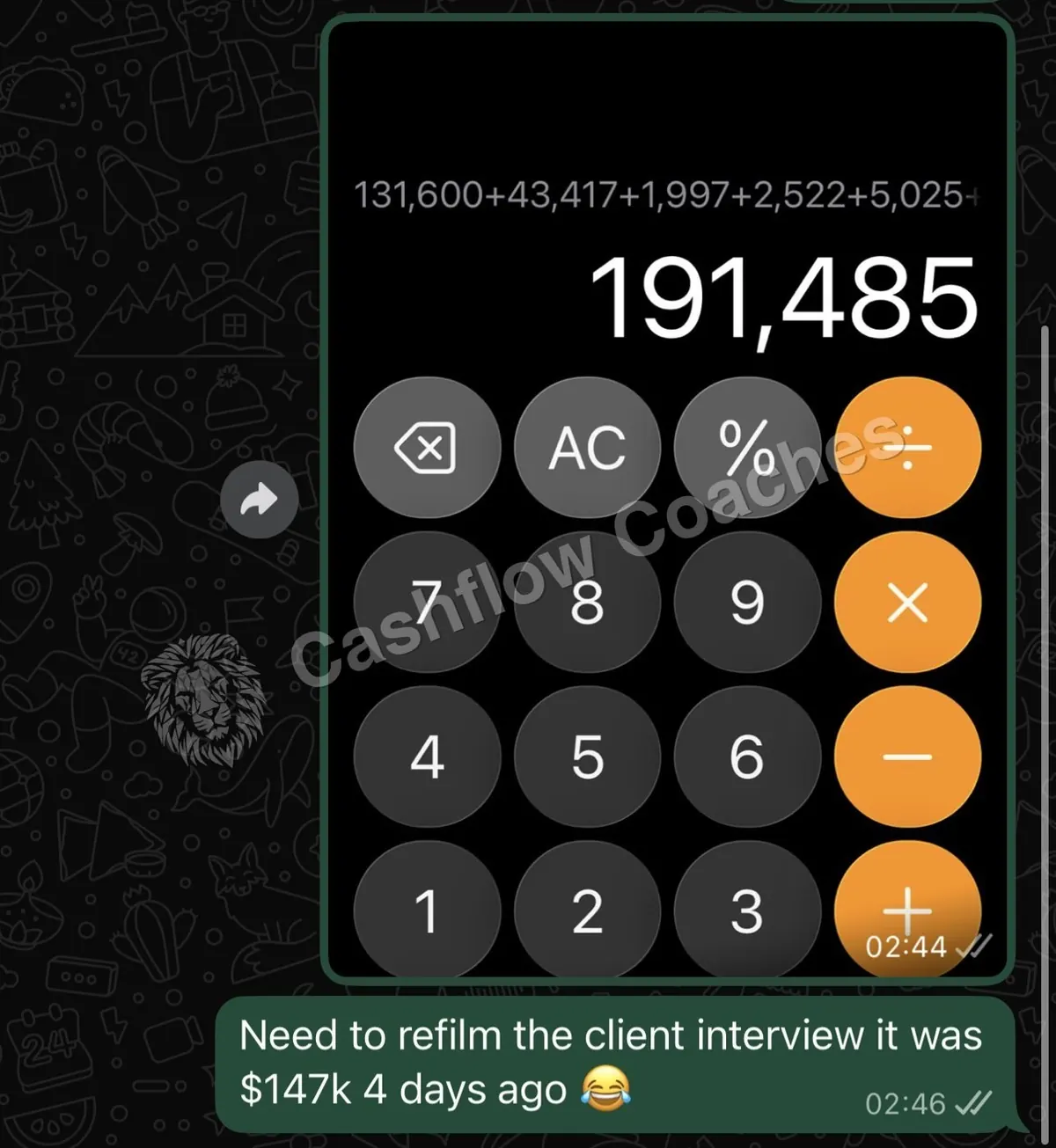 $191,485 for the month$147K of it in 4 days
Real screenshots from our clients and our stories. Not typical.
2How long should a discovery call be?
It depends on who runs it. A setter's discovery runs about 5 to 10 minutes. A closer's goes deeper, at about 15 to 20.
- Checks the basics: who they are, what they want, rough numbers
- Sells the value of the next call
- Books the closer and confirms the time
- Gets exact numbers, month by month
- Builds the gap and the cost of waiting
- Finds who decides, then moves to the pitch
One operator who tracked every call saw discovery average 18 to 24 minutes. Longer is fine when you do not need to close every call. Shorter usually means the questions stayed on the surface.
3How do you structure a discovery call?
Seven parts, always in the same order. The order matters more than the wording. Easy questions come first so the buyer gets used to answering, and the hard ones come once they trust you.
| Part | What you are after |
|---|---|
| 1. Frame | Agreement on how the call runs, and that they decide at the end |
| 2. Background | Easy facts: what they do, who for, how long |
| 3. Where they are | Real numbers, as specific as you can get |
| 4. Where they want to be | The goal, and why it matters to them |
| 5. What they tried | Past attempts, and why now |
| 6. Who decides | Anyone else who has a say |
| 7. Recap | Their gap, in their words, then permission to pitch |
4Discovery call questions, built for your call
0:00 to 1:00   Frame
1:00 to 3:00   Background
3:00 to 7:00   Where they are, in numbers
7:00 to 8:30   Where they want to be
8:30 to 10:00 Light qualify, then book the call with {closer}0:00 to 2:00 Frame 2:00 to 5:00 Background 5:00 to 13:00 Where they are, in numbers 13:00 to 17:00 Where they want to be, and the gap 17:00 to 22:00 What they tried, and why now 22:00 to 25:00 Who decides, and the recap 25:00 to 45:00 Your recommendation, price and close
Thanks for making the time, {fn}. Here's how I'd like to run this.

I'll ask about where things are now and where you want them to be. If it looks like we can help you {outcome}, I'll book you in with {closer}, who will walk you through how it works. If not, I'll tell you straight. Sound fair?Thanks for making the time, {fn}. Here's how I'd like to run this.
First I'll ask a lot of questions about where things are and where you want them to be. If I think we can help you {outcome}, I'll show you how we'd do it and what it costs. If I don't think we're a fit, I'll tell you, and point you somewhere better. Either way you decide at the end. Sound fair?What made you book this call now? Tell me a bit about the business. What do you sell, and who to? How long have you been doing it? Who else is on the team?
What made you book this call now?
What do you coach or consult on, and who is your client?
How do clients find you today?
How much of your week goes on delivery?
What made you book this call now?
What do you do for work at the moment?
How long have you been thinking about this?
What does a normal week look like for you?
What did you bring in last month? Just last month.
And over the last six months, month by month, roughly?
How many new clients did you sign last month?
Where did they come from?
What does that number need to be for you to be happy with it?
What do you earn now, roughly, each month?
How much would you need to make each month to replace your job?
How many hours are you putting into this right now?
What happens if the next six months look like the last six?
If we were talking a year from now and you were really happy, what would have happened?
Why does that matter to you? What changes at home or in your week?
On a scale of 1 to 10, how important is it to get there this year?
What would make it a 10?
What have you already tried to {outcome}?
What happened? Why do you think it didn't work?
Can I ask you a personal question? You've been at this a while. What changed that made you book a call this week?
If you change nothing, where does this go?
Who else is involved in a decision like this? How does the leadership work at the moment? Is it a 50/50 split with your partner, or is it your call?
If this looks like a fit, is there anyone you'd want to talk it through with first?
Would it make sense to have them on the next call?
So let me make sure I've got this right. You're at [their number] now. You want to {outcome}. The thing in the way is [the gap they named]. You've tried [what they tried]. Did I miss anything?

Do you want me to show you how we'd get you there?Sounds like a call with {closer} makes sense. Before I book it, two quick things.
If {closer} shows you a plan that fits, are you in a spot to start in the next few weeks?
And our programs are an investment. Is that something you've set aside room for?
Great. I have [time 1] or [time 2]. Which works?Want the full closing script after discovery, with the pitch, price and close written for your offer? Get the closing call script builder skill for Claude. For the setter's side of the call, see the appointment setter script.
See If You Qualify
Bring a recording of a recent discovery call. We'll show you where it lost the buyer and what we'd change first.
5What are the best sales discovery questions?
The best ones turn vague answers into numbers. People round up, generalize and play down their problems. Six moves get you past that.
Ask for last month, not last year
A common pattern: an owner says the business does about a million a year, then says last month was $40K when asked for last month on its own. The specific question gets the honest answer. It also stops "actually things are fine" at the end of the call.
Make them say the number out loud
One closer asked a prospect what they had made each month over the last six months. Saying a low number out loud does more than any pitch. You don't need to comment on it. Let it sit.
Chunk it down
"Not enough leads" means nothing. "How many sales calls did you take in the last 30 days?" means something. Push vague answers down to one number you can point to.
Find the gap, even with no pain
There are two kinds of gap: pain, where they are below where they should be, and unmet desire, where things are fine but they know they can do more. A buyer doing $10 million a year may have no pain at all. They still have a gap.
Ask why they ask
When a prospect asks a product question in the middle of discovery, answer it briefly, then ask "is there a reason you ask?" The real worry is often underneath, like a bad past experience with group coaching, and it changes the answer you give.
Assume, so they correct you
To find who decides in a business, ask "how does the leadership work? Is it a 50/50 split?" Assuming a split invites them to correct you, which is easier than asking "are you the decision maker?"
6Should you qualify on a discovery call?
Lightly, and late. Hard qualifying during discovery derails the call, and prospects start agreeing they are not qualified. Keep the money and timing questions for the end, once the gap is clear. Formal checklists like BANT and MEDDIC help you decide which deals deserve the closer's time. Our page on BANT and MEDDIC shows how to use them without turning the call into an interview.
7Discovery call example: a worked example
Chris is made up. He sells a $12,000 consulting program to agency owners and takes 20 sales calls a month himself.
| Each month | Before | After |
|---|---|---|
| Minutes on discovery | 6 | 20 |
| Calls taken | 20 | 20 |
| Calls where he pitched | 18 | 14 |
| Closed | 2 | 5 |
| Cash collected | $24,000 | $60,000 |
Before, Chris asked "how's business?", heard "pretty good", and spent 30 minutes on slides. After, he asked for last month's revenue, the last six months month by month, and how many calls the agency took in 30 days. Four prospects turned out to have no real gap, so he did not pitch them. The ones he did pitch had already said their problem out loud. Fewer objections came up, and the ones that did were real. For those, use our objection handling scripts.
8What happens after the discovery call?
Either the closer pitches on the same call, or a setter books the sales call and sends the prospect something to watch first. If the buyer needs time, book the next call before you hang up and send a follow-up email within the hour.
A good discovery call can carry a brand new offer. For one client, Blake Mathews, we built the funnel and the sales scripts in 14 days, and the offer collected $1,230,101 in 60 days on cold traffic. Results are not typical. For how the whole call fits a high ticket offer, read high ticket sales. If you are not sure the call is your weak spot, find the exact bottleneck in your business.
Find the exact bottleneck in your business
Frequently asked questions
What is a discovery call in sales?
It is the part of a sales conversation where you learn where the buyer is now, where they want to be and what is in the way, before you show them any offer.
What is the meaning of a discovery call?
A discovery call is a short call to find out whether you can help someone. You ask questions, they do most of the talking, and you only pitch if there is a real fit.
Is a discovery call a cold call?
No. A cold call reaches someone who did not ask to hear from you. A discovery call is booked by, or agreed with, a prospect who already showed interest.
How long should a discovery call be?
Operators commonly report 5 to 10 minutes for a setter's triage call and 15 to 20 minutes of discovery inside a closer's sales call.
What are good discovery call questions?
Questions that get specific numbers: what did you bring in last month, how many clients did you sign, what does that need to be. Then why it matters, what they tried, and who else decides.
What does discovery mean in sales?
Discovery means finding out the buyer's real situation before you sell. It covers their numbers, their goal, the gap between the two, and who makes the decision.
What's another word for a discovery call?
People also call it a triage call, a strategy call, an intro call or a qualification call. In high ticket sales, a strategy call often holds both the discovery and the pitch.
What are the 5 W questions in sales?
Who decides, what they want, when they need it, where they are now and why it matters. Each one should end in a specific answer, not a general one.

$10M+ in client results. I run Cashflow Coaches, a done-for-you marketing, sales, operations and tracking agency. We handle everything from paid ads, funnels, webinars, VSLs and Skool communities to setters, closers, ops and tracking. Two-time Skool Games winner.
Chris is a made-up example. His numbers show how the maths works and are not a client result. Benchmarks on this page are what other operators commonly report. They are not Cashflow Coaches results and not a promise. The case study linked on this page is a past result from a specific client and is not typical.