
1What is objection handling?
Objection handling is how you respond when a prospect gives a reason not to buy. On a high ticket call, the first reason is rarely the real one. "I need to think about it" usually means "I'm not sure it will work for me." "It's too expensive" often means the same thing.
So the job is to find the real worry, answer it, and ask again. Arguing with the first reason only makes them defend it. Handle doubt first. Until the prospect is sure it will work, any talk of timing, money or a partner is a smoke screen.
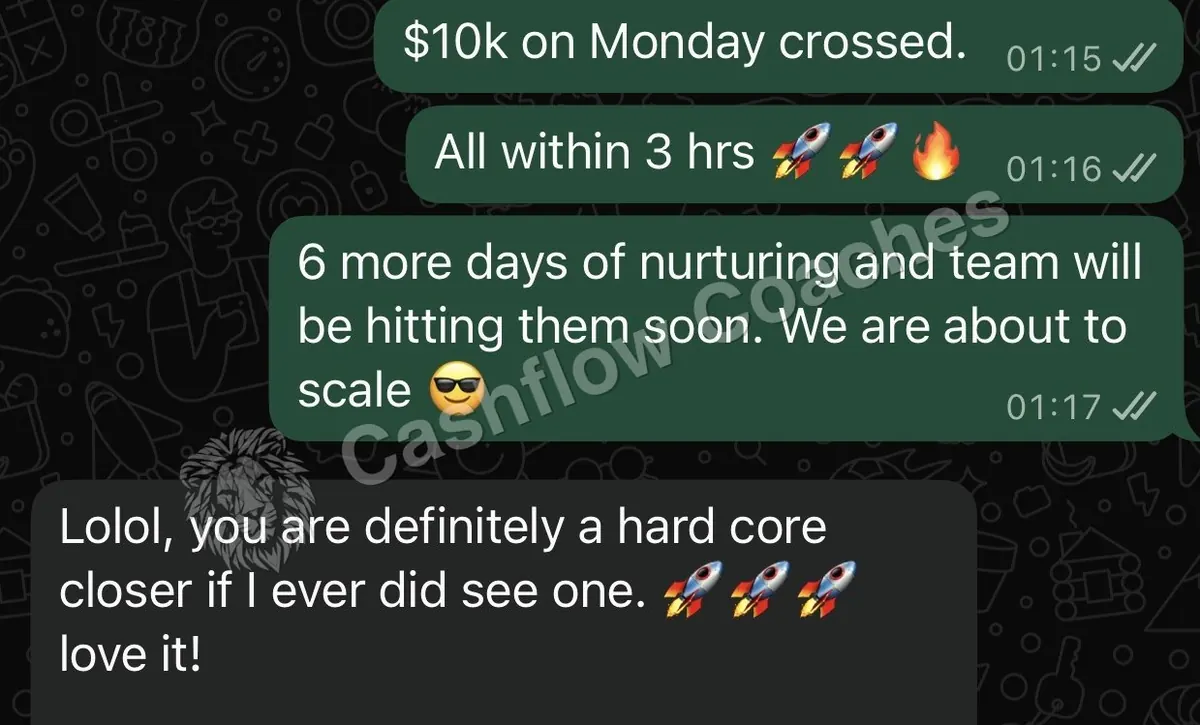 $10K in 3 hoursA client's closer, Monday morning
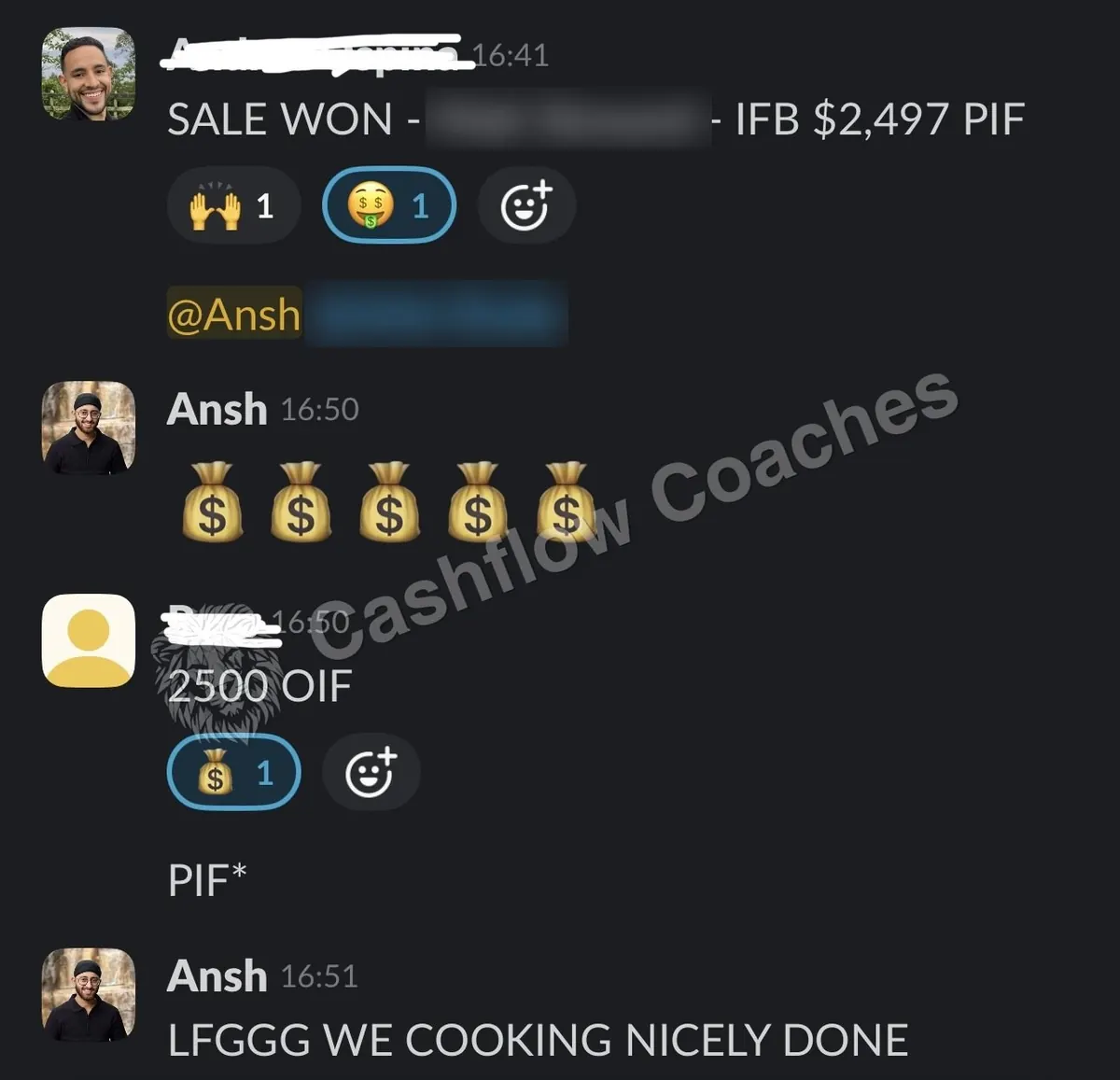 $2,497 paid in full"Sale won" in the team channel
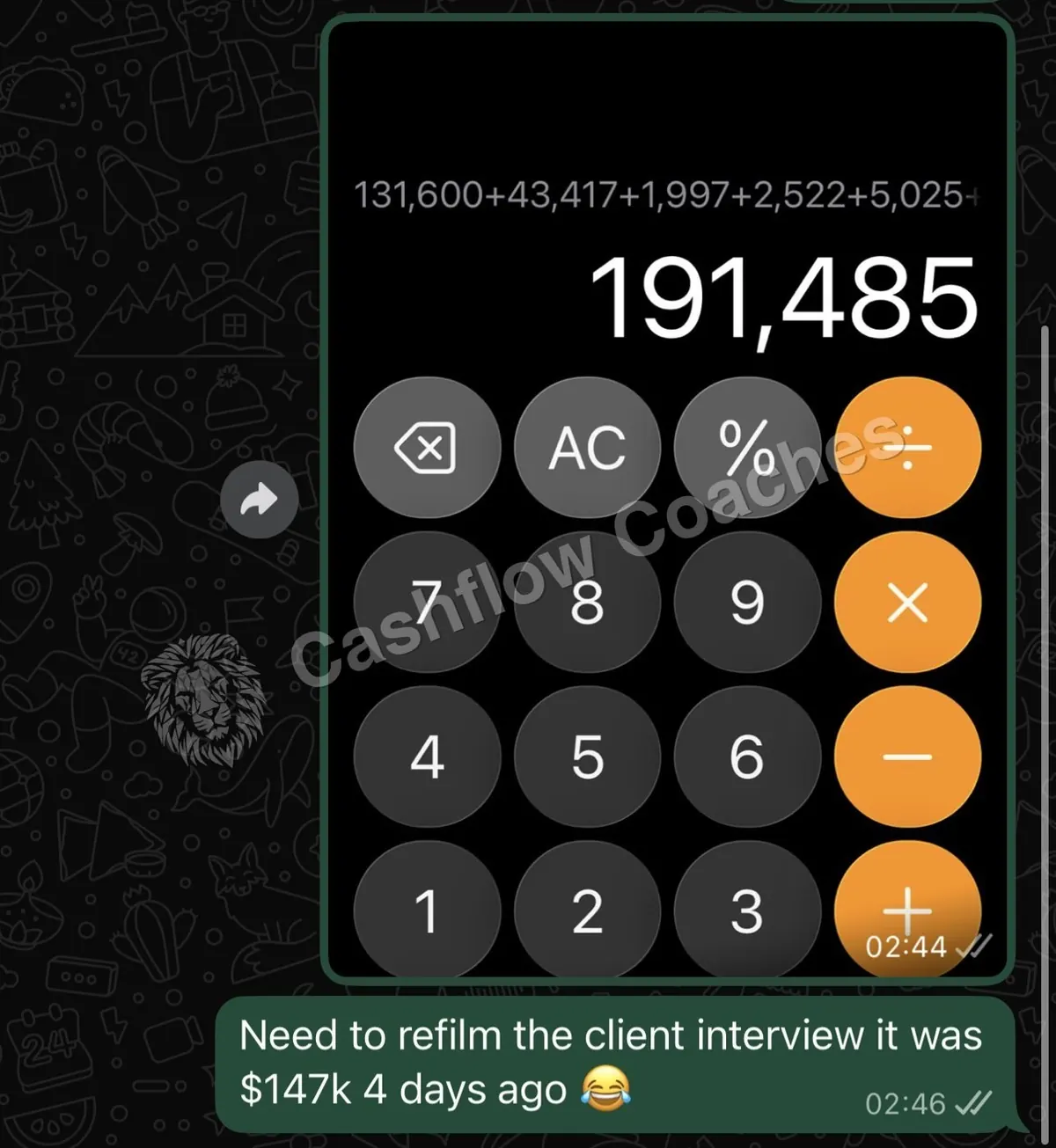 $191,485 for the month$147K of it in 4 days
Real screenshots from our clients and our stories. Not typical.
2What are the 5 steps for objection handling?
The same five steps work for every objection.
| Step | What you say | Why it works |
|---|---|---|
| 1. Hear it out | "Totally fair. Tell me more." | People who feel heard stop defending. |
| 2. Isolate it | "Money aside, is this the plan you need?" | Takes the stated reason off the table to see what is left. |
| 3. Tie it down | "And do you believe 100% it will get you there?" | A hesitant answer shows the real worry. |
| 4. Resolve it | Answer the real worry with specifics and proof. | You answer what actually stops them. |
| 5. Ask again | "Now that's cleared up, where are you out of 10?" | Turns a solved worry back into a decision. |
Step 3 does most of the work. Ask, money and everything aside, whether the prospect believes 100% it will work, then ask what keeps them below 100%. If the answer is nerves, say so kindly: "Sounds like a little bit of nerves. That's normal before a big decision."
3How do you handle objections in sales? Build the talk track
Pick what the prospect said and fill in their words from your notes. Read the track out loud twice before your next call so it sounds like you.
"Totally fair, {fn}. Can I ask two quick things so I know what you're weighing up?

Money aside for a second. Is this the plan you need to {goal}?"
[Wait for the yes.]

"And money aside, do you believe 100% it will get you there?"
[If they hesitate:] "What's keeping you below 100%?"
[Listen. That answer is the real objection. Answer it fully.]

"Now that's cleared up, where are you out of 10?"
[8 or more:] "Then let's get you started. The first step is [first onboarding step]."
[Still want time:] "How long do you need? And how will you know you've thought it through properly? Let's go through that now, while I'm here to answer anything." Hi {fn}, thanks for today. You said you want to {goal}. I've kept {when} for us to finish. Will you let me know if anything comes up and you can't make it?"I hear you, {fn}. Before we talk numbers: money aside, is this what you need to {goal}?"
[Yes.]
"And money aside, are you 100% in?"
[Yes.]
"Then can we look at the money together for a minute? I can set you up on a plan today, or give you a game plan to get there."
"Over the next 30 days, after your bills, how much cash will you have coming in? And how much do you have set aside now?"
[Treat both answers as what they can put toward this, not everything they have.]
"Based on that, here's what I can do: {price}."
[Stop talking. Let them answer first.]Hi {fn}, as promised, here's the plan we talked through: {price}. It's built around getting you to {goal}. I'll call you {when} to answer anything still open."Makes sense, {fn}. Can I ask: if you talked to them and they said no, what would you do?"
[Some say they'd do it anyway. If so:] "So it's more about having them on board than asking permission. Fair?"
"What do you think their main question will be?"
[Answer that question now, together.]
"When you two have made big decisions before, how did that go?"
[Let them remember a past yes.]
"Let's get them on a short call with us {when}, so they hear it first hand and can ask me anything. Does that work?" Hi {fn}, looking forward to {when} with you both. Ask them to bring every question they have. If anything comes up and you can't make it, will you let me know?"Fair, {fn}. What's making now feel like the wrong time?"
[Listen.]
"You told me you want to {goal}. Why does that matter to you?"
"And right now {gap}. If you push this off, what changes between now and then?"
[Usually: nothing.]
"So waiting means a few more months where {gap}. If you started now, when would you expect to see the first change?"
"You don't sound like someone who wants to stay where you are. What do you really want to do?" Hi {fn}, you said you want to {goal} and that right now {gap}. Waiting won't change that by itself. I've kept {when} open for us. Want it?"I get that, {fn}. What happened last time?"
[Listen to the whole story. Do not defend anyone.]
"So the worry is this goes the same way. If everything I laid out happened exactly as I laid it out, where would you be out of 10?"
[Under 8:] "What's keeping you from being more sure?"
[Answer with specifics, then put them in writing:]
"Here's exactly what you get in the first 30 days, and it goes in the agreement: [deliverables]."
"Would you let what happened last time stop you from {goal}?" Hi {fn}, here are the first 30 days in writing, like I said: [deliverables]. The same list goes in the agreement. I'll call you {when} to finish."Good, you should compare. Price aside, which option is more likely to get you to {goal}?"
[If they say ours:] "Why do you say that?"
[Let them make the case.]
"So the difference is {gap2}. If this gets you to {goal}, what is {gap2} next to that?"
[If they say the other one:] "What makes you think so?"
[Answer it, or let them go. A bad fit at any price ends in a refund.]Hi {fn}, you said the goal is to {goal}. Whoever you pick, ask them for clients who started where you are now. Here are three of ours: [links]. I'll call you {when}.Want every objection your prospects raise turned into tracks like these, with role plays for your closers? Get the objection handling playbook skill for Claude.
4What are the major objection categories?
Most objections on a high ticket call fall into two groups. Doubt is the big one: "will this work for me?" Then come three practical ones: timing, money and a partner. Trust in you or your company is a kind of doubt. Price against a cheaper option is a kind of money objection.
| What they say | What it usually means | Ask first |
|---|---|---|
| I need to think about it | Doubt they haven't said out loud | Money aside, is this the plan you need? |
| I can't afford it | Doubt, or a real cash gap | Money aside, are you 100% in? |
| I need to talk to my partner | Wants support, or a polite way out | If they said no, what would you do? |
| Now isn't the right time | Fear of the work, or real overload | What changes if you wait? |
| I've been burned before | Fear of the same mistake | What happened last time? |
| Someone else is cheaper | Not sure you are worth more | Price aside, who is more likely to get you there? |
Money: never cut the price
Never cut the price to close, because word gets round and every price becomes negotiable. Change the terms instead: a payment plan, a smaller start, fewer parts. After you say the number, stop talking. Operators commonly report that prospects with nothing saved and no plan to find the money almost never close, so asking how they would fund it tells you fast which money objection you have.
A partner: find out if it is permission or support
Operators commonly report that about one in three people, asked what they would do if their partner said no, say they would go ahead anyway. For them it is about support, so invite the partner to a short call. For the rest, ask what the partner's main question will be and answer it now.
Think about it: ask how long
Some closers simply ask how long the prospect needs to think. The question breaks the pattern, and the answer often brings out the real reason, which is usually money or doubt.
See If You Qualify
Bring three recorded calls that didn't close. We'll show you where the real objection was and what we'd say instead.
5What are the 3 F's in sales?
Feel, felt, found. "I understand how you feel. Others have felt the same. Here's what they found." It shows the prospect they are normal and gives a short proof story.
It works when the "found" part is a real client with a real result. It sounds canned when it is the first thing you say. Use it in step 4, after you know the real worry, never as your opening reply.
6What are the four P's of objection handling?
There is no single official list. The most common version is pause, probe, paraphrase and present. Pause before you answer. Probe with a question. Paraphrase the worry back in their words. Present your answer. It is the same idea as the five steps above, minus the last one. Asking again is the step most closers skip.
7When should you stop handling an objection?
After three tries on the same worry. Many teams handle an objection up to three times. If the pushback is still there, they book a follow-up call and nurture like a consultant. Pushing past that point closes deals that refund. Book the next call while you are still on this one, then send a short sales call follow up email within the hour.
Objections also tell you what to fix upstream. If the same one comes up on most calls, answer it before the call: in your ads, your video, your pre-call emails. A prospect who hears "will this work for someone like me?" answered three times before the call rarely asks it on the call. If many calls end in "I can't afford it", look at who you let onto the calendar. Our BANT and lead qualification page covers that, and the discovery call page covers the questions that stop most objections before they start.
8Objection handling example: one call, start to finish
Taylor is made up. She runs a $12,000 coaching program for agency owners. Her prospect, Lee, says "I need to think about it" at the end of the call.
"Totally fair, Lee. What are you weighing up?" Lee says it's a lot of money.
"Money aside, is this the plan you need to get to $50K months?" Lee says yes.
"And money aside, do you believe 100% it will get you there?" Lee pauses. "Maybe 70%."
"What's keeping you below 100%?" Lee says a past coach left him alone after week two. That is the real objection, and it isn't money.
Taylor shows the weekly call schedule and puts it in the agreement.
"Now where are you out of 10?" Lee says 9. They start on a three payment plan.
Had Taylor offered a discount at "it's a lot of money", she would have lost $2,000 and Lee would still have doubted. The money was never the problem.
We write sales scripts like these as part of every build. Blake Mathews's brand new high ticket offer went from $0 to $1,230,101 in 60 days with the funnel and scripts we built in 14 days. Results are not typical. For the full call around these tracks, see high ticket sales and the sales process. If you are hiring someone to run them, read how to hire a high ticket closer. Not sure objections are what's costing you? Find the exact bottleneck in your business.
Find the exact bottleneck in your business
Frequently asked questions
How do I handle objections?
Hear the objection out, isolate it by setting it aside for a moment, tie down whether they believe it will work, answer the real worry that comes up, then ask for the decision again.
What are the 5 steps for objection handling?
Hear it out, isolate it, tie it down, resolve the real worry, and ask again. Most closers do the first and fourth steps and skip the rest, so they answer the wrong objection.
What are the 3 F's in sales?
Feel, felt, found: I understand how you feel, others felt the same, here is what they found. It works when the found part is a real client result, and only after you know the real worry.
What are the major 3 objection categories?
On high ticket calls: doubt that it will work, money, and other people or timing. Doubt is the biggest, and money or timing objections are often doubt in disguise. Handle doubt first.
What are the four P's of objection handling?
The most common version is pause, probe, paraphrase and present. There is no single official list. It matches the five step method, minus the last step of asking for the decision again.
What are the three golden rules for objection handling?
Never argue with the objection. Ask a question before you answer one. Handle the real worry, which is rarely the first thing they say.
How do you handle "I need to think about it"?
Ask whether, money aside, it is the plan they need, then whether they believe 100% it will work. Ask what keeps them below 100%. That answer is the objection to handle.
What is the best way to handle sales objections?
Answer most of them before the call, in your ads, video and pre-call emails. On the call, use the same five steps every time, and stop after three tries on the same worry and book a follow-up.

$10M+ in client results. I run Cashflow Coaches, a done-for-you marketing, sales, operations and tracking agency. We handle everything from paid ads, funnels, webinars, VSLs and Skool communities to setters, closers, ops and tracking. Two-time Skool Games winner.
Taylor and Lee are a made-up example and not a client result. Benchmarks on this page are other operators' reports. They are not Cashflow Coaches results and not a promise. The case study linked on this page is a past result from a specific client and is not typical.