
1What is a high ticket closer?
A closer does not find leads. Ads, content, webinars or a setter fill their calendar. Their whole job is the call, so owners pay them on cash collected.
New to the model? Read what high ticket sales is and how it works first.
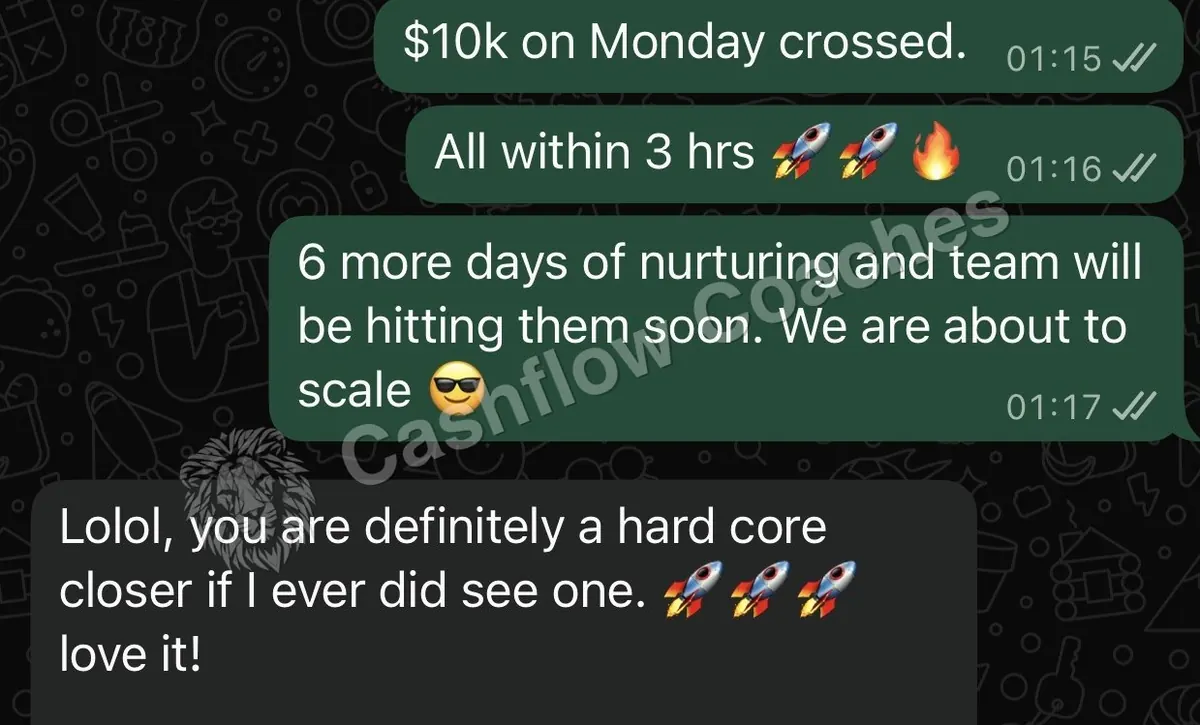 $10K in 3 hoursA client's closer, Monday morning
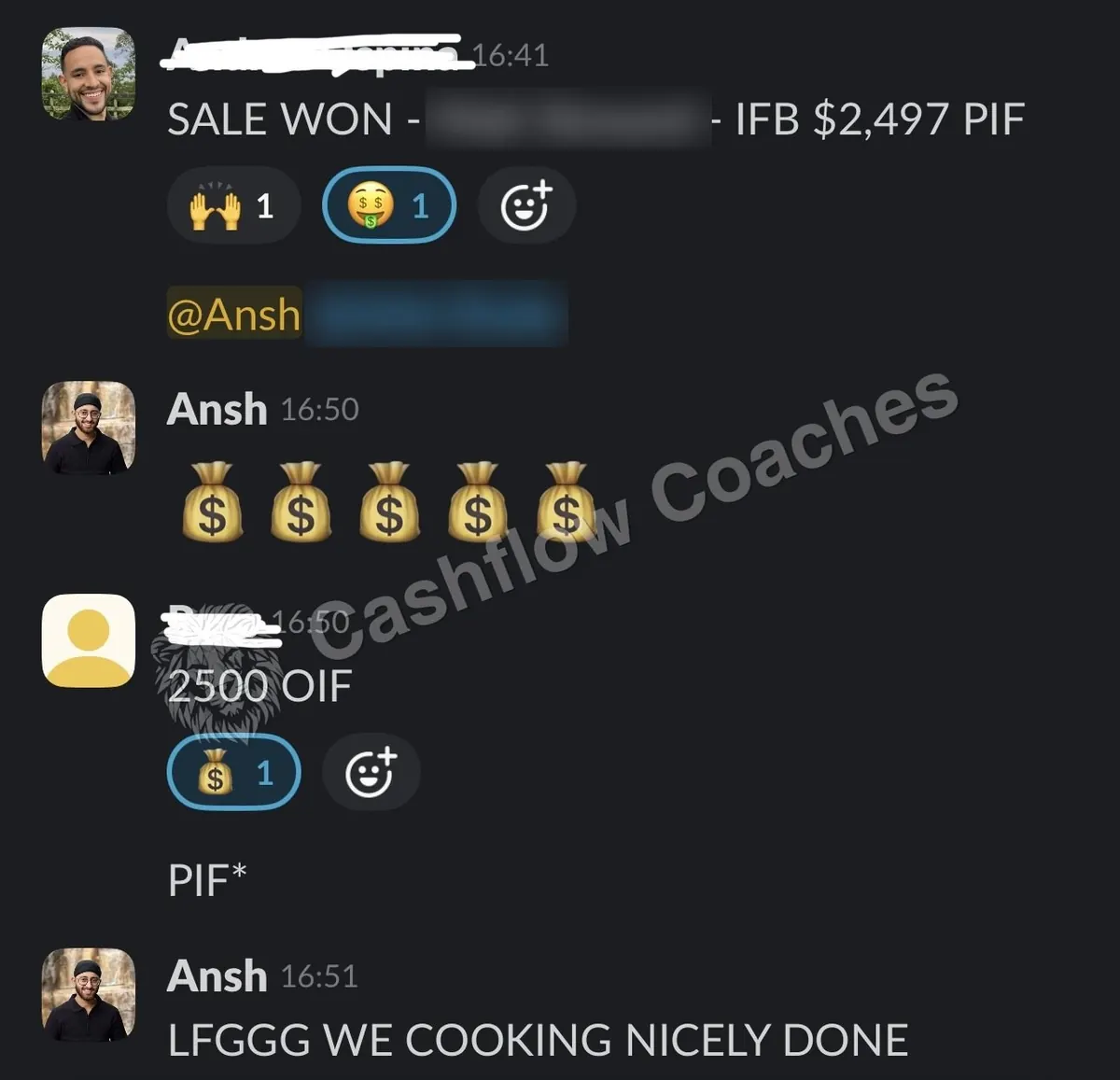 $2,497 paid in full"Sale won" in the team channel
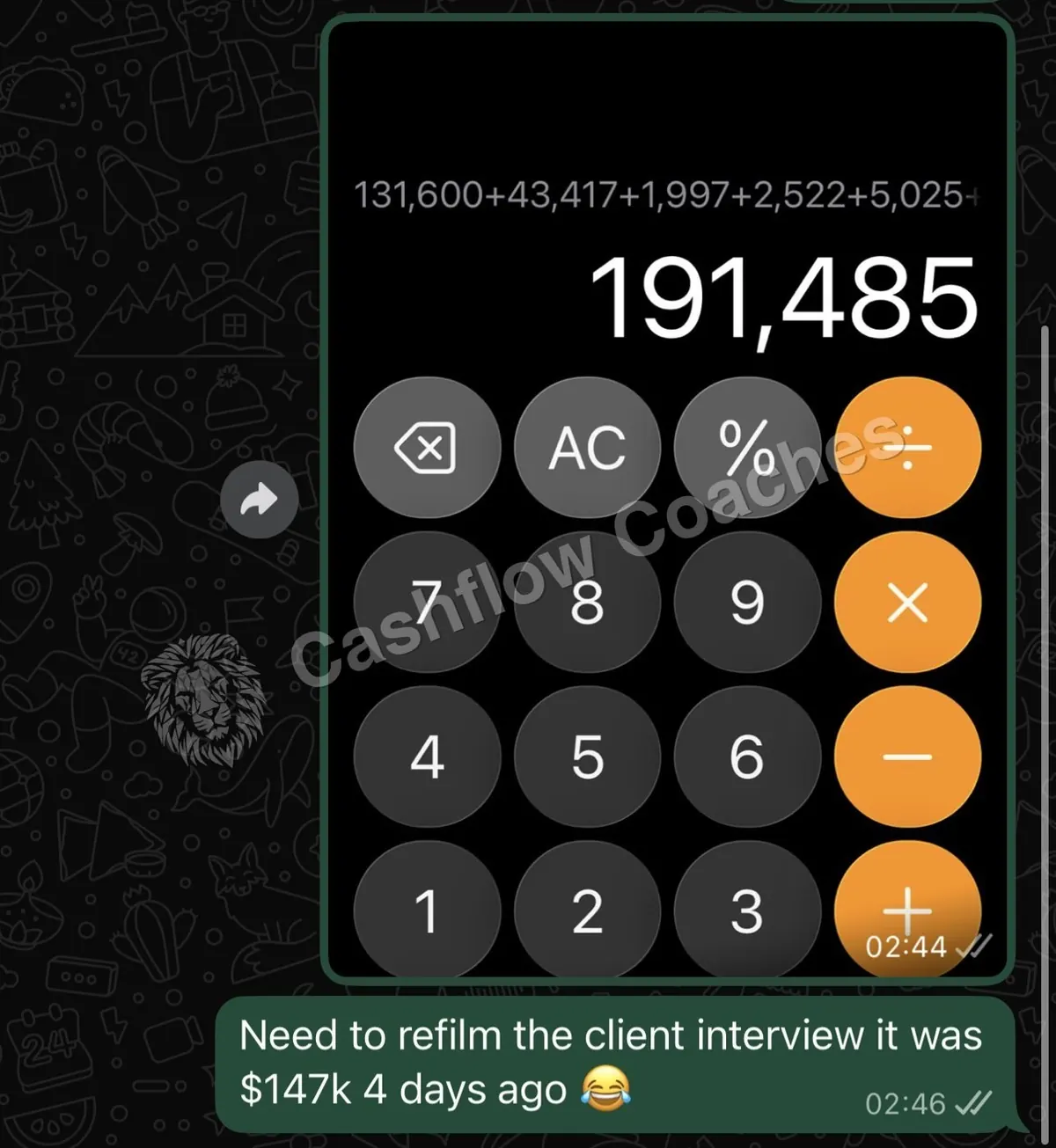 $191,485 for the month$147K of it in 4 days
Real screenshots from our clients and our stories. Not typical.
2What does a high ticket closer do on a call?
A good call has five parts. The closer talks less than the buyer in each.
- Open. Set the agenda and ask why they booked.
- Find the gap. Where they are now, where they want to be, and what has stopped them.
- Present the offer. Only the parts that fix the gap they just described.
- Handle the real concern. Find the root of "I need to think about it". Do not argue.
- Take payment. On the call, then book the first session.
After the call, the closer follows up with every "not yet" and logs the call in the CRM the same day.
3Setter vs closer vs remote closer vs sales closer
These four titles cover two jobs. A setter books the call. The other three run it.
| Role | What they do | Where they work | Typical pay model | Call type |
|---|---|---|---|---|
| Appointment setter | Calls and texts new leads, asks a few questions, books the good ones | Mostly remote | $25 to $50 per qualified call booked, plus 2% to 5% of upfront cash | Short qualifying call or chat |
| High ticket closer | Runs the sales call for an offer of a few thousand dollars or more and takes payment | Remote or in office | 10% to 15% of cash collected | Booked sales call on Zoom, phone or in person |
| Remote closer | Same job as a high ticket closer, done from home on Zoom or phone | Home | Commission on cash, sometimes a small base | Booked sales call on Zoom or phone |
| Sales closer | The general name for whoever runs the last sales conversation and asks for the decision | Any | Varies: commission, base, or both | The final call before a decision |
Setters can be paid other ways too. See how to hire appointment setters for the setter side, and the glossary for every term.
4What is a remote closer?
A remote closer, or remote sales closer, is a salesperson who works from home and takes pre-booked sales calls by Zoom or phone for a business selling a high ticket offer. They do not find their own leads. Pay is usually commission on cash collected, sometimes with a small base.
Remote high ticket closing means you can hire from anywhere and have to manage from a distance. You need these in place.
- Every call is recorded. You review them weekly on a live call.
- Cash is tracked per closer. In the CRM, not in a spreadsheet they fill in.
- The calendar is full of real buyers. Qualifying questions on the booking page and a good show rate.
Pass on a remote closer who wants a full salary and no commission, will not record calls, or cannot show cash collected.
5What is a sales closer?
A sales closer is the person who runs the final sales conversation and asks for the decision. In high ticket businesses it is the same job as a high ticket closer, usually paid on commission.
Pay comes from the price, the commission rate and how many calls you can fill. Run your numbers in the pay calculator.
6When should you hire your first closer?
Once you have a process for them to copy. A closer copies how you sell.
Operators running high ticket sales teams commonly report waiting until the founder closes about 30% over hundreds of calls, holds about a 70% show rate, and is fully booked. New reps close about half as well as the founder, so 15% to 20% if you close 30%.
Many treat a closer calendar that is 70% full as full.
If the empty calendar is the real problem, find the exact bottleneck in your business before you hire anyone.
How many closers do you need?
Work it backwards from the revenue goal: goal divided by cash per sale gives sales, divided by close rate gives calls taken, divided by show rate gives calls booked, then divided by selling days and calls per closer. Cap each closer at about 8 booked calls a day, and keep calendars at 80% to 90% full so there is time for follow-up and the CRM.
Made-up example numbers. Count yourself as one closer if you still take calls.
Hiring and training a closer commonly takes one to two weeks at best and four to six weeks for most. So start hiring when your calendar passes 70% full, not when it hits 100%.
7How much should you pay a high ticket closer?
The one pay change that reliably works: pay on cash collected, not on deals signed. For closers, that is usually 10% to 15% of cash. At a $10,000 price, 10% commission and 80% of the cash collected, that is about $800 a sale.
The choice is base or no base. Plan A is commission only. Plan B is a base plus a lower rate. The numbers are Dana's, a made-up coach, not benchmarks.
| Close rate | Sales | Cash | Plan A pay | Plan B pay |
|---|---|---|---|---|
| 10% | 5.2 | $29,120 | $2,912 | $4,038 |
| 15% | 7.8 | $43,680 | $4,368 | $5,058 |
| 20% | 10.4 | $58,240 | $5,824 | $6,077 |
| 25% | 13 | $72,800 | $7,280 | $7,096 |
| 30% | 15.6 | $87,360 | $8,736 | $8,115 |
| 35% | 18.2 | $101,920 | $10,192 | $9,134 |
The highlighted row is the close rate closest to yours.
A base costs you more when the closer is slow, and less when they are good. Good closers like that trade. Weak ones like the base. Whichever plan you pick, pay on a set date, only on cash that has cleared, and take commission back if a buyer refunds.
Monthly closer targets often look like 12 sales, $36,000 of upfront cash and a 15% close rate. Write your own targets into the offer letter.
What do good closers want from the job?
Three things, and your ad, your interview and your offer letter should answer all three.
- Money they can see. Show the monthly range your numbers really support, from the calculator above. In our view, average closers respond to $10,000 to $20,000 a month and top closers want $20,000 to $50,000. If your price and call volume cannot pay that, hire for growth and say so.
- Time. Remote or not, which hours, and what happens when a hot lead texts at 8pm.
- Growth. How you train them, how often you review calls, and what a great closer earns after a year with you.
See If You Qualify
Bring your calls, show rate and close rate. We will show you what we would fix first.
8Where to find closers, and the job ad (copy it)
Three places work best, in this order.
- Your own past clients. A client who got the result and can sell often makes the best closer you will ever hire. They believe in it because they lived it.
- Your audience and network. Post the role in your stories, your email list and your community.
- Recruiting ads. A short selfie video from you, sent to a page with the role, the pay range and a long application. On Meta, pick the employment special ad category. In our view, $50 to $200 a day for one to two weeks fills the pipeline.
Make applying hard. A long application with written answers and a video weeds out people who mass apply. A very detailed job post brings in far fewer applicants but far better ones. One post went from about 150 applications to about 7, with 5 of the 7 highly qualified. The full kit, with the application questions and offer letter, is in the sales hiring kit Claude skill.
Remote High Ticket Closer: {offer}, {price}

Who we are
We help {who} get {result}. Booked, qualified calls come in every day from {src}. We need a closer to take the calls we can't.

What you'll do
- Take {calls} booked sales calls a day on Zoom. You never find your own leads.
- Follow our call structure and use the buyer's own words.
- Take payment on the call and book the buyer's first session.
- Follow up with every "not yet" for at least two weeks.
- Update the CRM after every call, the same day.
- Send us your recordings and take coaching every week.

Who you are
- You have closed offers of $3,000 or more on the phone or Zoom.
- You can show cash collected, not just deals signed.
- You stayed a year or more on your last offers.
- You ask more than you talk, and you use feedback on the next call.

Do not apply if
- You need a full salary and no commission.
- You won't record your calls.
- You change offers every few months.

Pay
{pay}. Paid on cleared cash. Refunds are taken back.
Expected range at our current call volume: {range} a month.

How to apply
Fill in the full application and send a 2-minute video: sell us the last offer you closed, as if we were the buyer. Then email {email} once a day until you hear back. We only interview people who follow up.Hi [name],
Thanks for applying to close for {offer}. You're through to the next step.
Send us a selfie video, 90 seconds or less, answering these three:
1. It's the end of your day. You still have 30 minutes of CRM notes to log. Do you do it tonight or tomorrow morning?
2. Most people give the "right" answer to question 1. How will you show us you're being honest?
3. A buyer tells you: "{obj}". What do you say?
Please send it within 48 hours, to {email}.
[your name]Post it with the pay range. A post without one draws the wrong people.
9How to interview a high ticket closer
Hire on a role-play, not a resume. Salespeople sell themselves well in interviews. Each step below drops people, and the whole thing should take one to two weeks from application to offer. Good closers have options, so slow hiring loses them.
- Application, reviewed the next day. Knockout questions first: hours, a quiet room, a webcam. Then read the written answers. Lazy, short answers mean lazy follow-up texts. Check how long they stayed on past offers.
- The 90-second video task. Send the email above. It tests if they follow instructions, how they look and sound on camera, and how they handle your real objection. Drop anyone who misses the 48 hours.
- Follow-up test. Only talk to people who chased you without being asked. Follow-up is the job.
- Role-play interview. Ask where they sold, for how long and why they left. Then you play a real buyer from one of your recorded calls, with a real concern. Give one note, then run it again. With many applicants, run quick group calls first, one to two minutes per person.
- Score them. Use the scorecard below while it is fresh. Rank everyone only after the last interview.
- Paid trial. Hire your top one or two onto overflow calls, not your best leads.
Two kinds of people tend to last: hungry people with time to put in, and stable people with a family and real reasons to earn more. Pass on anyone who shares a past employer's numbers or scripts to impress you. They will share yours next.
Score each line 1 to 5. Our bar: 32 or more is a trial hire, 24 to 31 needs a second role-play, under 24 is a no. Copy each candidate's scores into one sheet, then rank.
Candidate: __________   Date: __________

Questions
1. Walk me through the last offer you closed. Price, close rate, cash collected.
2. What did you do the day after a buyer said "I need to think about it"?
3. Tell me about a month you missed target. What did you change?
4. What is the best piece of call feedback you have had, and how did you use it?
5. Why this offer, and what do you want to earn in 6 months?

Role-play: I play [buyer from a recorded call] with the concern "[concern]".
Give one note. Run it again.

Score 1 to 5
Followed up after applying: _
Asks before they tell: _
Listens and uses the answers: _
Says the price and waits: _
Handles one real concern: _
Asks for the sale: _
Takes coaching fast: _
Proof of past results: _
Total: __ / 40   (32+ trial, 24 to 31 maybe, under 24 no)
10How do you onboard and train a new closer?
Give a new closer the overflow, not your whole calendar, and watch every call. Their high ticket sales training is your own recorded calls.
| When | What happens |
|---|---|
| Week 1 | Train from the end first: how to take payment, then how to ask for the sale. They listen to your best recorded calls. |
| Weeks 2 to 8 | Overflow calls only, on a half calendar, for 30 to 60 days. You keep first pick of the calendar. |
| Every week | Review their calls on a live call, not in written chat. Turn each fix into a line in your script. |
| After about 100 calls | Full volume only once they hold about 15% or better over roughly 100 calls. |
15 calls with no sale means little, because a system that closes 20% can still have long streaks of noes. Give it the full 100 calls before you decide.
Many owners go through several closers, in one case about 8, before finding a good one. Plan for that.
11Worked example: Dana hires her first closer
Dana is a made-up business coach. She sells an $8,000 program, closes 30% of her own calls, and her calendar has been full for three months.
| Step | What Dana does |
|---|---|
| Week 1 | Posts the job ad with Plan A (10% of cash). Gets 40 videos. |
| Week 2 | 12 followed up. Runs short screens. Role-plays 5, scores them, picks 2. |
| Weeks 3 to 10 | Both closers take overflow only, about 40 calls a month each. Dana reviews two calls a week with each. |
| Week 10 | One closer is at 18% over 95 calls. The other is at 8%. She keeps the first. |
| Month 4 | The closer takes 80 booked calls a month at 20%. That is 10.4 sales, $58,240 cash, and $5,824 in pay. |
Dana now takes fewer calls herself and spends the time reviewing calls and filling the calendar. Filling the calendar is the hard part. If that is your bottleneck, read how high ticket sales works and run the sales math tool there.
12What a full closer calendar can look like
A closer is only as good as the calendar. Past results from specific clients. Not typical.
Weighing a vendor instead of hiring? Read how an outsourced sales team works. Cashflow Coaches builds the whole system for coaches: the funnel, the booking step, the reminders, and the sales team, with scripts we write and calls we review. See how one creator went from uneven $15K months to $95K cash collected.
13What to do this week
- Answer the seven readiness questions. Fix the first thing it gives you before you post the job.
- Pull your close rate, show rate and cash collected from the last full month.
- Run both pay plans in the comp calculator. Pick one and write it down.
- Fill in the job ad above and post it with a pay range. Tell your past clients first.
- Pick three recorded calls to use in role-plays.
- Print the scorecard. Score every candidate the same way.
- Block time to review the new closer's calls twice a week for the first two months.
Find the exact bottleneck in your business
Frequently asked questions
What is a high ticket closer?
A high ticket closer is a salesperson who takes pre-booked calls with warm leads and turns them into buyers of offers priced from a few thousand dollars up. Setters or funnels fill the calendar. The closer finds the real problem, presents the offer, handles concerns and takes payment, usually for commission on cash collected.
What is a remote closer?
A remote closer is a salesperson who works from home and takes pre-booked sales calls by Zoom or phone for a business selling a high ticket offer. They do not find their own leads. Pay is usually commission on cash collected, sometimes with a small base.
What is a sales closer?
A sales closer is the person who runs the final sales conversation and asks for the decision. In high ticket businesses, setters or funnels book the call, and the closer finds the problem, presents the offer, handles concerns and collects payment, usually for commission.
What is the difference between a setter and a closer?
A setter contacts new leads, asks a few questions and books the good ones onto the calendar. A closer runs the booked sales call and takes payment. Setters are often paid per qualified call booked plus a small share of cash. Closers are paid a larger share of cash collected.
How much do high ticket closers make?
Most are paid a share of cash collected. Operators running high ticket sales teams commonly report 10% to 15% of cash for closers, which works out to about $800 a sale on a $10,000 offer at 10% when 80% of the cash is collected. Total pay depends on price, calls and close rate.
Do closers make a lot of money?
Good closers on a high priced offer with a full calendar can. Pay comes from three things: the price, the commission rate and how many booked calls the business can fill. A great closer with an empty calendar makes very little.
Does high ticket sales really work?
Yes, when the offer gets real results and the calls come from warm leads who booked on their own. It fails when a business uses closers to push a weak offer or buys cold lists. Judge a closer on cash collected over about 100 calls, not one week.
How do you become a high ticket closer with no experience?
Some owners hire green reps and train them on a proven script, but most want proof of cash collected on calls. If you are new, practice with role-plays and recorded mock calls, and never pay a business or a high ticket sales academy to get hired. Real companies pay you.
Should a high ticket closer get a base salary?
It depends on how steady your calls are. Commission only costs you nothing on a slow month but attracts fewer strong reps. A small base plus a lower rate protects the rep while they ramp. Use the comp calculator on this page to see where each plan costs you more.
What close rate should a new closer hit?
Expect less than you close yourself. New reps close about half as well as the founder, so 15% to 20% if you close 30%. A common bar before giving a new closer full volume is about 15% or better over roughly 100 calls.
How long does it take to hire a closer?
It takes one to two weeks at best and four to six weeks for most businesses, from deciding to hire to having a trained closer on calls. Start before your calendar is full, not after.
Can AI sales agents replace a high ticket closer?
Not on the sales call yet. AI sales agents are best at setter work: texting and calling every new lead fast, answering simple questions and booking the call. Text new leads within 2 to 3 minutes and call within 5 to 7. A buyer paying $5,000 or more still wants a person on the closing call.

$10M+ in client results. I run Cashflow Coaches, a done-for-you marketing, sales, operations and tracking agency. We handle everything from paid ads, funnels, webinars, VSLs and Skool communities to setters, closers, ops and tracking. Two-time Skool Games winner.
Not sure if you need a closer yet?
Bring your calls, show rate and close rate. We will tell you whether you need a closer or more booked calls first.
Book your callKeep reading: High ticket sales explainedHow to hire appointment settersOutsourced sales teamSales glossaryClient acquisition for coachesClient acquisition cost calculatorDone-for-you webinar funnelCase study: Karl YombomFind your bottleneck (quiz)
Dana is a made-up example. Her numbers, base and commission rates show how the maths works and are not a client result or a benchmark. Benchmarks on this page are numbers that operators report from their own businesses, not guarantees. The scorecard bands are our own bar, not a benchmark. This page is not legal or employment advice; check local rules on contractor pay and commission. Every real result on this page is a past result from a specific client. None of them is typical or a promise of what you will make.