
1What is a client acquisition system?
Client acquisition just means getting new paying clients. A client acquisition system is the machine that does it on purpose, every week, whether or not you felt like posting that day.
Most coaches have pieces: a few ads, a calendar link, some emails, a closer. A system is when those pieces are joined, each one hands people to the next, and you know what every step costs.
| Question | Pieces | A system |
|---|---|---|
| Where do next month's leads come from? | Not sure | A channel you can turn up |
| What happens after someone opts in? | One email | A text in minutes, a call, then teaching |
| Who gets on your calendar? | Anyone | People who answered qualifying questions |
| How many booked calls show? | Unknown | Tracked every week |
| What does one client cost? | A guess | A number, by step |
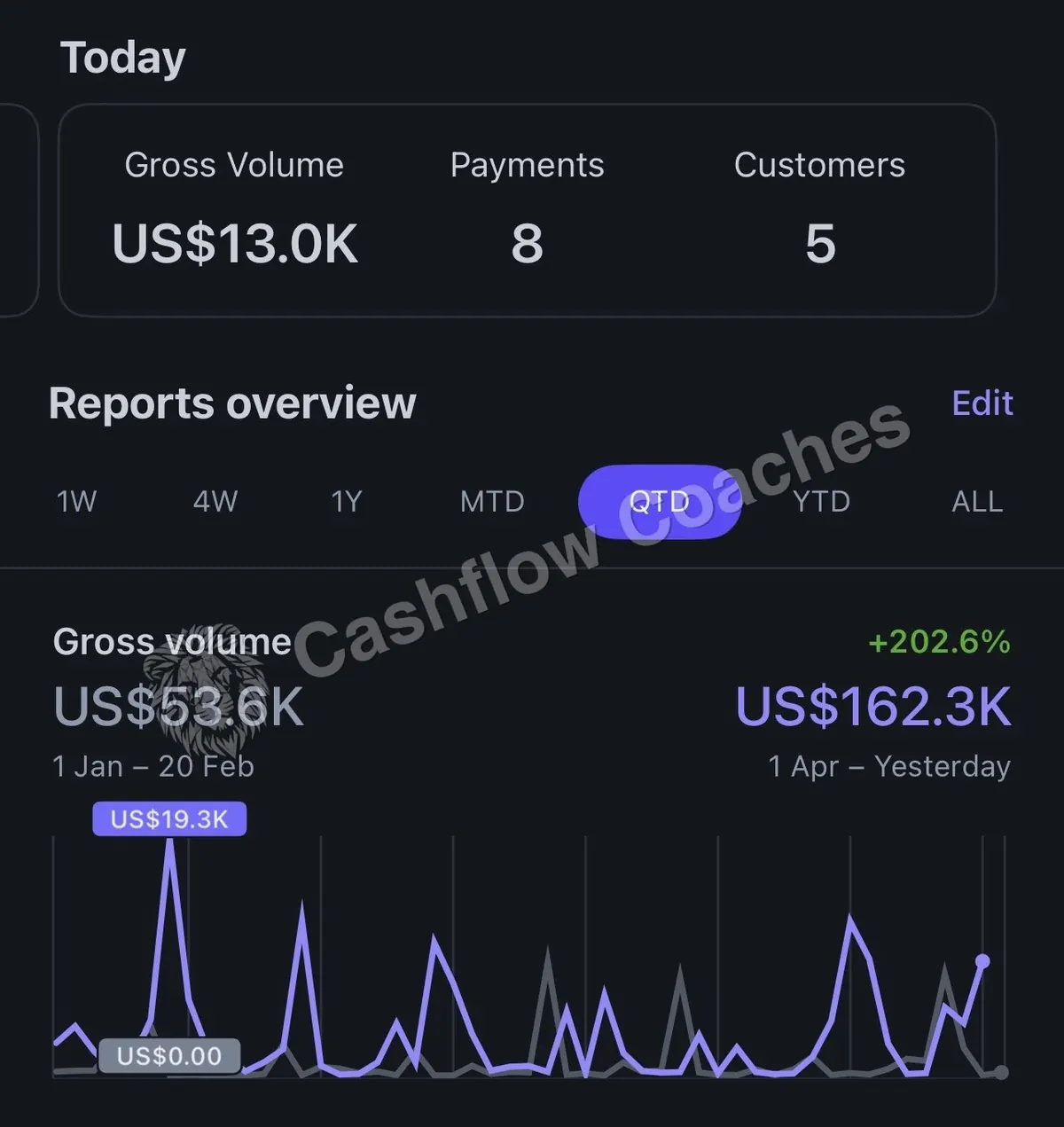 $53.6K to $162.3KQuarter on quarter, +202.6%
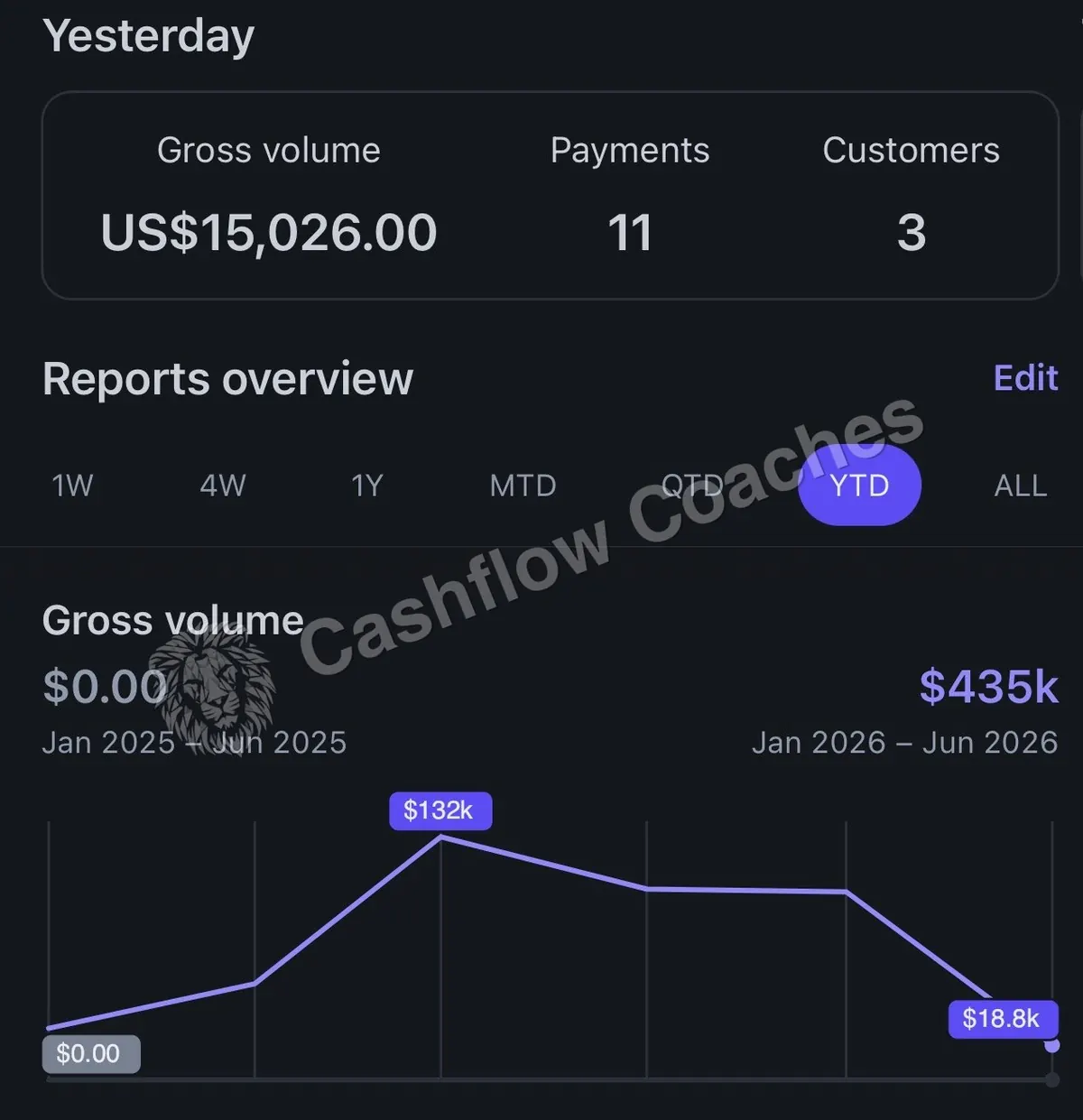 $0 to $435KA brand new account, year on year
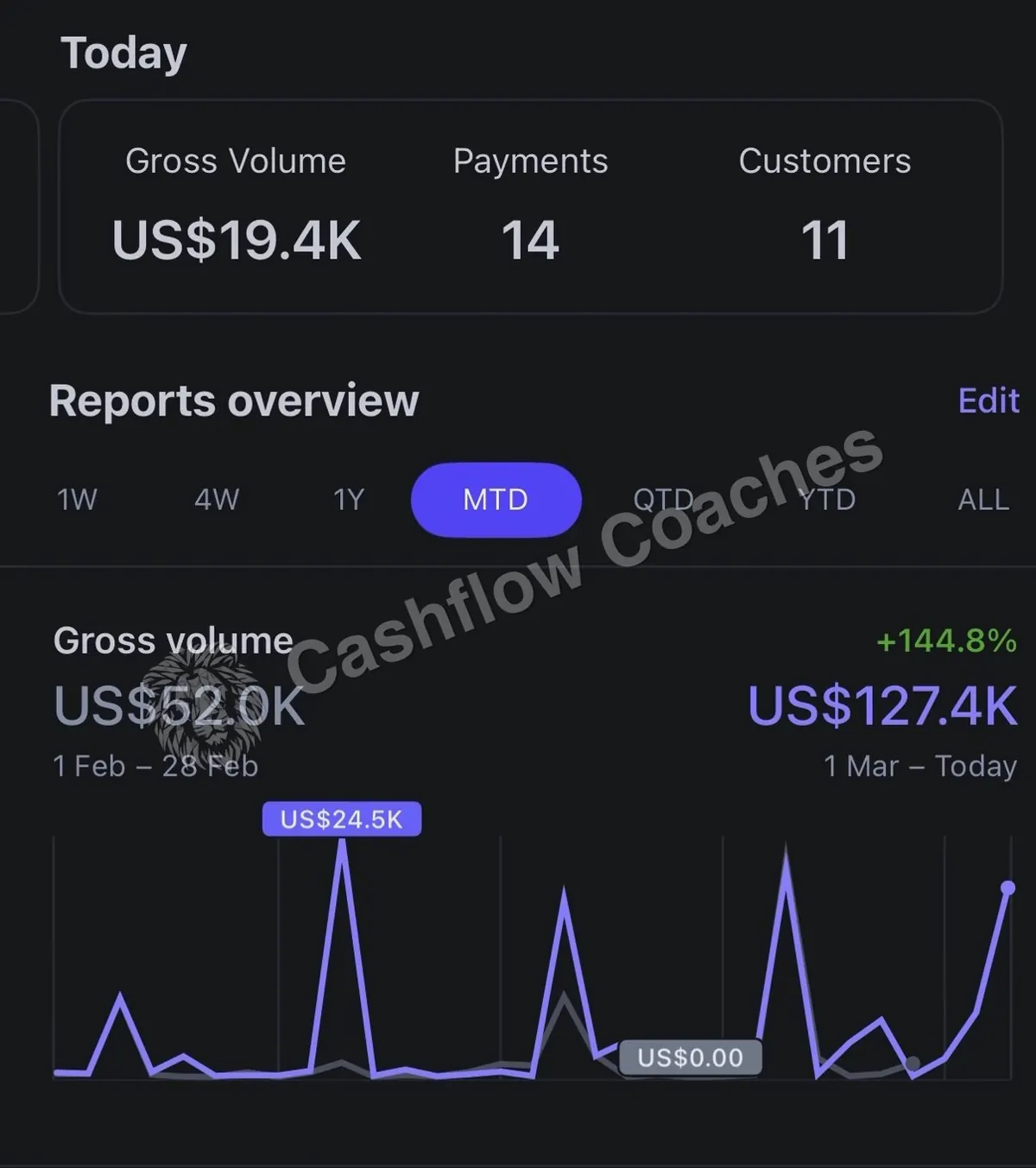 $52K to $127.4KMonth on month, +144.8%
Real screenshots from our clients and our stories. Not typical.
2What are the 6 parts of a client acquisition system?
Every new client moves through the same six parts in the same order. Each part has one number that tells you if it works.
| Part | Its job | Number to watch | Healthy range |
|---|---|---|---|
| 1. Offer | Sell at a price that pays for the rest | Close rate on shown calls | 20% to 25% |
| 2. Traffic | Bring the right strangers in daily | Cost per booked call | $100 to $300 |
| 3. Funnel | Teach and sell before the call | Webinar attendees who book | 30% or more |
| 4. Follow-up | Reach every lead fast | Time to first text | 2 to 3 minutes |
| 5. Sales calls | Get booked calls to show and close | Show rate | 60% to 70% |
| 6. Tracking | Show the cost at every step | CAC as % of price | Under 20% |
Ranges 1 to 5 are what operators running high ticket funnels commonly report, not promises. Under 20% for tracking is our own line, explained on the client acquisition cost page.
1. The offer
The offer is what you sell, who it is for, the result you promise and the price. It comes first because every other part costs money, and the price has to carry that cost. When fewer than about 18% of shown calls close, the price is too high for the proof behind it. An offer is ready to scale once 15 to 30 clients have got the promised result in the promised time.
2. Traffic
Traffic is how strangers find you: paid ads, content, partners or outreach. Can you turn it up with money next month? Referrals cannot. Only 9 or fewer of every 100 ads work, so the system needs new ads every week. One B2B offer at a $15,000 ticket got booked calls for $66 each, before retargeting was even switched on. Real result, not typical.
3. The funnel
The funnel is the part that teaches, so calls start warm instead of cold. For coaches it is usually a live webinar, a VSL call funnel or a free Skool community. We have helped scale 350+ Skool communities. Cost per booked call can fall from about $250 to about $40 when a free community sits in front of the calls.
4. Follow-up
Follow-up is everything between the opt-in and the call: texts, calls from setters, emails, reminders and replays. Waiting more than 5 minutes to reach a new lead cuts the odds of a close by about 80%. Only about 1 in 10 leads books a call alone. The rest need a person to reach out.
That is why most call funnels ask for a name and phone before the video, even though it costs something. Skipping the opt-in usually wins a cheaper client, but the opt-in gives setters and email a list to work. Keep it only if it raises cost per booked call by about 30% or less. In one test it doubled the cost to about $2,000 a call, so it came out.
Setters also need enough to work. About half the time setters look like they are failing, they are short of leads: one team needed 800 a month and got 200. Give them a flow that arrives daily from one steady source, with the same context on every lead and a written step for turning each one into a booked call. See appointment setter scripts for that step.
5. Sales calls
This part covers the booking page, the reminders, the show rate and the close. The best show rates come when calls are booked for the same day or the next day, and never more than about 72 hours out.
6. Tracking
Tracking is the weekly sheet that shows cost per lead, per booked call, per shown call and per client. Without it you cannot see the weakest part, so you fix the wrong one. Measure the funnel as qualified booked calls divided by link clicks, not applications or opt-ins. 3% to 5% of clicks should become qualified booked calls. A show rate sliding from 60% to 45% over a few weeks is often just noise in a small sample, so judge a full month. Track cash collected per booked call next to cost per booked call. One team measured about $700 of cash per call and said a $250 call left too little room to scale. To get the number fast, use the client acquisition cost calculator.
3Which part of your system is the weakest? Take the quiz
12 quick questions about last month.
4What should you fix first?
Start with the part that scored lowest. Each fix fits in one week. Operators commonly compare each step to its benchmark and fix the one that is easiest to double. Doubling a 1.5% page conversion to 3% halves cost per call.
One reported funnel turned only about 2% of clicks into bookings:
| Step | This funnel | Target | Read |
|---|---|---|---|
| Link click rate on the ads | 1% to 1.2% | About 2% | The weak step. New hooks first. |
| Calendar page visitors who book | 55% to 60% | Already strong | Leave it alone |
| Clicks that become booked calls | About 2% | 3% to 5% | Short by about half |
The calendar step was fine, so a new booking page would have changed little. Better hooks to lift the click rate were the fix. If the quiz points somewhere that feels wrong, find the exact bottleneck in your business with the longer quiz at the end of the page.
| Weakest part | First fix this week |
|---|---|
| Offer | Write down your last 10 client results. Tighten the promise to the result most of them got. Do not buy traffic yet. |
| Traffic | Pick one channel you can pay for. Set a daily budget you can hold for 30 days and track cost per booked call by ad. |
| Funnel | Build one teaching asset: a webinar, a short VSL or a free community. Send every lead through it before the call. |
| Follow-up | Text every new lead within minutes, then call. Add reminders before every call and a rebook text for every no-show. |
| Sales calls | Add 3 qualifying questions to the booking page, open only the next few days, and review two recorded calls a week. |
| Tracking | Start a Monday sheet: spend, leads, booked calls, shows, closes and cash. Work out your CAC from it. |
5Which client acquisition model fits your offer?
The model is the main path your system uses. Most coaches should run one model well before they add a second.
| Model | Best for | Number to watch | Can it grow? |
|---|---|---|---|
| Live webinar | Offers that need teaching first | 30%+ of attendees book | Yes, with ad spend |
| VSL call funnel | Buyers who decide fast | $100 to $300 per booked call | Yes, with ad spend |
| Free Skool community | Buyers who like to learn in a group | about 10% of joiners buy | Yes, with members |
| Referrals and content | Getting your first clients | Your hours per client | Slowly |
On cold traffic, Brecken Troike's webinar returned 36.96x on ad spend ($326,552 on $8,836). Real result, not typical. See the Karl Yombom case study for one build start to finish.
See If You Qualify
Bring your quiz results. We will go through them with you and say what we would fix first.
6Worked example: Dev finds his weakest link
Dev is a made-up business coach. He sells an $8,000 program on sales calls. Last month he spent $9,000 on ads, $3,000 on a closer and $400 on tools: $12,400 in total.
| Step | The maths | Result |
|---|---|---|
| Leads | $9,000 of ads at $18 a lead | 500 |
| Booked calls | 8% of leads book | 40 |
| Calls that showed | 50% show | 20 |
| New clients | 20% close | 4 |
| Cost per client | $12,400 ÷ 4 | $3,100 |
| Share of price | $3,100 ÷ $8,000 | 39%, too high |
Dev's first idea was more ads. Then he took the quiz. His weakest part was follow-up, at 0 of 4. Nobody called his leads, and booked calls got one email.
So he hired a part-time setter for $2,000 a month who texts every lead within minutes and calls right after. He added reminders before each call. Bookings went from 8% to 12% of leads, and show rate from 50% to 70%. He did not touch his ads.
- 40 calls, 20 showed
- 4 new clients
- 39% of price
- 60 calls, 42 showed
- 8.4 new clients on average
- 21% of price
Made-up example. $14,400 spent instead of $12,400. Revenue goes from $32,000 to about $67,200 a month, with the same ad budget.
7How do you build a client acquisition system, step by step?
Build it in this order. Each step makes the next one cheaper.
- Prove the offer. Sell it to warm leads and referrals first, until clients get the result you promise.
- Set up tracking before you spend. A simple weekly sheet is enough to start.
- Fix the booking step. Qualifying questions, a short booking window and reminders.
- Build one teaching asset. A webinar, a VSL or a free community.
- Turn on follow-up. Texts in minutes, setter calls, emails before every call, replays for no-shows.
- Turn on paid traffic. Start at a daily budget you can hold for 30 days.
- Review every Monday. Fix the weakest part, then raise spend in steps.
You can build it yourself, hire an agency, or have it built once and own it. The trade-offs are on the agency vs done-for-you page, and how Cashflow Coaches does it is on client acquisition for coaches. To have it built for you, see if you qualify.
8How does the system set your client acquisition cost?
Client acquisition cost (CAC) is everything you spent to get clients, divided by new clients won. Every part moves one number in that sum. The offer sets the close rate and the price CAC is judged against. Traffic sets cost per lead. The funnel and follow-up set how many leads book. Sales calls set show and close rate. Tracking lets you see all of it.
The formula, benchmarks for coaches and the levers that lower it are in the client acquisition cost guide. For your own number with every cost counted, run the CAC calculator.
9What to do this week
- Take the quiz above. Write down your weakest part and your second weakest.
- Fill in the scorecard below for last month. Spend, leads, booked calls, shows, closes and cash, all for the same month.
- Make the first fix for your weakest part. One fix from section 4, not six. Hold ad spend flat until it is live.
- Fill in the same scorecard every Monday. Thirty minutes. Judge a trend on a full month.
Monday scorecard, week of [date]
1. Offer: shown calls [ ], sales [ ], close rate [ ]%  (aim for 20% to 25%)
2. Traffic: ad spend $[ ], booked calls [ ], cost per booked call $[ ]  (aim for $100 to $300)
3. Funnel: watched the webinar or VSL [ ], booked a call [ ]%  (aim for 30% or more)
4. Follow-up: minutes to first text [ ]  (aim for 3 or less)
5. Sales calls: booked [ ], showed [ ], show rate [ ]%  (aim for 60% or more)
6. Tracking: cash collected $[ ], CAC $[ ], CAC as % of price [ ]%  (aim for under 20%)
Weakest part this week: [ ]
One fix, who owns it, done by: [ ]
To run the same audit with Claude on your own numbers, get the client acquisition system audit skill.
Find the exact bottleneck in your business
Frequently asked questions
What is a client acquisition system?
A client acquisition system is the set of linked steps that turns strangers into paying clients on a schedule you control. It has six parts: an offer, traffic, a funnel that teaches, follow-up, booked sales calls, and tracking. Each part hands people to the next, and the weakest part sets what every client costs you.
What does client acquisition mean?
Client acquisition means winning new paying clients. In a coaching or service business it covers everything from the first ad or post a stranger sees to the moment they pay. It is the other half of client retention, which is keeping the clients you already have.
What is a client acquisition model?
A client acquisition model is the main path your system uses to turn strangers into clients. For high ticket coaches the common models are a live webinar, a VSL call funnel, a free community such as Skool, and referrals or content. Most businesses run one main model well before they add a second.
What is the client acquisition process?
It is the order people move through: they see an ad or a post, opt in, get taught by a webinar, VSL or community, get followed up with, book a call, show up, and buy. Each step has a number, and the weakest number sets your cost per client.
What is the 3 3 3 rule in sales?
The name is used for a few different habits, so there is no one official version. Ours is a follow-up rule for coaches who sell on calls: reach every new lead 3 ways (text, call and email), send the first text within 3 minutes, and keep following up for at least 3 days. Fast, repeated, multi-channel follow-up is the idea under every version.
How long does it take to build a client acquisition system?
If the offer is already proven, the build takes weeks, not months. The slower part is tuning. You need about one full month of real numbers before you can see which part is weakest, and then you fix one part at a time.
How much does a client acquisition system cost?
There are two costs: the build and the running cost. A done-for-you build from Cashflow Coaches is a one-time five-figure install. Ad spend is separate and paid from your own ad account, from about $150 a day. The full breakdown is on the webinar funnel cost page.
Do you need paid ads for a client acquisition system?
No, but you need a traffic source you can turn up. Referrals and content work, but you cannot buy more of them when you want 10 more clients next month. Paid ads are the usual answer, and they should be raised only once the other five parts hold.

$10M+ in client results. I run Cashflow Coaches, a done-for-you marketing, sales, operations and tracking agency. We handle everything from paid ads, funnels, webinars, VSLs and Skool communities to setters, closers, ops and tracking. Two-time Skool Games winner.
Bring your quiz results to the call.
On the call we go through your six part scores, find the part that costs you the most, and show you what the full system would look like in your business. If you are not a fit, we tell you what to fix first.
Book your callKeep reading: Client acquisition cost (CAC)CAC calculatorClient acquisition for coachesDone-for-you webinar funnelAgency vs done-for-youFind your bottleneck (quiz)
Dev is a made-up example. His numbers show how the maths works and are not a client result or a benchmark. Benchmarks are ranges that operators running high ticket funnels commonly report, not promises. Every real result on this page is a past result from a specific client. None of them is typical or a promise of what you will make.