
1What is ROAS?
ROAS (return on ad spend) is the revenue your ads bring in divided by what you spent on those ads. $5,000 back on $1,000 of ads is a ROAS of 5, written 5x, 5:1 or 500%.
A 1x ROAS means you got your ad money back and nothing more. It is not profit yet.
| Number | Formula | What it tells you |
|---|---|---|
| ROAS | revenue ÷ ad spend | Money back per ad dollar |
| Break-even ROAS (BE ROAS) | 1 ÷ margin before ads | The lowest ROAS that does not lose money |
| Target ROAS | 1 ÷ (margin − profit you want) | The ROAS that leaves the profit you want |
| ACoS | ad spend ÷ revenue | The flip of ROAS. 25% ACoS = 4x |
| Marginal ROAS | extra revenue ÷ extra spend | Whether the next dollar still pays back |
| ROI | (profit − all costs) ÷ all costs | Profit on everything you spent |
For worked examples, see what ROAS means and how to read it.
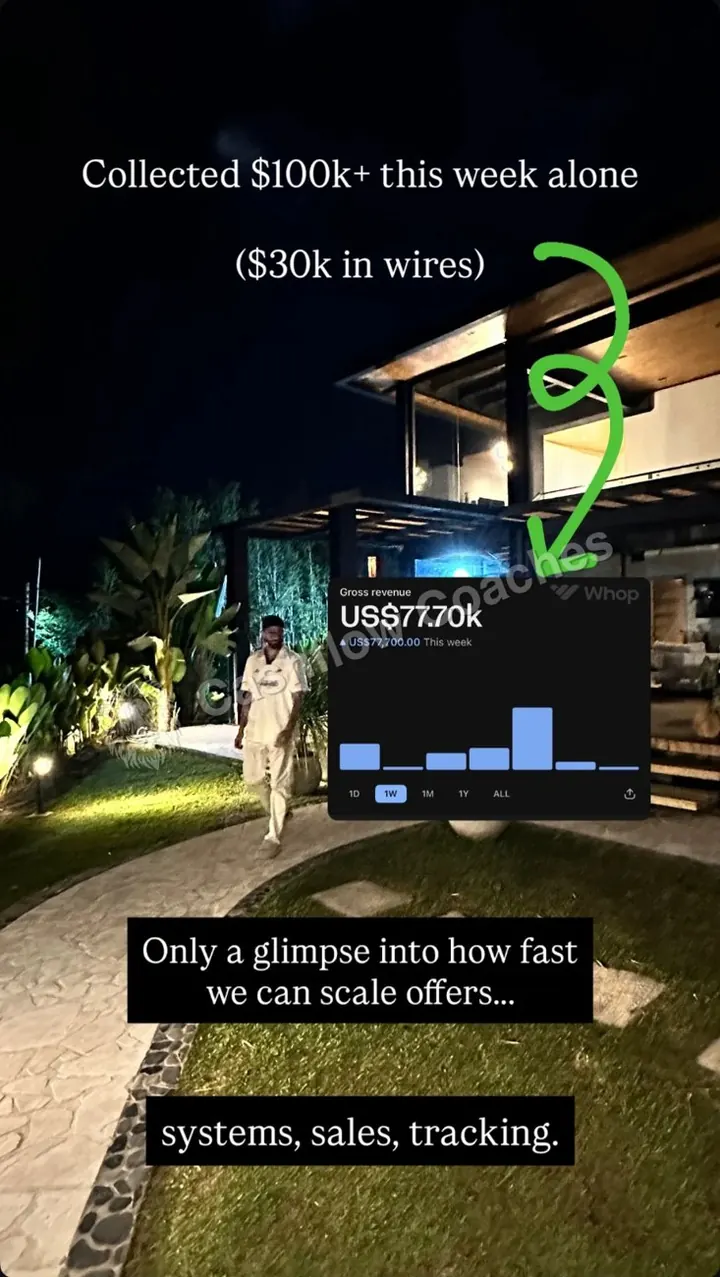 $100K+ in one week$30K of it in wires
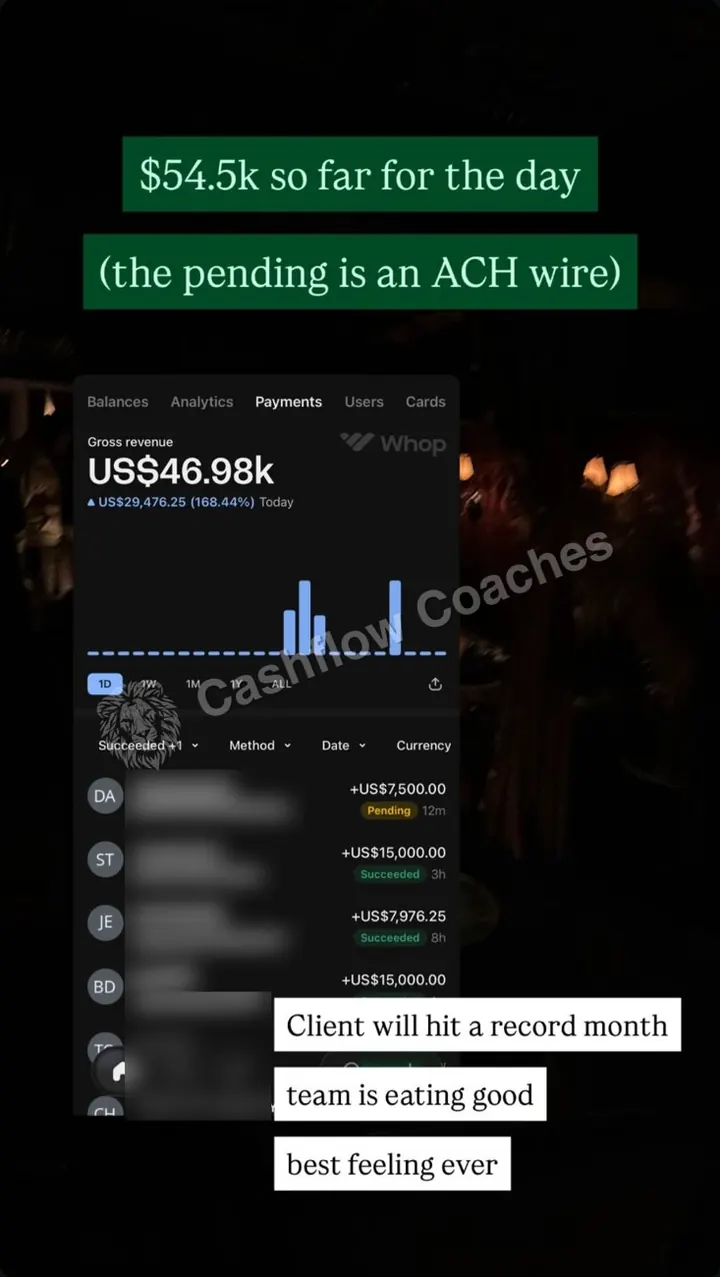 $54.5K in one dayPlus an ACH wire pending
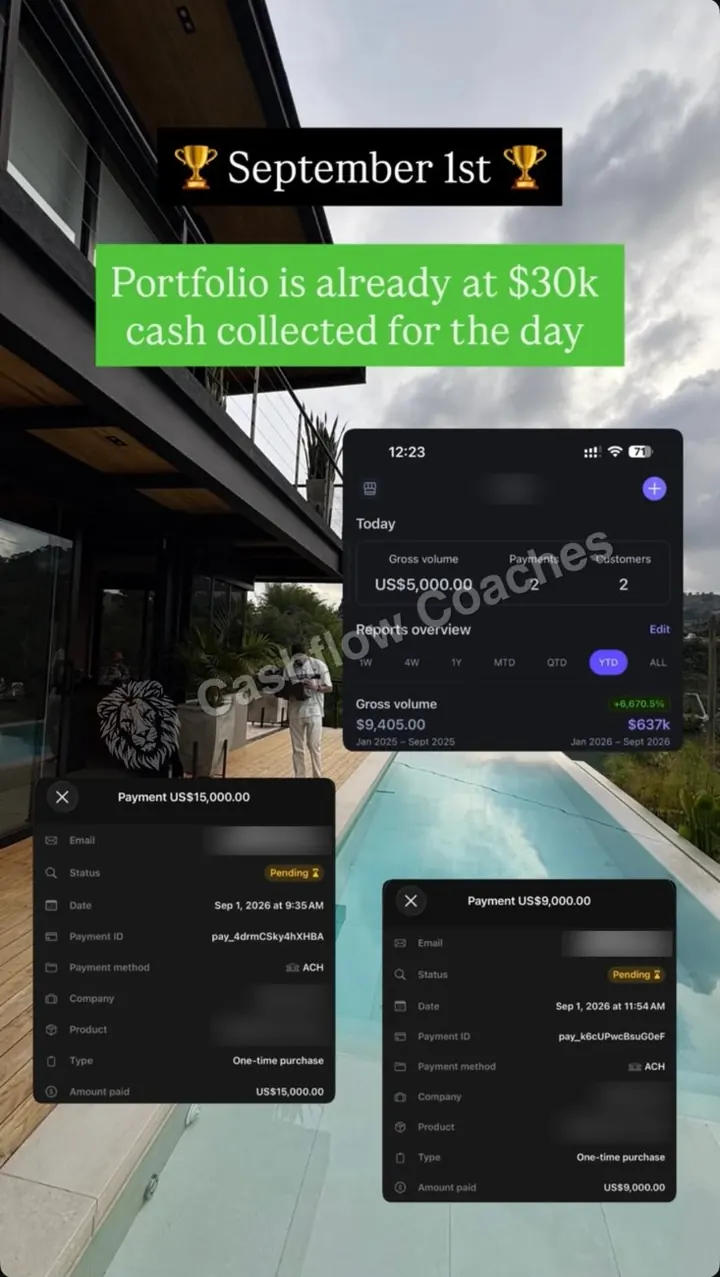 $30K by lunchtimeCash collected for the day
Real screenshots from our clients and our stories. Not typical.
2What does a ROAS of 1.5 mean?
$1.50 came back for every $1 of ads. Whether that is good depends on your margin. At a 67% margin, break-even is 1.49x, so 1.5x just about pays for itself. At a 50% margin, 1.5x loses 25 cents on every ad dollar.
3What ROAS do you need to break even?
Your minimum ROAS is 1 divided by your margin before ads. Margin is what is left of each sales dollar after delivery, commission and payment fees.
- Add up the costs that come with each sale as a share of the price. Jordan's: 20% delivery, 10% commission, 3% fees = 33%.
- Take that from 100%. Jordan's margin before ads is 67%.
- Divide 1 by the margin: 1 ÷ 0.67 = 1.49x. Below that, Jordan's ads lose money.
Find your margin and read across.
| Margin before ads | Break-even ROAS | Break-even ACoS | ROAS for 20% profit | ROAS for 30% profit |
|---|---|---|---|---|
| 20% | 5.00x | 20% | no room | no room |
| 30% | 3.33x | 30% | 10.00x | no room |
| 40% | 2.50x | 40% | 5.00x | 10.00x |
| 50% | 2.00x | 50% | 3.33x | 5.00x |
| 60% | 1.67x | 60% | 2.50x | 3.33x |
| 70% | 1.43x | 70% | 2.00x | 2.50x |
| 80% | 1.25x | 80% | 1.67x | 2.00x |
The last two columns are target ROAS: what you need to keep that profit after ads. In Google Ads, a 2.5x target is typed in as 250%. In Meta, use it as the line your cash ROAS has to clear before you raise budget.
4ROAS calculator: break-even, target ROAS and when to scale
Put in last month from your CRM and your bank, not from the ad platform. The example is Jordan, a made-up coach selling an $8,000 program on sales calls, with $4,000 paid on day one.
Ad numbers for last month:
Count every ad account and take refunds out of cash first.
Want your numbers sent to you?
Leave your email and we will send this breakdown, plus the one fix we would make first.
We only use this to send your numbers and to follow up about your ads and calls. If you add a mobile, we may call or text you about it.5Should you count cash collected or booked revenue?
Count both and decide on cash. Booked revenue is the full price of every sale. Cash collected is what reached your bank this month. On a payment plan, they can be far apart.
- $56,000 booked
- Some of it may never arrive
- $28,000 in the bank
- Pays this month's ad bill
Booked ROAS can clear break-even while cash ROAS does not.
Operators running high ticket funnels commonly report about 4x on revenue and about 2x on cash collected up front. Some set a cash floor: every $1,000 of ads has to bring back at least $1,200 in cash.
A bigger first payment raises cash ROAS straight away. Jordan moving from $4,000 to $5,000 down lifts cash ROAS from 2.80x to 3.50x with the same ads.
6What can you afford to pay for a booked call?
The most you can pay is the cash one booked call brings in, times your margin. Pay less and the call pays for itself.
| Line | The maths | You |
|---|---|---|
| Cash per sale | from the calculator | $4,000 |
| Cash per booked call | cash per sale × show rate × close rate | $700 |
| Break-even cost per booked call | cash per booked call × margin | $469 |
| What you pay now | ad spend ÷ booked calls | $250 |
| Room left per call | break-even minus what you pay | $219 |
Operators running high ticket call funnels commonly model a booked call at $100 to $300, and $500 to $1,000 for long sales cycles or much bigger tickets. They judge it against their own cash per sale, not anyone else's benchmark. One operator measured about $700 of cash per booked call and said paying $250 for that call left too little room to scale ads with confidence.
On Blake Mathews's $15,000 business-to-business offer, Cashflow Coaches got booked calls to $66 each (the case). Real, not typical. To add team and tool costs on top of ads, use the client acquisition cost calculator. To see how much a client is worth over time, use the customer lifetime value calculator.
7Which fix raises your ROAS the most?
Each row changes one thing and keeps ad spend the same. Best first.
| Change | Sales | Cash | Cash ROAS | Profit after ads |
|---|
"Calls 20% cheaper" means the same spend buys 25% more booked calls.
Show rate is often the cheapest fix. Test yours with the show rate calculator. To run this for every step of your funnel, from click to cash, get the funnel math diagnostic skill. Not sure which step leaks? Find the exact bottleneck in your business.
8What is marginal ROAS, and why check it before you scale?
Marginal ROAS is the extra revenue divided by the extra spend. It tells you if the next dollar still pays back. Your overall ROAS can look fine while the last dollar you added loses money.
| Jordan | Ad spend | Cash | ROAS |
|---|---|---|---|
| Last month | $10,000 | $28,000 | 2.80x |
| This month | $15,000 | $36,000 | 2.40x |
| The extra part | $5,000 | $8,000 | 1.60x |
Overall, 2.40x looks healthy. The extra $5,000 only made 1.60x, barely over Jordan's 1.49x break-even, so more spend at that rate adds almost no profit.
Each funnel has a spend level where cost per call starts to climb. Scale past it by adding a second funnel, not by forcing the first. If ad prices are part of the story, see what Meta ads cost.
9How do you convert ACoS to ROAS?
ROAS = 1 ÷ ACoS. ACoS = 1 ÷ ROAS. Your break-even ACoS is the same number as your margin.
| ACoS | ROAS | Profitable if margin is above |
|---|---|---|
| 10% | 10.00x | 10% |
| 20% | 5.00x | 20% |
| 25% | 4.00x | 25% |
| 33% | 3.03x | 33% |
| 50% | 2.00x | 50% |
| 67% | 1.49x | 67% |
| 100% | 1.00x | never |
10Worked proof: how one webinar returned 36.96x
Brecken Troike's cold traffic webinar spent $8,836 on ads and brought back $326,552. Not typical.
“Took my business from 100 grand a month to, 1.2 M a month. ... Best growth partner around.” Brecken Troike, on Trustpilot
| Line | The maths | Result |
|---|---|---|
| ROAS | $326,552 ÷ $8,836 | 36.96x |
| Break-even at a 50% margin | 1 ÷ 0.50 | 2.00x |
| Times over break-even | 36.96 ÷ 2.00 | 18.5x |
| Profit after ads at a 50% margin | $326,552 × 50% − $8,836 | $154,440 |
The 50% margin is an assumption to show the maths, not that client's real margin.
A cold webinar that is working usually returns about 3x to 5x, and about break-even when it is not. A separate client collected $40,000 on $710 of ads before a webinar went live (the case study).
11What is a good ROAS for a high ticket offer, and when should you scale?
A good ROAS is above your break-even line, on cash, and it holds when you spend more.
| Cash ROAS vs your break-even | Read | What to do |
|---|---|---|
| Under break-even | Losing money | Do not add spend. Fix show rate, close rate or the first payment |
| Up to 1.5 × break-even | Thin | Keep spend flat and fix one step |
| 1.5 to 2.5 × break-even | Healthy | Raise spend in small steps and watch marginal ROAS |
| Over 2.5 × break-even | Strong | Raise spend until cost per booked call starts to climb |
How to raise spend without breaking your ROAS
- Judge on enough data. Wait for a full month or at least 3 sales from the ads. Close rate needs about 30 shown calls before you trust it. At 8 calls, one extra sale moves it from 12.5% to 25%.
- Raise budget 20% to 30% at a time. Then wait 3 to 4 days before the next step. Doubling overnight resets what the ad platform has learned.
- Change one thing at a time. Never raise budget in the same week you change the page, the offer or the calendar. You will not know what moved.
- Check the calendar first. If your closers are more than about 80% to 90% booked, more calls wait days and show rate drops. Hire or open more hours before you raise spend.
- Know your step-back line. If cost per booked call rises more than 30% after a raise and stays there for 3 days, go back to the last good budget.
- Stack, do not force. On webinars, operators commonly wait for two profitable sessions in a row before they raise spend. When one funnel stops responding, add a second funnel or a new angle next to it.
12What to do this week
- Pull last month's ad spend from every ad account, retargeting included.
- From your CRM, count booked calls, shows and sales from those ads. From your bank, write down cash collected.
- Work out delivery, commission and fees as a share of price, and put it all in the calculator.
- If you raised spend lately, add the month before so it can check marginal ROAS.
- Do what the verdict says: raise the daily budget by 20%, hold, or start on the top row of the what-if table.
- Copy the result into your team chat and check it again in 7 days.
- Want a second pair of eyes? Bring the sheet to a call and see if you qualify.
Find the exact bottleneck in your business
Frequently asked questions
How do I calculate the return on ad spend (ROAS)?
Divide the revenue your ads brought in by what you spent on those ads in the same period. $28,000 back on $10,000 of ads is a ROAS of 2.8x. For a high ticket offer, run it twice: once on cash collected and once on booked sales.
What ROAS do I need to break even?
Break-even ROAS is 1 divided by your margin before ads. If you keep 50% of each sale after delivery, commission and fees, you need 2x. At a 67% margin you need about 1.49x. Below that line, every ad dollar loses money.
How do you calculate the ROAS for a 20% profit?
Divide 1 by your margin before ads minus 20%. At a 60% margin, that is 1 divided by 0.40, so you need 2.5x. At a 50% margin you need 3.33x. If your margin is 20% or less, no ROAS leaves a 20% profit after ads. The calculator on this page works it out.
What does a ROAS of 1.5 mean?
It means $1.50 came back for every $1 of ads. That only makes money if your margin before ads is above about 67%. At a 50% margin, a 1.5x ROAS loses 25 cents on every ad dollar.
What does ROAS stand for?
ROAS stands for return on ad spend. It measures how much revenue comes back for each dollar of ads. A ROAS of 3 can be written 3x, 3:1 or 300%. Most ad platforms show it as a plain number.
What ROAS is 25% ACoS?
A 25% ACoS is a 4x ROAS. ACoS is ad spend divided by revenue, so it is the flip of ROAS: 1 divided by 0.25 is 4. Your break-even ACoS is the same number as your margin.
What is a good ROAS for a high ticket offer?
Any ROAS above your break-even line makes money, so start there. Operators running high ticket funnels commonly report about 4x on revenue and about 2x on cash collected up front, and a webinar that is working often returns about 3x to 5x. One Cashflow Coaches webinar returned 36.96x. That result is not typical.
Should I measure ROAS on cash collected or booked revenue?
Track both, but decide on cash. Booked revenue includes payments that have not arrived yet and some that never will. Cash ROAS tells you whether this month's ads paid for themselves this month, which decides how fast you can spend more.
What is the difference between ROAS and ROI?
ROAS only compares revenue to ad spend. ROI compares profit to everything you spent. A 3x ROAS can still lose money if delivery, sales commission and fees eat more than two thirds of each sale.

$10M+ in client results. I run Cashflow Coaches, a done-for-you marketing, sales, operations and tracking agency. We handle everything from paid ads, funnels, webinars, VSLs and Skool communities to setters, closers, ops and tracking. Two-time Skool Games winner.
Bring your numbers to the call.
We check your cash ROAS, break-even line and cost per booked call. If you're not a fit, we tell you what to fix on your own.
Book your callKeep reading: What ROAS meansClient acquisition costCAC calculatorLifetime value calculator
Jordan is a made-up example. His numbers show how the maths works and are not a client result or a benchmark. The bands and scaling rules are how we plan, not a promise. Every real result on this page is a past result from a specific client. None of them is typical or a promise of what you will make. Your results depend on your offer, your price, your ad spend and your sales team.