

1A front end that sold, and $0 recurring
The client is an info business, not named on this page. Its front end sold well. Nothing was recurring.
| Starting point | Status |
|---|---|
| Front end | Working |
| Recurring revenue | $0 |
| Membership | None |
| How growth happened | More ads, every month |
Growth meant more ads every month
Every sale was a one-off, so the only way to grow was to buy more ads every month. When the ads stopped, revenue stopped.
That made ads risky, because each month had to pay for itself on new buyers alone.
2What we built: an annual membership on top of the front end
An annual membership
A membership sold by the year.
Positioning for the yearly price
The offer was set up so the yearly price felt like the obvious choice.
Onboarding
The first steps a new member takes, so they get value early.
Engagement
The things that kept people in and using it.
The ascension path
A step from the front end the business already had into the membership.
3$0 to $143,000 a year recurring
| Ratio | How it is worked out | Result |
|---|---|---|
| Monthly equivalent | $143,000 ÷ 12 | about $11,917 |
| Members needed at $697 a year | $143,000 ÷ $697 | about 206 |
The second row is only an example. $697 a year is the paid tier price in our Skool community case, not this client's price.
Run it on your numbers
Put in your yearly price and goal.
$697 is an example price from our Skool case. The 80% renewal is a starting guess.
4Sell the membership by the year, to people already buying
1. Sold by the year
Selling by the year means the money comes in up front and members are in for twelve months. An annual plan at about a 17% discount brings lower churn than monthly.
2. The yearly price felt obvious
If buyers have to think hard about the yearly price, many pick nothing. The positioning made it the easy pick.
3. Onboarding and engagement kept people in
Recurring revenue is only recurring if members stay. Operators running paid communities commonly report about 80% of members staying each month on average, with the best groups at 90% or more.
4. It sat on a front end that already sold
The ascension path offered the membership to people coming through the front end the business already had. The membership did not have to find its first buyers from scratch.
What to copy this week
- Add up last year's one-off sales. Then ask: what would a share of those buyers pay every year?
- Write what members get all year. Something they would miss if they left.
- Price the yearly plan so it is the easy pick. Make the monthly plan the one that needs a reason.
- Plan the first week for a new member. What do they do on day one, day three and day seven?
- Offer it to your past buyers first. They already trust you. No new ads needed.
See If You Qualify
Bring your front end numbers. We'll tell you whether a membership would work on top of them.
5Build it yourself with Claude
Free Claude skill: download the Skool community launch plan. It plans a community that feeds a bigger offer: the launch, getting members in, and the path from member to booked call.
6Want this built for you?
Not sure which step is leaking in your business? Take the bottleneck quiz first. If you already know, book a call and we will go through your numbers together and tell you what we would build first.
Find the exact bottleneck in your business
Frequently asked questions
What did this paid community build make?
Zero to $143,000 a year in recurring revenue for an info business that had nothing recurring before, and most of it is profit.
What did Cashflow Coaches build?
An annual membership, positioned so the yearly price felt like the obvious choice, plus the onboarding and engagement that kept people in, and an ascension path from the existing front end into it.
Why annual and not monthly?
The money comes in up front and members are in for a full year. Operators running paid communities commonly report lower churn on annual plans.
Why is it near pure profit?
Our site describes the $143,000 a year as near pure profit. It is sold to people coming through a front end the business already had. We have not published a cost breakdown, so we cannot show the exact margin.
How many members do I need for $143K a year?
It depends on your price. At $697 a year, an example price from our Skool case, you would need about 206 members. Use the tool above with your own price.
Is there a screenshot for this case?
Not on our site. We publish the before and after numbers for it.
Is this result typical?
No. It is a past result from one business. Your results depend on your offer, your buyers and your price. Cashflow Coaches does not guarantee revenue.
More case studies
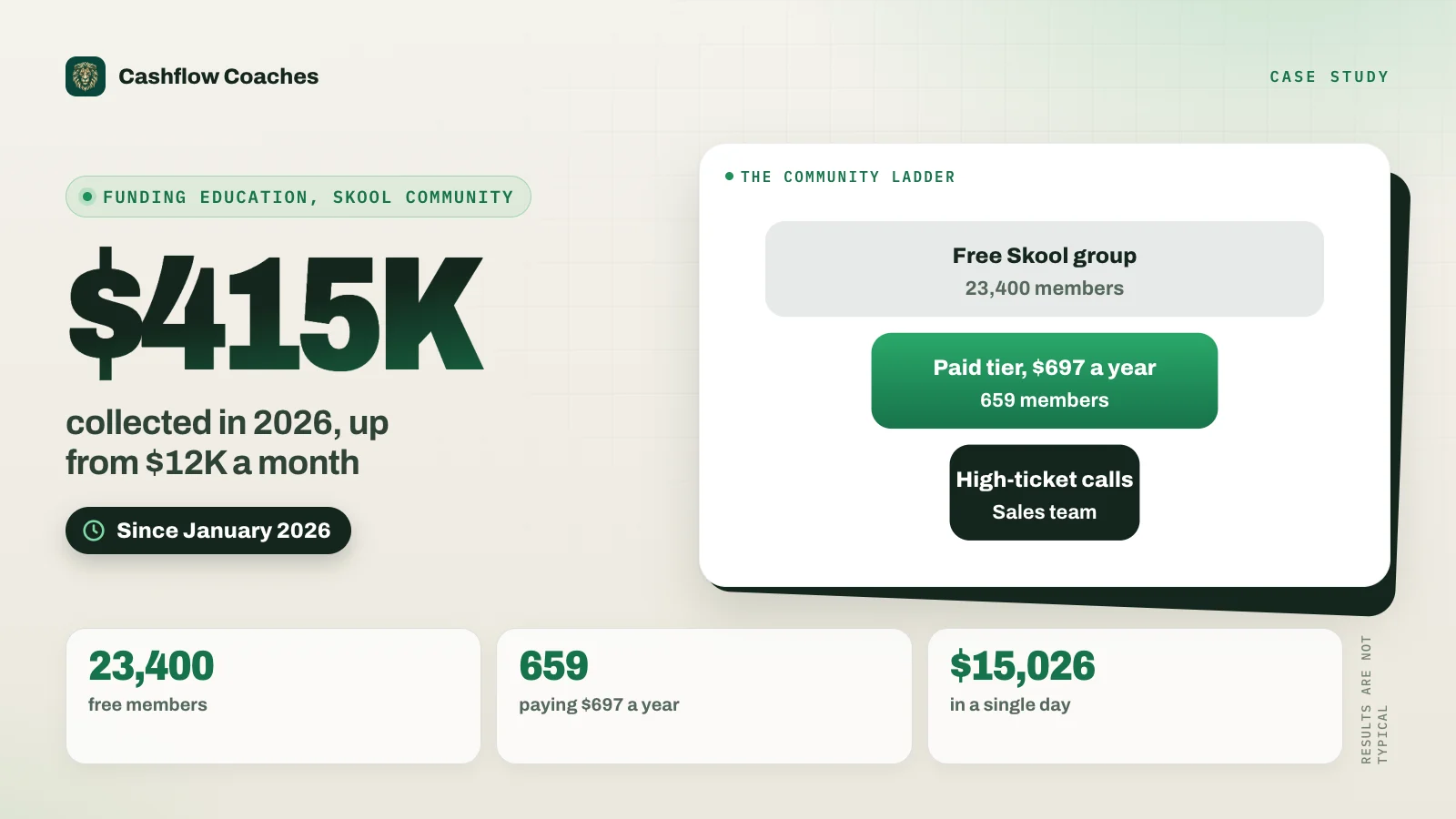 $12K a month to $415K with a Skool community
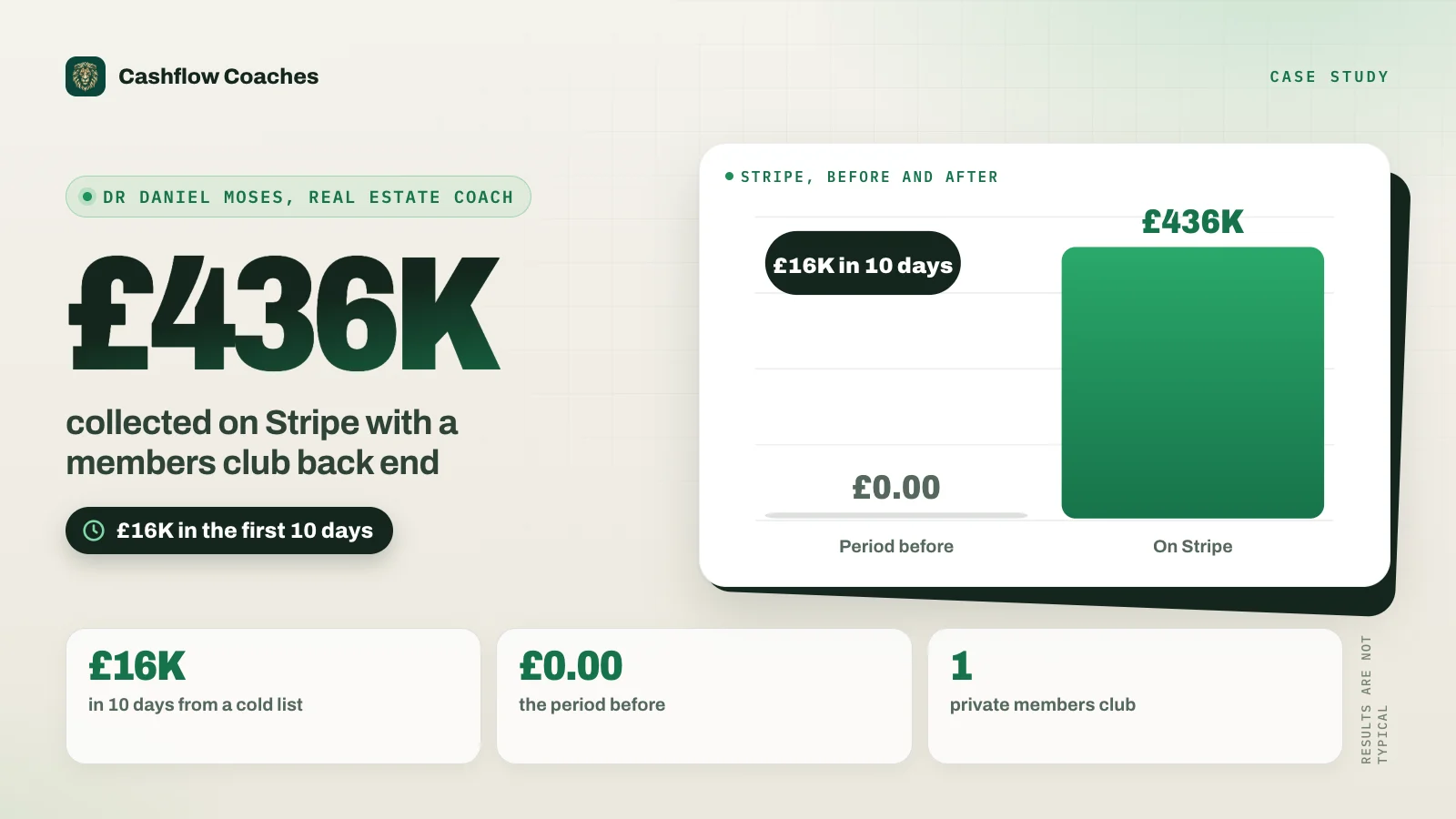 Dr Daniel Moses: £436K on Stripe
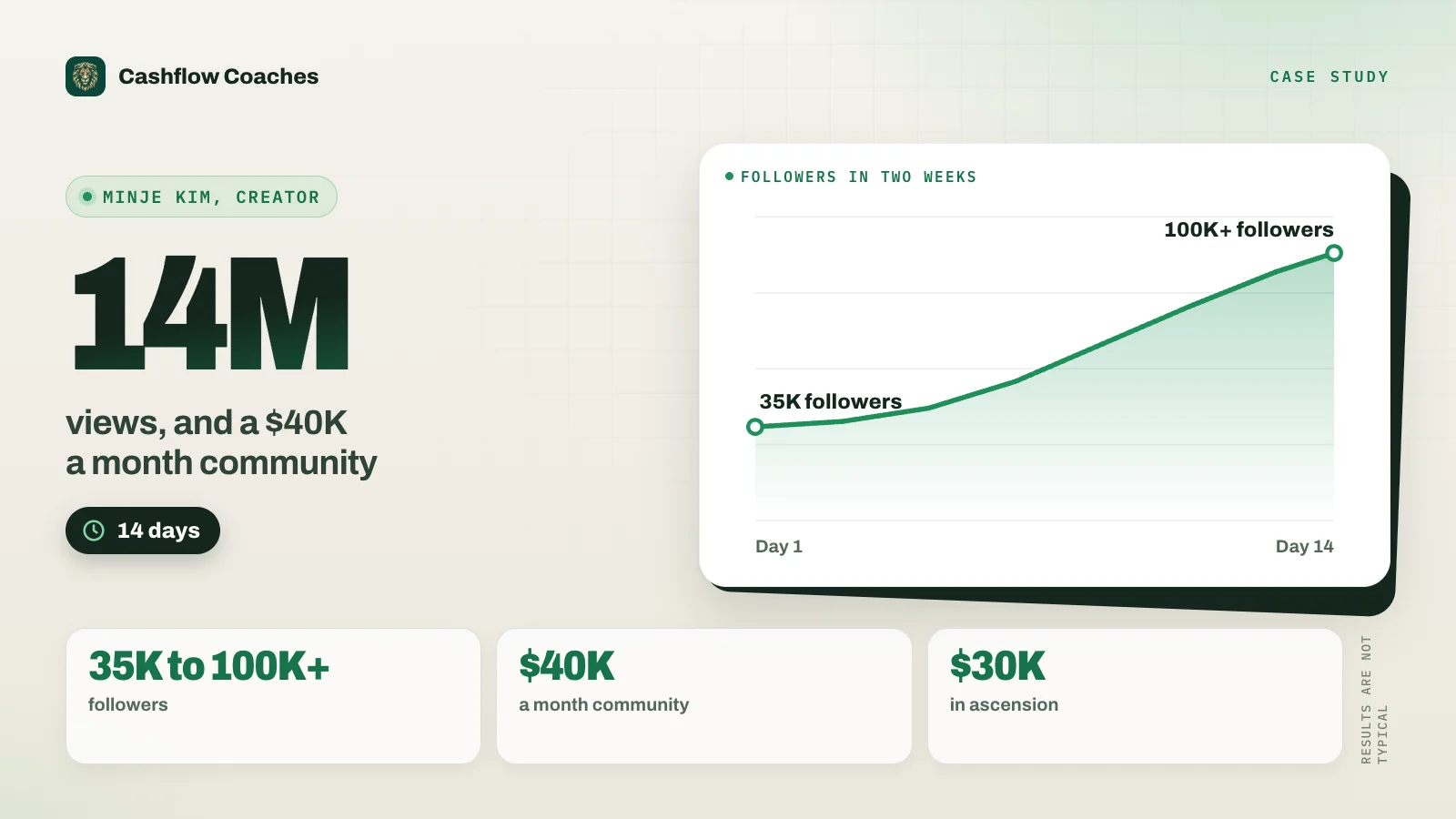 Minje Kim: no offer to 14M views and a $40K a month community

$10M+ in client results. I run Cashflow Coaches, a done-for-you marketing, sales, operations and tracking agency. We handle everything from paid ads, funnels, webinars, VSLs and Skool communities to setters, closers, ops and tracking. Two-time Skool Games winner.
Keep reading: All case studiesSkool community caseDr Daniel Moses caseSkool communities guideDone-for-you Skool growthFind your bottleneck (quiz)
Results are not typical. The business in this case is not named on this page. Every figure on this page comes from a client's payment dashboard or a post we published at the time. It is a past result from one specific business, not a promise of what you will make. Your results depend on your offer, your price, your market, your ad spend, your sales team and your own effort. Names, emails and payer details in the screenshots are blurred.